
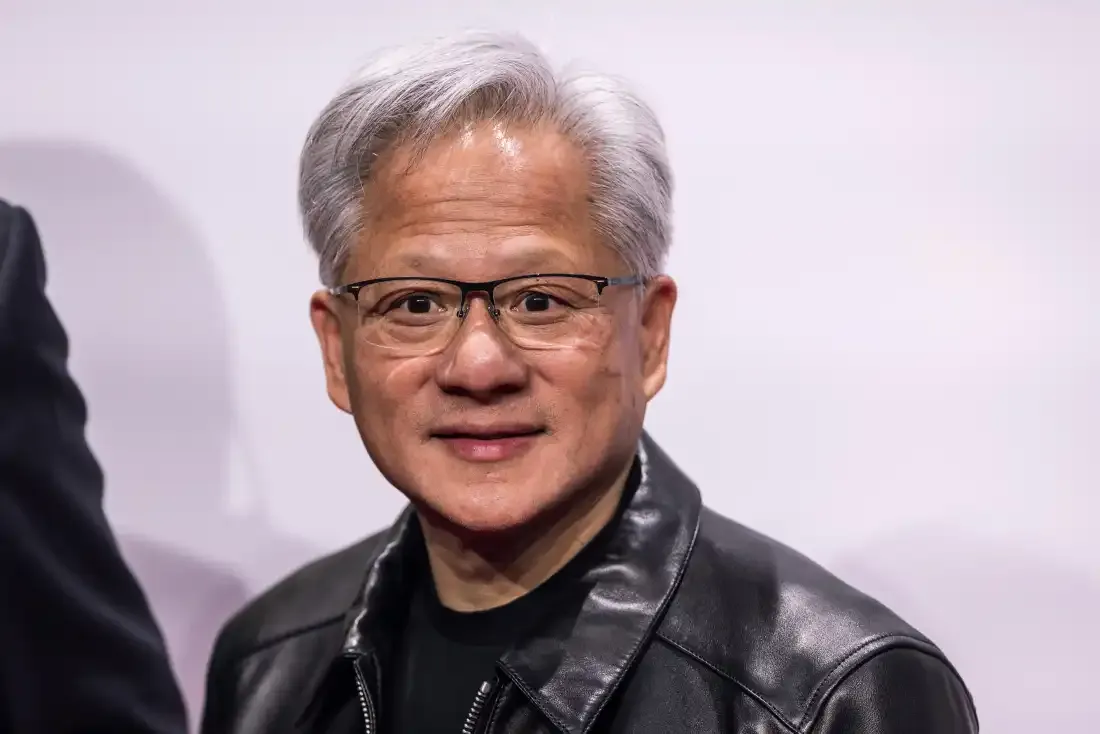

Nvidia has reinstated Jensen Huang as president and CEO, but its investigation and new compliance oversight continue. Here is what the reversal signals for GeForce GPUs, AI chips, drivers, and PC players waiting on Nvidia’s next moves.
Image: npr.org
Huang is back at Nvidia, but the board did not close the case
Nvidia reinstated Jensen Huang as president, chief executive officer, and a member of its board effective immediately on November 23, according to the company’s own newsroom and investor release. The board said it voted unanimously after discussions with Huang, adding that it was satisfied with his “candor and ability to lead NVIDIA.”
That is the concrete leadership reversal. The tension is that Nvidia also said the independent investigation that followed recent reporting about Huang being “the target of a foreign intelligence effort” will continue to its conclusion. Huang, according to the company, supports the investigation and is cooperating with it.
Nvidia also disclosed new governance moves around the issue. The board has formed a National Security and Export Control Committee made up solely of independent directors, is engaging counsel with national security experience, and is beginning a search for a new chief compliance officer who will report to the Nominating and Corporate Governance Committee. The company said it will continue cooperating with ongoing government investigations and inquiries.
For readers tracking PC gaming news, the immediate result is leadership continuity at the company behind GeForce GPUs, DLSS, major game driver releases, and a large share of the AI compute market. The less comfortable reality is that continuity now sits alongside formal oversight, export-control scrutiny, and an unresolved investigation.
The board framed the decision around stability, not a new product promise
Nvidia’s statement does not announce a new graphics card, driver program, pricing move, or gaming initiative. It says the board believes Jensen Huang is the right person to lead Nvidia and that his reinstatement is in the best interests of stockholders, employees, partners, and customers. Harvey C. Jones, Nvidia’s board chair, will remain in that role. Colette Kress, who served as interim CEO during Huang’s short absence, continues as chief financial officer.
That distinction matters for GeForce buyers. A CEO return can steady investor and partner confidence, but it does not automatically change the next GPU launch window, solve availability, lower board partner pricing, or fix a troublesome driver branch. None of those specifics were included in Nvidia’s announcement.
The practical signal is strategic continuity. Huang has been central to Nvidia’s public identity during the AI boom and remains the executive most associated with its long-term platform strategy. NBC News described him as an unofficial ambassador for the AI boom and reported that Nvidia employees cheered him at the company’s Santa Clara headquarters after the reinstatement. NBC also reported that Nvidia’s stock rose 31% on the news, following a technology sell-off tied to anxieties about the AI sector.
For players, continuity is useful but limited information. If you are waiting on the next GeForce GPU generation, the reinstatement reduces the chance of a sudden top-level strategic reset. It does not confirm specs, memory configurations, price bands, power targets, launch timing, or driver features.
AI chips remain the center of Nvidia’s boardroom game plan
Huang’s return is being discussed heavily in gaming circles because Nvidia is a PC gaming hardware company in the eyes of many players. The boardroom pressure described in the source material, however, is centered on AI chips, national security, export controls, and the wider U.S. technology economy.
Nvidia’s own statement says the board received input from senior levels of the United States government and, based on that input, believes Huang’s reinstatement poses no national security risk. Rock Paper Shotgun and GamingOnLinux both highlighted that language from Nvidia’s announcement. NBC News went further, reporting that President Donald Trump said he personally intervened “directly and indirectly” with Nvidia’s board and believed Huang “did nothing wrong.” NBC also reported that Trump had previously said the federal government had no reason to believe Huang’s return posed a national security risk.
That context explains the scale of the reversal. Nvidia is not being treated as a graphics-card vendor in isolation. Its chips power AI models and data-center expansion, according to NBC’s reporting, and its export-control position sits inside a larger U.S.-China technology contest. Nintendo Life similarly connected the controversy to AI competition between the U.S. and China while noting reports around alleged affairs and an alleged Chinese spy. Nvidia’s official wording is narrower: it refers to recent reporting that Huang was the target of a foreign intelligence effort and says the independent investigation continues.
This is the current Nvidia meta: gaming remains highly visible, but AI compute is the economy-defining lane pulling the most political and regulatory attention. When the company has to balance chip allocation, software priorities, developer resources, and public messaging, GeForce exists inside that larger AI-driven strategy.
GeForce strategy may benefit from leadership continuity, but players need evidence
The clearest PC gaming implication is that Nvidia avoids a prolonged leadership vacuum while customers, board partners, laptop makers, game studios, and driver teams prepare for whatever comes next. That matters because GeForce GPU launches are not single-product moments. They involve silicon supply, add-in board designs, laptop integration, developer relations, software features, marketing, and driver readiness.
Still, the sources do not support any claim that Huang’s reinstatement changes a specific GeForce roadmap. Nvidia has not announced a new consumer GPU in these materials. It has not said whether gaming hardware will receive more priority relative to data-center AI chips. It has not disclosed changes to driver cadence, Linux support, DLSS plans, RTX feature support, or Game Ready driver certification.
The best read is risk management. A sudden CEO search could have introduced uncertainty around partner negotiations and public confidence. Restoring Huang likely keeps Nvidia’s existing playbook intact. That playbook has rewarded high-margin AI and data-center demand while keeping GeForce as the premium face of Nvidia gaming hardware. Whether that helps PC players depends on execution: launch inventory, honest segmentation, sane power and thermals, driver stability, and features that work across real games rather than only controlled demos.
If Nvidia wants this reversal to land well with PC players, the next proof will not be another leadership statement. It will be the next GeForce announcement, the next driver branch, and whether the company can make its gaming value proposition feel strong while AI remains the business engine.
Driver trust is the player-facing test Nvidia can actually control
Players do not interact with board committees. They interact with frame pacing, shader compilation, game profiles, hotfixes, laptop drivers, capture tools, upscaling support, and whether a new GPU driver breaks a game the night before a raid, tournament, or launch weekend.
That is where the leadership reversal becomes tangible. The board’s statement is designed to stabilize confidence among stockholders, employees, partners, and customers. For the gaming audience, “customers” means people deciding whether to stay in the GeForce ecosystem, wait for a new card, buy current inventory, or compare against competing hardware.
Nvidia has made no player-specific commitment in the reinstatement announcement, so the smart position is to separate governance confidence from product confidence. Huang’s return may reassure developers and OEM partners who already build around Nvidia’s hardware and software stack. It does not guarantee that the next driver will be cleaner, that older cards will get longer feature support, or that Linux users will see faster improvements. GamingOnLinux covered the reinstatement because Nvidia’s leadership choices matter to that community, but Nvidia’s announcement itself contains no Linux-specific pledge.
For PC gamers, the driver layer is the balance patch. A strong GPU can be undermined by unstable releases, delayed game support, or feature fragmentation. If Nvidia wants to convert restored leadership into restored consumer trust, driver quality is the most immediate battlefield.
Government involvement raises the stakes around chips and availability
The unusual element in Nvidia’s announcement is not only that Huang returned quickly. It is that the board explicitly cited input from senior levels of the U.S. government when addressing national security risk. NBC reported that Trump celebrated the decision and said he had intervened with the board. Rock Paper Shotgun also quoted Nvidia’s statement on government input and noted that Huang had powerful advocates calling for his reinstatement.
That matters to gaming hardware because the same company deciding GeForce strategy is operating in a market shaped by export controls, AI infrastructure spending, and national security scrutiny. Nvidia’s new National Security and Export Control Committee suggests the company expects those pressures to remain part of its operating environment.
There is no confirmed connection in the supplied sources between Huang’s reinstatement and any change to GeForce availability or pricing. But the broader pressure is easy to identify from the confirmed facts: Nvidia’s leadership is being evaluated through the lens of AI capacity and geopolitical risk, not solely consumer graphics. When AI chips command enormous demand and political attention, PC gaming hardware can become the secondary lane in allocation and messaging, even if it remains one of Nvidia’s most visible consumer brands.
That is the strategic tension for players. Nvidia needs GeForce mindshare, especially among enthusiasts who influence broader PC buying behavior. It also has every incentive to prioritize the AI-chip market that has turned the company into a central technology power. Huang’s return keeps the same strategist at the table for both battles.
If you are planning a GPU upgrade, wait for product facts, not CEO signals
The useful buyer guidance is simple: do not buy or delay a graphics card solely because Jensen Huang is back as Nvidia CEO. The reinstatement is major corporate news, but it is not a product announcement.
If your current PC cannot hit the performance target you need today, judge available GeForce GPUs on current street prices, VRAM, power requirements, game benchmarks, and driver behavior in the titles you actually play. If you are waiting for the next generation, keep waiting for confirmed specs, launch dates, independent testing, and retail availability. Nothing in Nvidia’s statement confirms those details.
For players watching Nvidia’s next move, the key indicators are now clear. Look for whether Nvidia keeps gaming prominently positioned while AI chips dominate corporate strategy. Watch how quickly driver teams respond to major game launches and hotfix issues. Track whether new GeForce cards arrive with practical memory configurations and pricing that make sense outside flagship demos. Pay attention to whether Nvidia’s new compliance structure affects public messaging around chip exports, supply, or partner availability.
Nvidia reinstates Jensen Huang at a moment when the company’s identity is split between enthusiast PC hardware and industrial-scale AI infrastructure. The board has chosen continuity, but the investigation continues and the compliance machinery is expanding. For PC players, the next real answer will come from hardware, software, and support decisions, not the return announcement itself.