
With Cryptic Studios newly independent from Embracer and cofounder Jack Emmert back in the CEO chair, we look at his history with City of Heroes, Neverwinter, and Star Trek Online and what his talk of a return to “classic” MMO design could mean for the studio’s live games.
Jack Emmert’s return to Cryptic Studios as CEO is not just a leadership shuffle. It lands at the intersection of two big storylines in the MMO industry: the great Embracer unwinding, and a growing nostalgia for “classic” MMORPG design at a time when live service fatigue is setting in.
For Cryptic’s aging but resilient MMOs Neverwinter and Star Trek Online, his comeback could mark the first clear creative direction they have had in years.
From City of Heroes to the licensed MMO era
To understand why Emmert’s homecoming matters, you have to rewind to the early 2000s. As one of Cryptic’s cofounders and lead designers, Emmert helped define a particular strain of Western MMO design built on accessibility, fast iteration, and licensed IP.
City of Heroes, launched in 2004 under NCsoft, was Cryptic’s breakout hit. Emmert and the team leaned into superhero fantasy: rapid character creation, snappy combat, and team friendly encounter design. Where EverQuest leaned on attrition and grinds, City of Heroes emphasized feel good power curves and social play in a relatively low friction environment. It fostered a loyal roleplay driven community that stuck with the game even as the broader market shifted toward World of Warcraft.
That approach carried forward when Cryptic pivoted into licensed MMOs. Champions Online, another superhero title, arrived in 2009, followed by Star Trek Online in 2010. Neverwinter completed the licensed trilogy in 2013, adapting the Dungeons & Dragons Forgotten Realms setting into an action focused free to play MMO.
Across those games you can trace Emmert’s design fingerprints: approachable combat models, clear progression paths, story arcs structured like TV episodes, and a willingness to trade some sandbox depth for accessibility and cadence. In an era before “live service” became the industry’s catch all phrase, Cryptic quietly operated one of the most durable live MMO portfolios in the West.
Leaving Cryptic and collecting MMO battle scars
Emmert exited Cryptic’s day to day leadership over a decade ago and went on to gather a rare kind of industry experience: running multiple long lived MMOs across different owners and business models.
At Daybreak, he led DC Universe Online and later oversaw Standing Stone’s The Lord of the Rings Online and Dungeons & Dragons Online. More recently he headed Jackalyptic Games, a NetEase backed studio building a Warhammer MMO that never made it to launch before NetEase pulled back from overseas development and shut the studio down.
In interviews about his return to Cryptic, Emmert has been blunt that this period changed his leadership style. He talks about being less stubborn, more collaborative, and more interested in acting as a figurehead who represents the team and the players rather than a top down “do as I say” designer. That matters for a studio whose remaining games are all live, complex, and community dependent.
He is not coming back to build a new game from scratch in a vacuum. He is coming back to steward worlds that have been running for over a decade and to try to make sure Cryptic itself survives another 26 years.
Cryptic’s rough ride under Embracer
The other half of the story is structural. Cryptic’s portfolio survived, but the studio went through a destabilizing ownership period.
Embracer Group acquired Cryptic as part of its broader spree, then shifted the studio into what increasingly looked like a low investment holding pattern. Staffing was cut and the day to day operations of Star Trek Online, Neverwinter, and Champions Online were handed off to DECA Games, a group within Embracer that typically specialized in live ops for older or mobile titles.
From the outside, it looked like a classic “zombie MMO” scenario. The games stayed online and received content, but Cryptic itself faded from view and community confidence eroded. Players worried that the studio was being set up as a maintenance mode asset rather than a creative force.
That trajectory reversed in 2024. Arc Games the publishing label that had evolved out of Perfect World and Gearbox Publishing San Francisco separated from Embracer in a management backed deal. Cryptic went with Arc and reclaimed direct control of its games. The current team is a hybrid of legacy Cryptic staff and former DECA developers who were already embedded in the projects.
This is the environment Emmert is walking back into. Cryptic is smaller than in its peak City of Heroes days, but it is once again an independent studio with its own destiny and a slate of live games that still have meaningful, if niche, communities.
“Classic MMO” as a north star, not a time machine
In his first interviews as returning CEO, Emmert has repeatedly used the phrase “classic MMO” to describe the direction he wants to steer Cryptic. That wording is easy to misinterpret as a promise of old school grind or full scale time travel back to 2004 design sensibilities, but the details point to something more targeted.
What Emmert describes is a renewed focus on the fundamentals that made pre battle pass MMOs sticky for years: coherent long term progression, meaningful social structures, and content that respects time investment without feeling extractive. Against a backdrop of fragmented live services that chase daily engagement metrics and battle pass retention curves, the pitch is to make Cryptic’s games feel like persistent worlds first and monetization vehicles second.
He also talks about “vibrancy” as the goal. For Cryptic, whose entire business is now built on games more than ten years old, a classic MMO vision is less about retro difficulty and more about restoring a sense that these worlds are truly alive. That means new content, regular events, visible roadmaps, and community outreach that convinces lapsed players that it is worth reinstalling.
The key industry question is how aggressively Cryptic can execute on that vision while working with the budgets of a smaller, independently owned studio that is no longer part of Embracer’s conglomerate scale.
Star Trek Online: steady warp or bold course change?
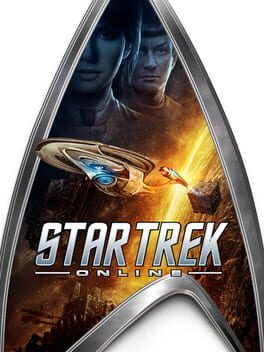
Star Trek Online is the clearest test case for Emmert’s philosophy. It is a 2010 title built on a TV episodic model, divided into story arcs, featured episodes, and seasonal updates that tie in to modern Star Trek canon.
Over time STO’s systems have accreted layers of lockboxes, premium ships, and event currencies, reflecting the broader free to play trend toward monetizing collection and FOMO. The game has remained profitable and content has kept coming, but for many returning players its interface and economy can feel like an archaeological dig through a decade of competing priorities.
A classic MMO vision here likely does not mean ripping out monetization. Instead, Emmert’s experience across DC Universe Online and LOTRO suggests an emphasis on clarity and long term goals. Expect efforts to streamline progression paths, re surface story content that new captains might otherwise miss, and highlight group activities that make the game feel like Starfleet rather than a solo theme park.
Strategically, STO also benefits from Cryptic’s renewed independence. Without Embracer overhead, Arc and Cryptic can negotiate more directly with Paramount on tie ins and scheduling, and Emmert has explicitly framed the near term as a push to win back lapsed captains. That could translate into more coherent story arcs, better onboarding for players returning after years away, and events that celebrate Star Trek history instead of just selling the next meta ship.
If Emmert delivers on his collaboration talk, we should also see more creator level visibility. STO has always thrived when its developers show up in community channels to talk about narrative choices, systems changes, and long term plans. A CEO who is comfortable being a public facing “voice of the team” fits that pattern.
Neverwinter: sharpening the D&D identity
Neverwinter’s situation is slightly different. As an action MMO built on the Dungeons & Dragons license, it has long walked a line between fast paced, instanced dungeon running and the character driven, tabletop inspired fantasy that D&D fans expect. Its monetization and campaign structure have often felt closer to a modern live action RPG than to the kind of slower burn, world centric MMO that “classic” language evokes.
Under a classic MMO lens, the opportunity for Neverwinter is to double down on its strengths as an evergreen D&D hub. That can mean reinforcing progression paths that feel like campaigns rather than disconnected modules, improving new player and returning player flows so that the leveling journey tells a cohesive story, and making group content feel less disposable.
Industry wide, D&D remains one of the strongest fantasy brands and Wizards of the Coast continues to expand the IP across media. For Cryptic and Arc, that makes Neverwinter a strategically important asset. A healthier, more cohesive MMO is a better partner product for any cross promotion Wizards pursues in the future.
A more classic mindset could also influence how Neverwinter experiments with power creep and monetization. Emmert has seen firsthand on LOTRO and DDO how long running MMOs can box themselves into corners with stat inflation or overly aggressive store designs. His public comments suggest a desire to protect longevity even if that means dialing back short term, high friction revenue tactics.
Champions Online and the long tail question
Champions Online is the forgotten sibling in Cryptic’s portfolio, but it is arguably the purest expression of the studio’s original City of Heroes era design. Its population is modest, yet dedicated, and it persists as a living example of a pre battle pass superhero MMO.
For Emmert’s classic MMO agenda, Champions is both a challenge and an opportunity. Its small size makes big new system investments unlikely, but it is also a prime candidate for low cost, high goodwill improvements: quality of life updates, community requested tweaks, and communication that reaffirms that the game is not simply waiting for a sunset announcement.
In industry terms, how Cryptic treats Champions will be a signal to other publishers about what a lean, independent MMO studio can afford to do with its longest tail products.
Beyond maintenance: can Cryptic build again?
One important detail that surfaced in the Arc and press messaging is that Emmert is not just being brought in to maintain live games. Both he and Arc talk openly about “new projects” alongside Star Trek Online, Neverwinter, and Champions Online.
That does not necessarily mean a new big budget MMO in the near term. It could be smaller experiments, spin offs, or prototypes that test how classic MMO values can coexist with today’s market realities. Given Emmert’s history with superhero and fantasy IP, it would not be surprising to see Cryptic court another licensed partner, though this time with more caution around scope and burn.
From an industry perspective, simply having Cryptic back in the conversation as a potential builder of new online worlds matters. The studio has shipped more live service MMOs than most active Western developers, and Emmert’s return consolidates that experience under a leadership team that has already survived one era of consolidation and retrenchment.
What to watch next
For players and industry watchers, the next 12 to 24 months will be the real test of whether Emmert’s classic MMO rhetoric translates into tangible change.
On the game side, look for clearer roadmaps and public facing plans for Star Trek Online and Neverwinter. Watch for events or systems that explicitly target lapsed players, such as catch up mechanics, streamlined currencies, and narrative recaps.
On the business side, pay attention to hiring signals. Emmert has already said he wants to bring back former Cryptic staff. If the studio starts to rebuild key discipline leads in design, live ops, and community, that is a strong indicator that Arc is serious about more than bare minimum maintenance.
Finally, watch how Cryptic communicates. A classic MMO ethos is as much about relationship as systems. Regular developer communication, transparent discussions of tradeoffs, and a willingness to say “no” to short term monetization in favor of long term trust will matter as much as any new questline.
Jack Emmert’s return to Cryptic comes at a time when the MMO market is searching for its next identity after a decade of battle passes and gacha inspired mechanics. If Cryptic can successfully pair its hard won experience in licensed MMOs with a genuinely player first, classic minded strategy, Star Trek Online, Neverwinter, and even Champions Online could find a second, more confident life.