

itch.io says daily game-page creation has doubled in two months, while downloads and purchases have not. The surge is a warning sign for players, indie developers, and storefronts already wrestling with AI games discovery.
Image: pcgamer.com
itch.io’s new-page count doubled, but its audience did not
The strongest concrete signal in the current itch.io AI slop debate comes from itch.io itself: the platform said on X that “the number of game pages being created per day has doubled in the past 2 months.” Polygon, citing an itch.io Bluesky post from late Oct. 31, reported that the graph attached to the post showed daily page creation rising from around 3,000 in August 2026 to more than 6,000 by Oct. 30.
That would be a major operational shift for any storefront. For itch.io, it cuts into the core value of the platform: low-friction publishing for experimental, student-made, jam-built, niche, and independent games. A storefront can absorb growth when new supply brings new demand with it. The tension here is that itch.io reportedly said in another reply, also cited by Polygon and echoed in a Reddit archive of the post discussion, that “the number of downloads and purchases has not doubled.”
Confirmed facts stop there. itch.io has said daily page creation doubled, and reporting based on its social posts says purchases and downloads did not double alongside it. Polygon also reported that itch.io replies indicated AI projects make up the majority of these new pages. The conclusion many players and developers are drawing, that generative AI has turned open storefronts into high-volume spam targets, is plausible and consistent with the platform’s own discussion, but the public material cited here does not provide a complete dataset, a breakdown by genre, a spam definition, or a count of how many pages were removed, hidden, sold, downloaded, or abandoned.
The discovery economy breaks before the storefront does
The immediate problem is not that itch.io has too many games in the abstract. itch.io has always thrived because it lets almost anyone publish. Polygon describes it as an indie-friendly platform filled with student projects, game jam work, higher-profile indies, and charity-bundle releases. That openness is a feature, and for many developers it is the reason itch.io exists as a meaningful alternative to more commercialized storefronts.
The risk is that discovery systems are an economy of attention. If supply doubles in two months while demand remains comparatively flat, every page competes against a thinner slice of browsing time, search visibility, tag relevance, and front-page patience. Developers do not only compete with good games in that environment. They compete with placeholder pages, asset flips, automated uploads, low-effort experiments, and projects that may be using generative AI to turn production speed into storefront volume.
This is where the strategy problem becomes visible. For a small developer, itch.io is often part storefront, part portfolio, part community hub, and part launchpad. If tags, recent-release feeds, and asset pages fill with material that players perceive as AI slop, the cost of being found rises. That cost is not always paid in money. It is paid in time spent marketing outside the platform, in social media dependency, in Discord cultivation, in mailing lists, and in the constant need to prove that a handmade game is worth opening among hundreds of new pages.
AI games storefronts face the same pressure curve as Steam
Polygon connects itch.io’s spike to an existing concern around Steam: a flood of new games and demos, including AI-made competition and clones, making it harder for handcrafted indie projects to stand out. That comparison matters because Steam and itch.io sit at different points on the platform spectrum. Steam is a commercial PC storefront with heavier store infrastructure and a large purchasing audience. itch.io is more permissive, more creator-driven, and more closely tied to jams, prototypes, and experimental releases.
If both platforms are feeling similar pressure, the issue is bigger than one store’s moderation style. Steam AI games and itch.io AI slop pages are symptoms of the same incentive mismatch: tools that reduce production friction can increase upload volume faster than store discovery, curation, and buyer trust can adapt. Storefronts have spent years optimizing for abundance. Generative AI stress-tests that model by making abundance cheaper to manufacture.
The Roblox comparison should be handled carefully. The sources provided for this story do not include comparable Roblox figures, enforcement details, or a platform statement. Still, Roblox is part of the wider public conversation because it is another creator-driven ecosystem where discovery, recommendation, and marketplace trust determine whether quality work can surface. The itch.io data should not be treated as proof of a Roblox-specific surge. It should be read as a warning about any platform where publishing friction is low and visibility is scarce.
Filters help, but they also reveal how much work is being shifted to users
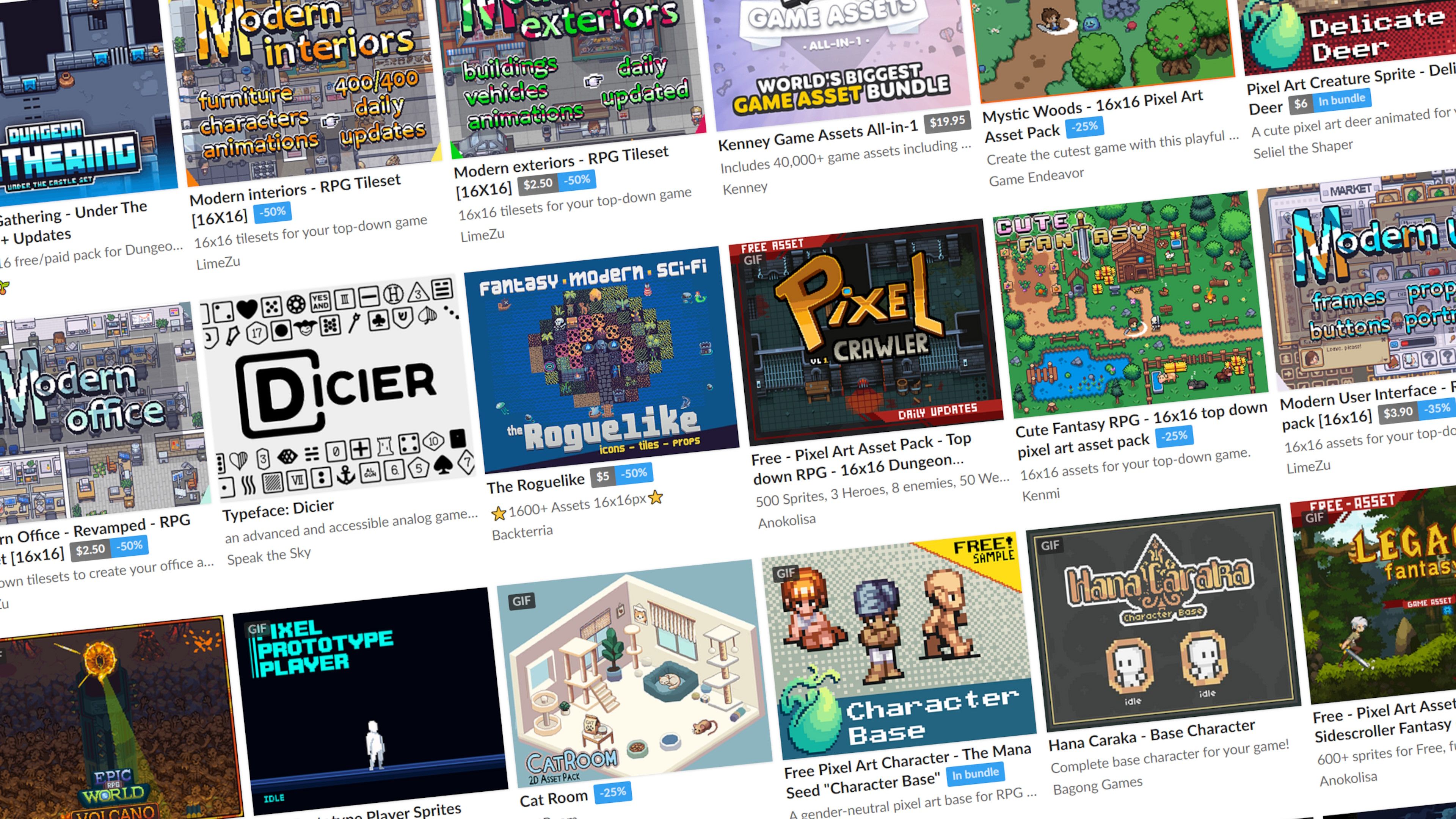
The supplied PC Gamer page includes the required image context of an itch.io assets page tagged with “no AI,” and Polygon notes that itch.io already asks developers to disclose AI usage. In the X replies preserved with itch.io’s post, users suggested stricter upload limits, penalties for accounts whose uploads all carry AI disclosures, a default no-AI filter, and community-rated notes on pages. Another user wrote that browsing the new game assets page had become “impossible” without enabling the “no AI” filter.
Those reactions are community comments, not platform policy. They are useful because they show where frustrated users are looking for relief: upload throttles, default filtering, disclosure enforcement, and community annotation. Each tool has tradeoffs. A no-AI filter gives players a clearer route through the catalog, but only if disclosure is accurate and enforcement is meaningful. Upload limits can slow spam, but they can also punish legitimate teams releasing asset packs, jam collections, translations, or episodic builds. Community notes can identify bad actors, but they introduce moderation burdens of their own.
The deeper issue is that filters are defensive systems. They ask players and developers to compensate for a supply shock after it reaches the storefront. If AI-generated pages make up the majority of new submissions, as Polygon reported itch.io replies indicated, then discovery cannot be solved only at the point of browsing. The platform also has to decide what kind of friction belongs at the point of upload.
For developers, the meta shifts from publishing to proof
Indie developers already know that releasing a game is not the same as finding an audience. The itch.io game pages doubled figure sharpens that reality. When daily supply jumps from roughly 3,000 to more than 6,000 pages, according to Polygon’s reading of itch.io’s graph, the old assumption that presence on a platform creates some baseline chance of discovery becomes weaker.
The practical adjustment is strategic rather than cosmetic. Developers using itch.io now have stronger reasons to make provenance clear: show process work, name collaborators, disclose AI use where relevant, maintain devlogs, link to playable builds, and cultivate traffic outside the store. None of that guarantees attention, but it creates trust signals in an environment where players may increasingly scan for signs that a page is low-effort or machine-generated.
There is a fairness problem here. Handmade developers may have to spend more time proving authenticity because the storefront has become noisier. That is a tax on the very creators itch.io is known for supporting. Polygon’s description of itch.io as a home for student work, jams, higher-profile indies, and charity-bundle games is important because those scenes depend on discoverability that does not require a professional marketing apparatus. If discovery tilts toward whoever can publish the most pages or manipulate tags most aggressively, the strategic advantage moves away from craft and toward volume.
For players, the safest read is to treat store pages as claims, not guarantees
Players looking for AI games storefronts to sort themselves out should expect an uneven period. itch.io’s public statement confirms a sudden increase in game-page creation. Reporting from Polygon says downloads and purchases did not rise at the same pace and that itch.io replies pointed to AI projects as the majority of the new pages. What is not confirmed is a neat number for how much of the catalog is AI-generated, how much is malicious spam, how much is harmless experimentation, or how much is commercially successful.
That uncertainty changes how players should browse. Tags, screenshots, and descriptions are useful, but they are no longer enough on their own when page volume can scale so quickly. Recent comments, devlog history, external creator profiles, demo availability, and transparent disclosure become more important signals. A project using AI is also not automatically identical to a scam or a bad game, but hidden or vague AI usage gives players less information with which to judge value, labor, and originality.
The same caution applies to broader claims about Steam, Roblox, and other creator-driven hubs. Steam is specifically raised in the supplied reporting as a parallel discovery concern, especially around crowded indie visibility and AI-made competition. Roblox is part of the broader storefront and creator-platform debate, but the sources here do not provide a matching Roblox dataset. The responsible takeaway is narrower and more useful: itch.io has produced a rare public signal that page supply can spike dramatically without a matching rise in player activity, and that is exactly the kind of imbalance that damages discovery systems.
The open-storefront bargain is being renegotiated in public
itch.io’s challenge is difficult because its openness is also its identity. Heavy restrictions could protect browsing quality while making the platform less welcoming to experiments, game jams, and first-time creators. Light restrictions preserve access but risk burying the work that made the storefront valuable in the first place. That is the balance every open or semi-open game platform now has to revisit as generative AI lowers the cost of filling shelves.
The next meaningful developments to watch are concrete policy changes rather than vibes: whether itch.io changes upload limits, makes no-AI browsing options more prominent, strengthens AI disclosure enforcement, alters tag visibility, or publishes more data about page creation, downloads, purchases, and removals. For Steam, the equivalent questions revolve around how Valve surfaces demos and manages cloned or AI-heavy projects. For Roblox-style ecosystems, the question is how recommendation systems protect player trust when creation tools accelerate.
For now, the confirmed story is simple and serious. itch.io says daily game-page creation has doubled in two months. Reported follow-up comments say downloads and purchases have not doubled. Polygon reports that itch.io indicated AI projects make up the majority of the new pages. That combination turns itch.io AI slop from a complaint about taste into a storefront discovery problem, one that affects players trying to browse, developers trying to survive, and platforms trying to keep openness from becoming noise.