
What Iron Galaxy’s latest restructuring reveals about the shrinking safety net for support studios, the pressure on live service pipelines, and which partnerships could feel the impact.
Iron Galaxy Studios has long been the name you saw in the credits after the main splash screens went by. From BioShock and Batman to Destiny, Fallout 76, Apex Legends and the PC versions of The Last of Us, the Chicago based company built its reputation on being the team that showed up, stabilized, optimized and shipped. In early 2026, that reputation now sits under the shadow of another major round of layoffs and a structural reset that says as much about the state of AAA support work as it does about one studio.
Another cut after “last resort” layoffs
According to multiple reports and Iron Galaxy’s own public statement, the company is undergoing a new wave of layoffs that could reach roughly 90 employees, on top of the 66 staff cut in 2025. Management framed last year’s reductions as a last resort, but the studio now says even those measures were not enough to keep its previous headcount sustainable.
The messaging has shifted from temporary crisis language to an acceptance that the pandemic boom is not coming back. Iron Galaxy describes the market as a new normal, with slower growth, more cautious greenlighting by publishers and a different pattern in how players spend time and money in games. For a studio whose business model is tightly interwoven with publisher pipelines, that shift hits directly at capacity planning and staffing levels.
A portfolio built on being everyone’s problem solver
Iron Galaxy is not a household name in the same way as the IP owners it works with, but its project list over the last decade reads like a tour through modern AAA development. The studio has supported or co developed work on BioShock 2, various Batman Arkham titles, Destiny, Fallout 76, Apex Legends, Overwatch and multiple other blockbuster franchises. Its engineers and designers are often brought in to handle platform ports, performance work, content support or live service feature delivery.
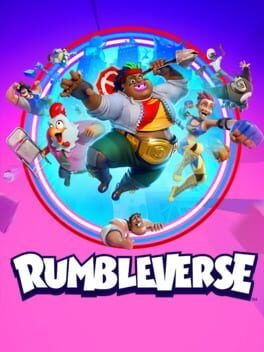
The company has also pushed its own projects. It handled later seasons of Killer Instinct, brought back Tony Hawk’s Pro Skater with a modern collection, and created Rumbleverse, a wrestling themed brawler royale that launched in 2022 before winding down support in early 2023. That mix of original IP and contracted work once looked like a resilient hedge. Now, with original projects having short lifespans and publishers tightening external budgets, even a diversified support studio is exposed.
What the restructuring really says about support work
The most important detail in Iron Galaxy’s public comments is not the headcount number but the idea that the business never really returned to pre 2020 conditions. For a co development specialist, that translates into fewer overlapping contracts, more gaps between milestones and less appetite from publishers to fund surplus capacity that sits idle while scopes change.
Support studios operate on a different risk profile than primary IP owners. Their revenue depends on being staffed up enough to respond quickly when a partner needs help, yet lean enough that idle time does not sink margins. The last few years of rapid expansion across the industry encouraged many of these teams to scale up aggressively. Live service roadmaps were expanding, new platforms were launching, and publishers were comfortable outsourcing large chunks of work.
By 2026, the reverse is true. Fewer live service bets are being made, and those that exist are being managed more conservatively. Internal teams at major publishers are being asked to absorb more responsibility as leadership looks for clearer control over costs and schedules. For Iron Galaxy, that seems to mean fewer large simultaneous engagements and less visibility into long term work. The result is a forced resizing of the studio to a footprint that can be fully utilized by confirmed contracts rather than speculative pipeline.
Co development pressures heading into 2026
Iron Galaxy’s pivot reflects a pattern that other support heavy studios are also confronting. Co development partners are facing several overlapping pressures.
First, live service games are still central to publisher strategy but are no longer treated as endlessly expandable content machines. Roadmaps are being trimmed and experimental modes are shelved more quickly. That means fewer large scale, multi year external contracts for seasonal content, event pipelines or platform specific ports. When a game like Apex Legends or Overwatch slows its cadence or narrows platform expansion, the knock on effect hits the vendors and support studios that previously helped deliver those updates.
Second, premium blockbusters are increasingly expensive but also more concentrated. When a publisher decides to focus its resources on fewer tentpole releases each year, there are fewer parallel projects needing external help at the same time. A studio like Iron Galaxy that once could juggle multiple AAA partnerships in different phases may now find that the demand curve is lumpy rather than steady, creating utilization problems that make large permanent teams harder to justify.
Third, risk aversion around ports and PC releases is rising. High profile PC launches have been scrutinized for technical issues, and publishers are reacting by narrowing the number of vendors they trust or choosing to delay ports instead of running them in lockstep with console versions. Iron Galaxy has been one of the go to names for PC conversions and optimization work, but when the volume of parallel porting projects shrinks, that specialization becomes less stable as a primary revenue driver.
Which live projects and partnerships could feel the impact
Iron Galaxy’s public statements about the restructuring are careful not to name specific partners, which is typical for a studio whose business is built on long term trust. Still, its past and recent project history offers some guideposts on which relationships are most likely to be affected by a smaller headcount and reorganized teams.
The first category is active or ongoing live service support. Franchises like Apex Legends, Fallout 76 and Overwatch exemplify the sort of work Iron Galaxy has contributed to in the past. These games are maturing, not expanding at the pace they once did. A leaner Iron Galaxy suggests that where it continues to assist, it will probably focus on narrower, high leverage tasks rather than broad content production. That might mean feature specific engineering support, platform performance work for new hardware revisions or targeted optimization passes instead of whole season pipelines.
The second category is complex multi platform releases from major single player or hybrid franchises. Iron Galaxy’s involvement in PC versions of The Last of Us titles illustrates the kind of porting and technical triage work it can deliver. As its team shrinks, it becomes more difficult to anchor several huge cross platform efforts under one roof at the same time. That in turn could encourage publishers to spread work across multiple vendors, pull more of it in house or reduce the ambition and timing of simultaneous launches.
The third category concerns emerging or experimental projects, such as new IP or unusual platform combinations where publishers once relied on experienced support partners to lower risk. With fewer staff, Iron Galaxy is likely to be more selective about these kinds of engagements, prioritizing contracts that provide clearer, longer term revenue over shorter experiments. For external partners, that reduces the pool of seasoned co developers willing to jump onto atypical or fast pivoting projects, which could slow innovation at the edges of big portfolios.
A changing role for trusted specialists
Iron Galaxy’s stature in the industry has been built on reliability. Other studios know that when its logo appears in the credits, late game technical fires were probably being put out. The new layoffs do not erase that reputation overnight, but they do change the scale at which Iron Galaxy can operate. A smaller studio will likely mean fewer simultaneous AAA partnerships and a tighter focus on a core set of recurring clients.
For the broader co development ecosystem, the signal is clear. The safety net that external support teams used to represent is stretched thinner in 2026. Publishers may still need expert partners for spikes in workload and specialized tasks, but they will find fewer large scale support studios with surplus capacity waiting in reserve. Iron Galaxy’s restructuring is one of the clearest signs yet that the post boom correction has reached even the most established names in contract development.
In practical terms, players are unlikely to see immediate, obvious changes. Games will still launch, patches will still roll out, and credits will still feature a long list of studios. The real shifts are happening in how those relationships are structured behind the scenes. For Iron Galaxy and its peers, surviving this period means right sizing teams, tightening focus and rethinking what it means to be the studio that quietly ships everyone else’s games.