
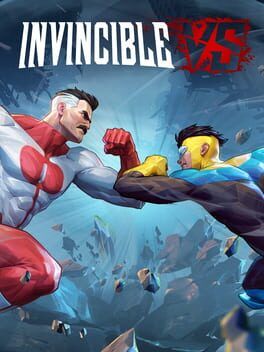

Quarter Up breaks down how Invincible VS turns graphic violence, reactive tag-team combat, and layered onboarding tools into a distinct identity in a crowded licensed fighter scene.
A Different Kind Of Licensed Brawler
Invincible VS arrives in a fighting game landscape already crowded with brands. From Dragon Ball and Naruto to Mortal Kombat tie-ins, players are used to flashy supers and familiar faces stitched onto familiar systems. Quarter Up, the in-house Skybound studio behind Invincible VS, clearly knows that just putting Omni-Man on the box is not enough.
In interviews, executive producer Mike Willette, game director Dave Hall, and technical director Bill Merrill keep circling the same trio of ideas: a combat system built around constant interaction, violence that actually serves gameplay, and onboarding tools that try to welcome both genre diehards and fans arriving purely from the comic or Prime Video series. Invincible VS is trying to be a legitimate tag fighter first and a piece of Invincible merchandise second.
Owning The Violence Instead Of Hiding Behind Cutscenes
Invincible as a property is synonymous with gore. The show’s most talked-about moments are a montage of bodies going through buildings, snapped bones and blood-slicked train carriages. Translating that into a playable format is tricky. Too little and the game feels off brand. Too much and matches risk turning into slow, cinematic splatter reels that only look like the show without actually playing well.
Quarter Up’s solution is to push the brutality into the core of the play experience instead of reserving it for canned supers. Limbs break mid-combo, faces swell and bruise as rounds go on, and stage destruction happens in the same instant you are hit-confirming your string. The team repeatedly emphasizes that the goal is to preserve match flow. You are not pausing to watch a movie of Omni-Man ripping someone apart, you are buffering your next tag or boost while that dismemberment is happening.
This is where Invincible VS starts to separate itself from other licensed fighters. A lot of adaptations lean on high-budget cinematics to sell the fantasy, but they keep the underlying inputs safe and slow. Invincible VS still wants the spectacle, but it wants it to come from what expert players are doing in real time, not what a pre-rendered cut-in is showing.
“Two-Way Interactions” In A 3v3 Tag Shell
On the surface, Invincible VS looks like another 3v3 tag fighter. You pick a trio of characters, you swap them in and out, you juggle opponents until a health bar disappears. Hall and Willette are clear that the game’s real identity lives one layer deeper in what they call “two-way interactions.”
Instead of the one-player-vs-training-dummy feel that some tag fighters drift into when a combo starts, Invincible VS wants defending players to have meaningful decisions even when they are the ones getting hit. Meter-based escape options, air tech choices, wakeup timings and the boost system give players chances to wriggle out, gamble on a reversal, or at least force the aggressor to adjust.
It is not a brand-new concept, but the priority is unusual for a licensed game. Hall talks about wanting every sequence to feel like a back-and-forth, even when someone is clearly in control. That philosophy also informed the team’s reaction to beta feedback. When testers began finding easy “touch of death” routes, Quarter Up dug into damage scaling, increased punish windows for unsafe specials, and tried to make sure that the optimal game plan is not simply “get in once, then run autopilot until victory.”
The Killer Instinct pedigree the studio carries matters here. That game thrived on aggressive, high-commitment offense that still let defenders swing momentum back with breakers and counters. Invincible VS borrows that idea of constant threat on both sides. It is a way of making the hyperviolence itself feel responsive rather than oppressive.
Teaching New Players Without Flattening The Skill Ceiling
For many people, Invincible VS will be their first modern tag fighter. They will show up because they saw the show or read the comics, not because they know what a reversal window is. Quarter Up has been upfront that accessibility features and onboarding tools are core pillars, not last-minute menu toggles.
At the surface level, there are familiar comforts. Auto-combos let newcomers mash a single button chain and still see their favorite character launch opponents or end in a flashy special. Simplified chains reduce awkward link timings. The game clearly labels special move inputs and offers an approachable tutorial that covers basic movement, blocking and tag mechanics.
Underneath that, though, the systems are far from shallow. The combo rules let you move from normals into specials and back again. The boost system modifies how attacks behave, stretching routes or changing properties at the cost of resources. Advanced players can squeeze out extra damage by timing cancels precisely or routing into assists at specific heights. Frame data is available in training, along with recording and playback tools and a customizable dummy that lets you lab punishes or defensive options.
This creates the kind of layered onboarding that most licensed games do not attempt. Newcomers can have fun on day one with big chains and recognizable super moments. As they spend more time, the game nudges them toward lab work and system understanding without hiding that depth behind obscure community tech.
Onboarding As A Bridge Beyond Invincible’s Core Audience
The real test is whether those tools can pull in players who would usually bounce off fighters entirely. For someone who only knows Invincible from streaming, terms like “plus on block” or “OTG” mean nothing. Quarter Up seems to recognize that, and the interview hints at a philosophy that treats onboarding as more than a static tutorial.
Training mode hooks directly into ranked matchmaking so you can practice while in queue instead of staring at a lobby. The game supports frame data overlays and situational recordings right out of the box, a feature that many hardcore fighters do not launch with. Arcade-style modes and character-specific endings give solo-focused players a way to learn movesets in a low-pressure environment while still getting Invincible-style story beats.
Critically, the team talks about not wanting the gap between “I like the show” and “I can survive in online matches” to feel impossible. The auto-combo approachability, the clear punish windows and the fast, readable feedback during combos all work in service of teaching without condescending. When you lose, in theory, you should have some idea of why.
If Invincible VS can actually deliver on that loop, it positions itself as a genuinely welcoming entry point for genre outsiders. It will not replace something like Street Fighter 6 for competitive purists, but it can be the first serious tag fighter that a comic fan learns to understand rather than just button through.
Licensed Fighter, Tournament Aspirations
All of this exists inside a game that very clearly wants a life beyond launch week hype and accolades trailers. The developers speak openly about targeting tournament play and long term balance. There is a commitment to quick fixes for infinites or game-breaking tech, paired with a slower, more cautious approach to broad balance passes as the meta settles.
Post-launch DLC plans, including Year 1 characters like Immortal and Universa, reflect that long view. A growing roster not only keeps Invincible fans engaged with new faces, it also gives competitive players fresh matchups to solve. Strong online features at launch, 60 FPS across platforms, and platform-specific optimizations like higher dynamic resolutions on PS5 Pro are all the kind of infrastructure decisions that matter if you want your game on stage at events rather than just on a shelf next to the Blu-rays.
In that sense, Invincible VS is less an experiment in fan service and more a bid to stand shoulder to shoulder with the genre’s regulars. The Invincible license is the hook, not the whole pitch.
Can Invincible VS Stand Apart In The Long Run?
With an accolades trailer already showcasing strong critical reception, Quarter Up’s approach appears to be landing. Reviewers have praised the two-way combo game and the thrill of those violent, momentum swinging exchanges, while sometimes noting stiffness in animation or gaps in explaining deeper risk-reward nuances.
Those critiques highlight the tightrope Invincible VS is walking. If the onboarding stops at “teaching inputs” instead of teaching decision making, casual players might never fully appreciate what makes the system special. If the brutality overshadows readability, newcomers could misinterpret chaotic scrambles as unfairness instead of recognizing the options they had.
Yet the framework is promising. By baking brutality into moment-to-moment play, focusing on reactive, interactive combat, and treating onboarding as an evolving ladder rather than a single tutorial, Invincible VS is doing more than riding the wave of a hot license. It is trying to invite a broader audience into the kind of expressive, back-and-forth fighting game that usually only seasoned players stick with.
If it succeeds, Invincible VS could be remembered as the game that turned a notoriously violent superhero universe into one of the more approachable entry points to high level tag fighters, instead of just another brand on the character select screen.