
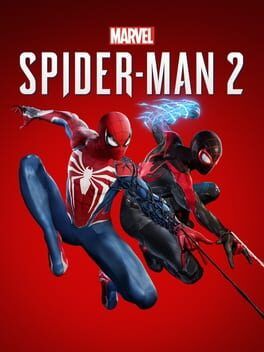

Spider-Man: Brand New Day director Destin Daniel Cretton says Insomniac’s games directly inspired stunt ideas, showing how the PlayStation series has reshaped expectations for Spider-Man movement, tone, and action.
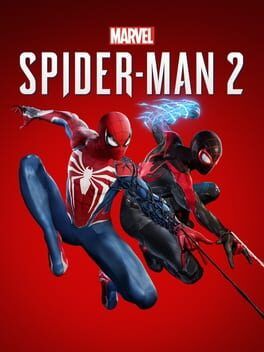
Image: IGDB
Store links: Marvel's Spider-Man 2 on Steam
Insomniac’s Spider-Man has moved from reference point to action blueprint
Spider-Man: Brand New Day director Destin Daniel Cretton has confirmed that Insomniac’s Spider-Man games were part of the movie’s creative reference pool, with the clearest influence coming from the stunt department. In an interview with Polygon, Cretton said the team drew inspiration from the video games alongside Spider-Verse and previous live-action Spider-Man films. When asked directly about the games, he said he is “not a gamer” but has played one, and that he surrounded himself with people who were far deeper into them.
The concrete detail is the revealing part. According to Cretton, people in the stunt department loved playing Insomniac’s Spider-Man games, captured gameplay, brought those screen grabs into production, and asked, “Can we pull this move off?” He called that “a great inspiration for things.”
That is a sharper development than a director saying he likes a game on a press tour. It suggests the PlayStation series has become a practical visual language for Spider-Man action, especially for movement that has to sell speed, impact, aerial control, and personality in the same beat. The tension for Brand New Day is obvious: live-action Spider-Man now has to compete with a version of the hero that players have spent years controlling directly.
The games changed what Spider-Man movement is expected to feel like
Insomniac’s Marvel’s Spider-Man, Marvel’s Spider-Man: Miles Morales, and Marvel’s Spider-Man 2 built much of their appeal around animation readability. The player has to understand a dodge, a swing arc, a web zip, a dive, a launch, or a midair transition instantly, because the games ask players to perform those moves at high speed. Push Square’s report highlights that fluid animation across combat and web swinging as one of the series’ defining strengths.
That is where the Spider-Man games movie influence becomes especially interesting. A movie can cut around an impossible motion, hide a transition, or emphasize spectacle over continuity. A game has to make the same fantasy repeatable. Insomniac’s Spider-Man succeeds when a rooftop dive, a last-second dodge, or a web-assisted takedown feels both exaggerated and legible. That gives stunt teams a catalog of poses, timing, and silhouettes that already communicate “Spider-Man” to millions of players.
Cretton’s Polygon comments do not confirm that any specific move from Marvel’s Spider-Man 2 or the earlier games appears in Brand New Day. They do confirm a working process: the stunt department studied gameplay captures and tested whether those motions could translate into live-action choreography. That distinction matters. This is not proof of one-to-one adaptation, but it is evidence that Insomniac’s animation grammar has become part of the live-action conversation.
Brand New Day is chasing a first-person rush, not only a comic-book pose
Polygon also asked Cretton about the movie’s web-slinging, and his answer points to a broader approach than simple game references. He said the team looked at wingsuiters and parkour athletes online, paying attention to athleticism as well as how those athletes capture motion with GoPro cameras and selfie sticks. Cretton said that research informed lens and angle choices meant to put the audience with Spider-Man, giving viewers the rush of dropping from a skyscraper and swinging at 200 miles per hour.
That lines up with the expectations Insomniac helped sharpen. In the games, swinging is not background transportation. It is rhythm, acceleration, altitude management, camera confidence, and release timing. Players know when momentum feels fake because they have steered through it themselves. A movie does not need to simulate a controller in the viewer’s hands, but Brand New Day appears to be aiming for the same sensation of embodied speed.
Polygon’s preview of the first 30 minutes described the film as both a natural evolution of the Tom Holland Spider-Man series and a leap forward in style and tone. That is Polygon’s assessment, not a studio claim, but it gives Cretton’s comments more weight. The influence he is describing is not limited to a cute nod for PlayStation fans. It sits inside a broader attempt to refresh how Holland’s Spider-Man moves on screen after three Jon Watts-directed films.
Fans are already reading the trailer through Insomniac’s combat system
The audience is making the connection before the film is even out. ScreenRant reported that fans have pointed to trailer and TV spot moments that resemble Insomniac-style traversal and combat animations. The examples cited include a spinning dive into webbing attacks that fans compared to the Web Blossom ability from Marvel’s Spider-Man, a rooftop backflip that viewers connected to in-game pursuit animation, and an evasive low flip while dodging gunfire that some fans compared to a well-timed Perfect Dodge.
Those are fan readings of promotional footage, not confirmed frame-by-frame lifts. ScreenRant also notes that Web Blossom did not return in Marvel’s Spider-Man 2, which makes the comparison more about the larger Insomniac visual vocabulary than a specific current-game feature. Still, the reaction shows how players now parse Spider-Man action. They are not only asking whether the suit looks right or whether the web-swinging is fast. They are reading combat rhythm, dodge timing, aerial control, and finisher-like body language.
That creates an unusual feedback loop. Insomniac’s games drew from decades of comics, animation, and film language. Now a new live-action movie is being discussed through the mechanics and animation priorities of those games. Cretton’s confirmation gives that fan conversation a factual anchor: people on the movie’s stunt side really were bringing gameplay references into the room.
Sony’s cross-media timing is part of the story
There is also a business layer here, and it should be kept separate from the creative claim. Push Square reports that Marvel’s Spider-Man 2 is set to receive the Brand New Day suit as free DLC on PS5 on 28 July, shortly before the movie’s debut. Push Square also reported separately that Tom Holland and Zendaya have praised the Marvel’s Spider-Man games, with Holland calling them “absolutely sensational.”
Those details do not prove the movie was shaped by marketing needs. Cretton’s Polygon interview describes a creative and stunt-driven use of the games. At the same time, the public rollout shows the obvious advantage of keeping Sony’s live-action Spider-Man films and PlayStation’s Spider-Man games in conversation. A free movie suit in Marvel’s Spider-Man 2 gives players a low-friction reason to return to the game. Cretton’s comments give moviegoers a reason to look at Brand New Day’s action with the games in mind.
The useful way to read the Insomniac Spider-Man Brand New Day connection is as both creative influence and platform synergy. The confirmed creative point is that gameplay captures helped inspire stunt ideas. The confirmed publishing point, via Push Square’s reporting, is that Marvel’s Spider-Man 2 is also getting a free Brand New Day suit. The interpretation is that Sony benefits when the movie and game reinforce each other’s version of Spider-Man as the contemporary default for motion, athleticism, and cinematic action.
The unanswered question is whether live action can match the game’s rhythm
For players, the challenge is not whether Brand New Day can reference a pose from Marvel’s Spider-Man. The harder test is whether a live-action sequence can preserve the rhythm that makes Insomniac’s Spider-Man feel right: the snap into a dodge, the suspended beat before impact, the quick reset after a web strike, the way a swing feels dangerous only if the camera lets the fall breathe.
Cretton’s comments suggest he understands that the camera is as important as the move. His references to wingsuit footage, parkour videos, GoPro shots, selfie-stick angles, and lens choices all point toward action designed around sensation rather than only choreography. That is the space where Spider-Man lives or dies on screen. Too polished, and he becomes weightless. Too grounded, and he loses the impossible elasticity that separates him from other street-level heroes.
What remains unconfirmed is how much of that approach survives across the full film. Polygon’s source material is based partly on an early preview and an interview, while the fan comparisons cited by ScreenRant come from trailers and TV spots. The full movie will determine whether the Insomniac influence is felt as a few recognizable moves or as a sustained action philosophy.
A practical note for Marvel’s Spider-Man 2 players
If this news sends you back to Marvel’s Spider-Man 2, the clearest confirmed tie-in is the Brand New Day suit update. Push Square reports that the suit is coming to the PS5 game as free DLC on 28 July, ahead of the film’s theatrical debut. The source material provided does not list a price because the suit is described as free, and it does not provide new platform information beyond Marvel’s Spider-Man 2’s PS5 context in Push Square’s report.
There is no confirmed Brand New Day story DLC in the provided sources, no announced gameplay expansion, and no claim that the movie’s stunts are being added back into the game. What players can reasonably expect, based on the reporting, is a cosmetic crossover suit and a film whose director has openly acknowledged the games as a stunt and movement reference.
That may be enough to make the next rewatch or replay feel different. Insomniac’s Spider-Man games are no longer sitting off to the side as licensed adaptations. According to Cretton’s own account to Polygon, they are part of the reference stack for how modern Spider-Man action is built, tested, and imagined in live action.