
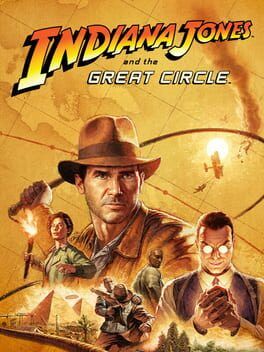
MachineGames’ cinematic Indy adventure hits Nintendo’s new hybrid hardware. Here is how the Switch 2 version stacks up to PS5 and Xbox, what DLSS is doing behind the scenes, and what it means for future blockbuster ports on the system.
A New Indy, A New Nintendo Handheld
Indiana Jones and the Great Circle was already a visual showcase on Xbox Series X|S and PC, with ray traced global illumination, dense environments, and cinematic presentation. Bringing that to a portable system at launch is exactly the kind of stress test fans wanted for Nintendo Switch 2, and MachineGames has delivered a port that feels surprisingly close to the living room versions while making smart cuts to fit the hardware.
Across reports from Video Games Chronicle, Eurogamer, and Nintendo Life, a consistent picture emerges. Switch 2 runs Indiana Jones at 1080p when docked and 720p in handheld, targeting a stable 30 frames per second in both modes. That is a big departure from the 60 fps targets on PS5 and Xbox Series X|S, but the remarkable part is how much of the cinematic presentation survives on a smaller, less power hungry device.
How The Switch 2 Version Looks Next To PS5 And Xbox
On PS5 and Xbox Series X, Indiana Jones and the Great Circle aims for 60 fps with dynamic resolution and ray traced lighting. Digital Foundry’s work on those platforms points to Series X often hovering around a high internal resolution close to 1800p, with RT global illumination intact and a stable frame rate. PS5 is broadly comparable, trading a slightly lower average resolution for equally smooth performance. Both platforms deliver crisp image quality on a 4K display, even when dynamic resolution dips.
Switch 2 takes a different route, locking to 30 fps and leaning heavily on reconstruction. The native pixel counts sit lower, but with DLSS-style upscaling engaged Nintendo’s machine produces a surprisingly clean 1080p output in docked mode. Side by side with PS5 or Series X on a big screen you can spot the differences. Fine foliage, distant props, and incidental clutter tend to fade in earlier on the big consoles, while Switch 2 pushes back the draw distance for small objects, uses simpler shadow filtering, and drops the more advanced ray tracing routines entirely.
Yet character models, major structures, and core materials hold up well. Indy’s leather jacket, facial animation, and the intricate indoor sets in places like the Belvedere museum or the Vatican feel close enough that you do not immediately read the Switch 2 version as a substantially downgraded port. It looks more like a high quality console version configured for a 30 fps “quality mode,” rather than a bespoke last gen cut down.
DLSS And Image Quality On A Hybrid
The real star of the Switch 2 port is Nvidia’s upscaling tech. DLSS reconstruction is doing heavy lifting both docked and handheld. Docked at 1080p, the image remains sharp enough that only direct comparisons reveal the softer edges and slightly noisier fine detail that come from reconstructing from a lower native resolution.
In handheld mode the limits are clearer on paper. The target is 720p, and the internal resolution can dip below that in busier firefights or larger exterior hubs. In practice, reviewers found that the smaller screen, combined with motion blur and filmic post processing, masks a lot of these drops. The end result is a softer look than docked, but one that still reads as a big budget cinematic shooter on a portable screen.
There are occasional tells. Distant geometry can smear during fast camera pans, and thin details like wires, fences, or foliage can shimmer more than on PS5 or Xbox. Still, compared to the temporal reconstruction and FSR solutions used on many last gen ports, this is a big leap for a Nintendo handheld. Indiana Jones turns into a quietly strong advertisement for DLSS as a baseline feature of Switch 2’s third party line up.
Performance: 30 FPS Done Right
MachineGames targets a capped 30 fps on Switch 2 instead of chasing 60. That might sound disappointing coming from the current gen console versions, but it is an understandable trade given the need to keep ray tracing, high resolutions, and 60 fps on more powerful machines. On Nintendo’s hardware the main goal is consistency, and for the vast majority of the story the game delivers.
Reports from all three outlets highlight that general exploration, puzzle solving, and combat run smoothly. You move through tombs, rooftops, trains, and jungle ruins without obvious hitching, and camera control feels responsive enough even at 30 fps. There are some dips. Busy hub spaces like the Vatican and crowd heavy sequences can provoke a few dropped frames and visible streaming stutters. Cinematic transitions sometimes hitch as the game streams in heavy assets.
The key point is that these hitches are brief and do not derail the pacing of the adventure. They are noticeable if you are looking for them, especially coming from the 60 fps experience on PS5 or Series X, but they never reach the kind of prolonged slowdown or aggressive blur that plagued bigger Switch 1 ports. For a launch window hybrid version of a cutting edge cinematic game, this is far better than many expected.
Controls, Gyro, And Playing Indy On The Go
Indiana Jones and the Great Circle is built around first person exploration, gunplay, and whip based traversal. That mix can be tricky to translate to a portable system without full size sticks and triggers, yet the Switch 2 version gets several smart control enhancements.
There is support for gyro aiming, which helps offset the looser feel that can come with a 30 fps cap. Subtle wrist adjustments while lining up gunshots or whip targets make combat feel more responsive than standard stick aiming alone. Reviewers also highlight Switch 2’s “mouse like” control option using the upgraded Joy Con hardware. This setup, which allows for more granular pointer style aiming, makes picking up objects, throwing items, and interacting with puzzle elements snappier than you might expect at 30 fps.
Combine those input tweaks with the cinematic camera work and strong audio mix, and the Switch 2 version retains much of the immersion that defined the original releases. Handheld play in particular benefits from closing the distance between screen and eyes. Story heavy segments and quieter archaeological exploration feel well suited to playing on a couch or commute.
What This Port Says About Switch 2’s Third Party Future
Indiana Jones and the Great Circle is not just another big game on Nintendo hardware. It is one of the clearest real world tests of whether Switch 2 can hang with PS5 and Xbox for modern blockbuster releases.
The answer, judging from this version, is that it can, with the right expectations and smart technical choices. When a developer is willing to:
• cap at 30 fps instead of insisting on 60
• rely on modern reconstruction like DLSS instead of native 4K
• pare back expensive features like full ray traced global illumination
it is possible to deliver a cinematic experience that feels fundamentally the same across platforms.
Compared to some of the rough early years of Switch ports, where games like Wolfenstein II or Doom 2016 were forced down to extremely low resolutions and aggressive dynamic scaling, Switch 2 is in a much better place. Indiana Jones joins titles like Cyberpunk 2077, Star Wars Outlaws, and Resident Evil Requiem as examples of “current gen” games that make the jump to Nintendo’s hybrid with fewer compromises and far more consistent performance.
There are limits. You are not going to see parity with PS5 Pro or high end PC in raw resolution, and certain visual showcases built entirely around ray tracing will still demand heavier cuts. CPU bound games with huge systemic simulations might also require more intrusive tweaks. But for cinematic, corridor heavy adventures and more guided open areas, Switch 2 now looks viable as a day and date target.
The presence of DLSS as a standard tool cannot be overstated. It gives third party studios a straightforward way to scale down internal resolution without throwing away clarity. Combined with a more capable CPU and storage pipeline than the original Switch, that should translate to more ambitious ports with fewer loading hitches and less aggressive visual downgrades.
Verdict: A Promising Blueprint For Portable Blockbusters
Indiana Jones and the Great Circle on Switch 2 is not the definitive way to play MachineGames’ adventure. PS5 and Xbox Series X still rule for 60 fps, higher resolutions, and ray traced lighting. Yet the Nintendo version manages something arguably more important. It proves that a modern, visually rich blockbuster can be brought to a portable hybrid in a way that preserves the core experience.
Docked play delivers a clean 1080p image with mostly stable 30 fps, strong character rendering, and intact cinematic direction. Handheld play sacrifices some sharpness and fine detail, but DLSS and the smaller screen keep the overall presentation impressive. Performance is not flawless, yet the dips are mild enough that they never spoil the ride.
For Switch 2 owners, Indiana Jones and the Great Circle feels like a statement of intent. If this is what big third party ports can look like in the system’s first wave, the outlook for future blockbusters on Nintendo’s new hybrid hardware is unusually bright.