

Verified July 2026 scene codes for The Incident at Galley House, how to enter them in the seance machine, and what early impressions say codes cannot solve.
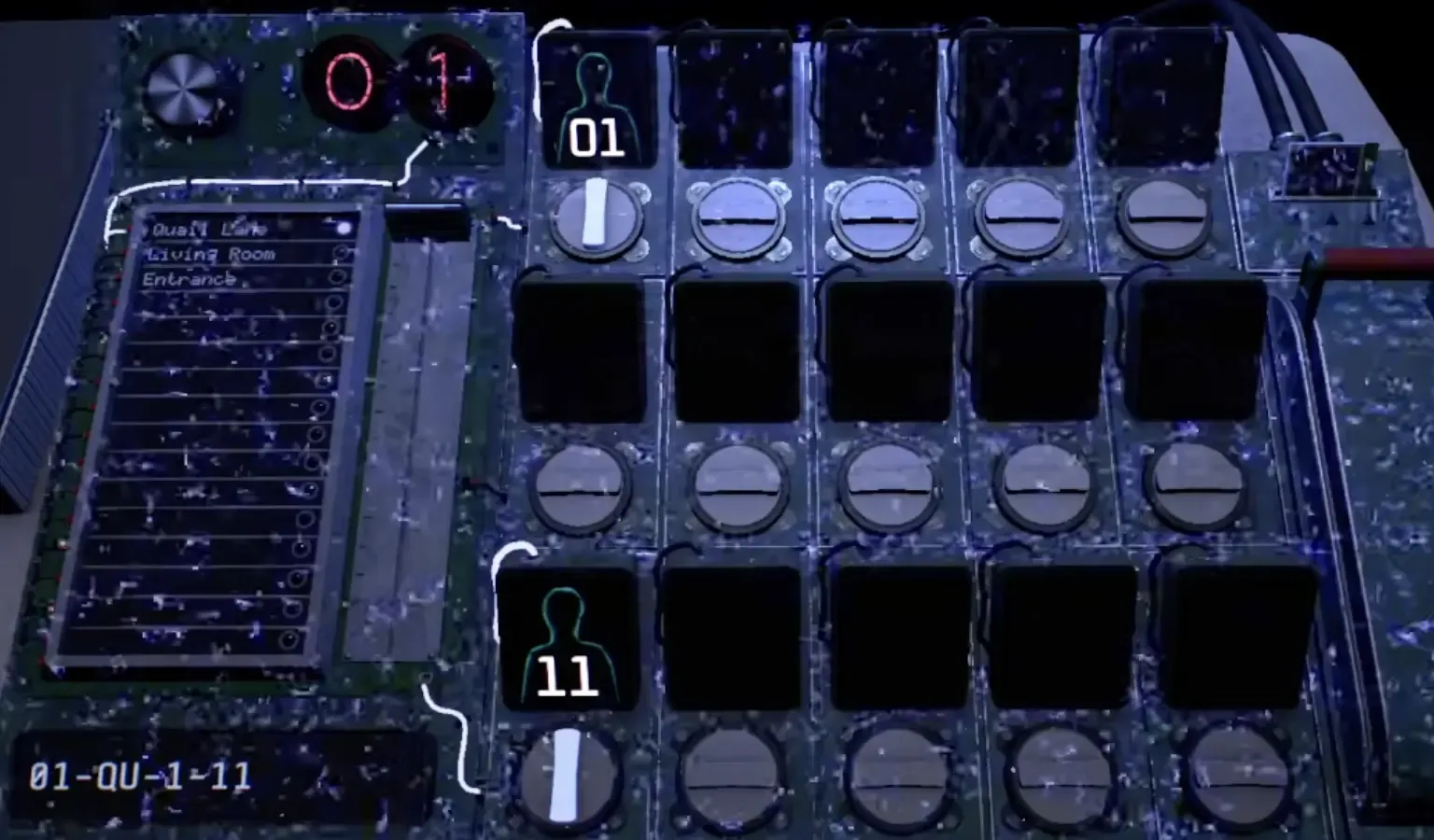
Image: whisperofthehouse.com
The active codes are scene keys, not free rewards
The most important clarification for anyone searching The Incident at Galley House codes is that the confirmed codes in current public guides are puzzle reconstruction inputs, not gift codes, currency drops, or cosmetic reward strings. Last Word on Gaming’s July 17 codes guide, Whisper of the House’s July 16 verified walkthrough hub, GameSpew’s walkthrough, and Ninewiki’s achievement guide all describe codes as the format used to unlock memories through the game’s machine: a time slot, a two-letter location, and every person present in the scene.
That creates an unusual search problem. A player looking for Galley House codes July 2026 may be expecting a familiar live-service list of active and expired rewards. The available source material does not support that. None of the provided guides, wiki pages, or impressions identify promotional code redemption, limited-time items, launch bonuses, or active Galley House rewards in the usual sense. The confirmed “reward” for a valid code is access to a reconstruction scene, which can advance the investigation, reveal new evidence, or unblock a stuck deduction.
The game itself, according to Whisper of the House and the Galley House wiki, is a narrative deduction mystery developed by William Rous and Evil Trout Inc. and released on Steam on July 14, 2026. Siliconera describes it as an enhanced re-imagining of William Rous’s earlier free Itch.io game, while Whisper of the House and the wiki frame it as a reimagining, remaster, and expansion of the browser mystery Type Help. Across those descriptions, the central loop is consistent: you play as Reya Beckon, use a seance machine to reconstruct events around the Galley House deaths, and solve progression by understanding who was where and when.
Verified Galley House codes July 2026: what is safe to enter
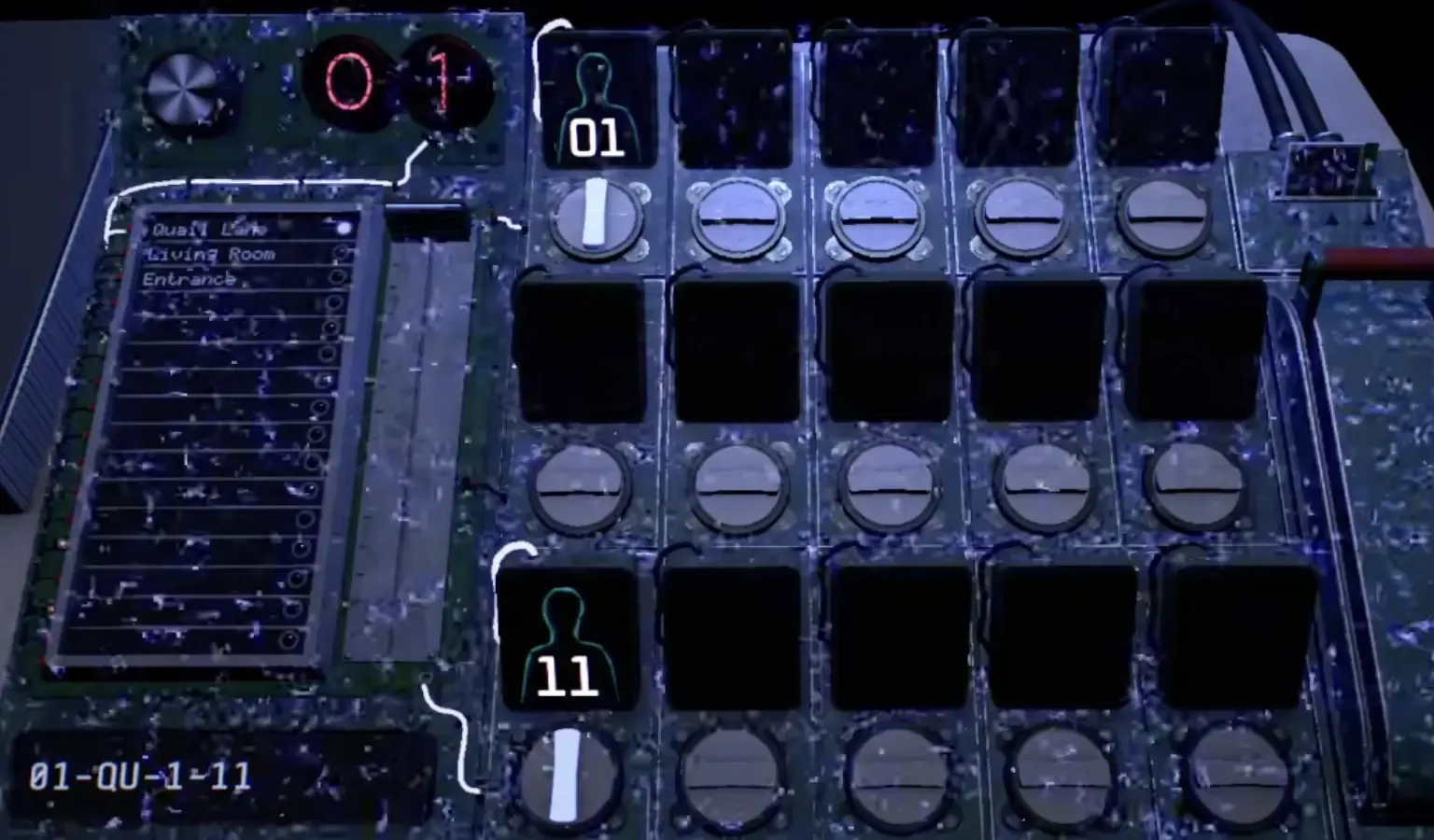
For a spoiler-light starting point, multiple guides agree on the opening reconstruction format. Whisper of the House says the opening scene is 01-QU-1-11, meaning Time 01, Quail Lane, and People 1 and 11. Last Word on Gaming also identifies 01-QU-1-11 as the initial code, derived from the rain, the “sir” address, and the route to the house. Ninewiki says Manual Page 1 gives three early scenes: 01-QU-1-11, 02-EN-1-6-7-10, and 03-LI-1-4-5-6-7-8-9.
Those three codes are the cleanest confirmed early inputs because they are presented by guides as foundational machine setup and first progression rather than late-game answer-sheet material. GameSpew’s walkthrough also lists 01-QU-1-11 and 03-LI-1-4-5-6-7-8-9, though its source text shows 02-EN-1-6 7-10 with a missing hyphen between 6 and 7. Last Word on Gaming, Whisper of the House, and Ninewiki all give that Entrance code as 02-EN-1-6-7-10, so readers should use the fully hyphenated version.
Whisper of the House’s all-scene page states that there are 106 valid reconstructions across the original timeline, hidden victims, modern investigation, and Scene 00. It names three codes most likely to block progress as 01-ST-12, 25-WI-K, and 31-LI-67-70, and identifies the final Scene 00 code as 00-LI-3-5-6-7-8-10-12. Those are confirmed by that guide, but they are also heavy spoilers because they expose hidden identities and late reconstruction structure. If your goal is to preserve the mystery, treat the first three early codes as calibration help and leave the later strings alone until deduction has stopped being enjoyable.
How to redeem Galley House codes in the seance machine
If by “how to redeem Galley House codes” you mean how to make the game accept a scene input, the process begins with the machine rather than an account menu. Ninewiki says the initial setup involves collecting the To-Do List and Manual Page 1 after entering Galley House, turning the generator wheel, getting the Access Card, and placing that card in the machine. During calibration, it says players add the first room codes from the manual, including QU, EN, and LI, with ST immediately useful afterward.
Once the machine is ready, the guides describe every valid reconstruction as the same three-field structure: TIME-LOCATION-PEOPLE. Whisper of the House gives 03-LI-1-4-5-6-7-8-9 as an example, meaning Time 03, Living Room, and People 1, 4, 5, 6, 7, 8, and 9. The Galley House wiki similarly explains that scene tags encode the time period, room, and character presence. The important systems detail is that the people field is not a party list, suspect list, or list of speakers. Whisper of the House says it includes every profile physically present, even if someone is silent or already dead.
That last rule is where many rejected codes come from. Whisper of the House’s guide hub says most failed reconstructions are caused by one missing participant or by a room being remembered differently from where the evidence was found. Ninewiki makes the same practical point, noting that a code can fail because one additional participant is missing even when the time and room are correct. In other words, the machine is not asking whether you understood the most dramatic conversation. It is asking whether you accounted for the full spatial state of the scene.
The system is harsher than it first looks
The Incident at Galley House appears friendly at the surface because its codes are readable. EN is Entrance, LI is Living Room, QU is Quail Lane, ST is Study, KI is Kitchen, DI is Dining Room, BI is Billiard Room, and so on, as listed by GameSpew and the Galley House wiki. Once the room abbreviations are learned, a player can scan a code and understand its basic shape immediately. That readability can make failure feel unfair when the machine rejects something that seems emotionally or narratively correct.
The reason is that Galley House treats reconstruction as a systems puzzle. The wiki says the eleven victims are numbered by death order rather than introduction order, with Victim 11 dying first and Victim 1 last. It warns players not to assume the first corpse they see is Victim 1 because the memory machine deliberately scrambles exposure order. Whisper of the House adds that the code tables use numeric IDs because that is what the machine accepts, and that you do not need to rename every profile before using a list if the person and location have been added.
From a progression perspective, this is the game’s main friction point and its main pleasure. A code such as 01-BI-6-10 is not a password hidden in a drawer. Last Word on Gaming says that Billiards 4 reveals People 6 and 10 were in the billiards room together, which leads to that code. Another example from Last Word is 02-KI-11, derived from Study 06 revealing that Thornton, Person 11, was in the kitchen. These strings are compact solutions to chains of observation, and copying them solves the lock while bypassing the chain.
What codes can fix: stalls, rejected scenes, and spoiler control
Codes are useful when the deduction loop stops producing satisfying progress. Last Word on Gaming explicitly frames its guide around tougher situations where players need help finding the room solution and the code to enter. Whisper of the House separates its help into spoiler tiers, recommending hints first when a reconstruction is being rejected and complete codes only when the player wants a full answer sheet. GameSpew gives a similar caution, telling readers to seek clues themselves and use the list at their own risk because scrolling can reveal spoilers.
That restraint is worth taking seriously. The game’s reward structure is knowledge. A valid code unlocks a scene, and a scene can reveal new movements, identities, physical clues, or future code paths. If you use a full scene list too early, you may still finish the timeline, but you will flatten the investigation into data entry. For players who enjoy RPG quest routing, the better comparison is skipping to the quest-state flag rather than reading a hint for the next objective. It advances the log, but it also removes the small deductions that make the route feel earned.
A practical compromise is to use confirmed early setup codes freely, then switch to diagnostic help when the machine refuses a reconstruction. Check whether the location is the actual scene location rather than the room where you learned the clue. Check whether a silent witness, corpse, or briefly present character belongs in the people field. Check whether the time slot already places a person somewhere else. That advice is supported across Whisper of the House and Ninewiki, and it preserves more of the case than copying all 106 valid reconstructions.
What codes cannot fix: the early narrative friction
The clearest early impression in the provided source material comes from Siliconera, which found The Incident at Galley House beautiful and captivating in its visuals and voice performances, while also calling it frustrating for players who prefer satisfying, clear-cut resolutions. Siliconera praises the puzzle mechanic, search function, tagger, lack of penalties for hints, sound design, spatial audio, and cast performance. It also says the game took around seven and a half hours to beat and that some subplots drop without resolution, leaving less payoff than the writer wanted.
That is the limit of active Galley House rewards as scene codes. They can unlock the next reconstruction, confirm a room, or reveal who was present. They cannot change the tone of the ending, add closure to a subplot, or make the story resolve like a conventional whodunnit. If your friction is mechanical, meaning a rejected code, an uncertain room abbreviation, or a missing participant, the guides are likely to help. If your friction is narrative, meaning you want every character thread tied off cleanly, Siliconera’s impression suggests the answer sheet will not solve that discomfort.
There is also a useful distinction between hints and certainty. Siliconera notes that Galley House offers organizational tools and no penalties for hints, which means using help is not treated as failure by the game. But external full-code lists go further than in-game hinting because they can expose late identities, hidden people, and final-scene composition. For a lore-aware player, the danger is not that the code “spoils the solution” in a single twist. It is that it quietly spoils the evidentiary path, which is where much of the worldbuilding and character context lives.
A patient route for players deciding when to use codes
If you are starting fresh, the safest reading of the available guides is to treat codes as surgical tools. Use 01-QU-1-11, 02-EN-1-6-7-10, and 03-LI-1-4-5-6-7-8-9 if you need the early machine structure confirmed. Learn the room abbreviations from the in-game manual and public room lists. Then, when you hit a rejection, diagnose the failed reconstruction before pasting a full answer. Whisper of the House’s hub recommends starting with hints, moving to all scene codes only when deduction stops being fun, and saving ending explanations until after finishing the modern investigation.
Readers looking specifically for The Incident at Galley House codes should therefore adjust expectations. As of the July 2026 source material provided here, there are verified scene codes and walkthrough inputs, but no confirmed promotional code list, no documented expired reward codes, and no evidence of redeemable freebies. The “active” codes are active because the machine accepts them as valid reconstructions.
That makes Galley House a poor fit for players who want codes to shower them with upgrades, but a strong fit for players who like structured deduction, timeline assembly, and identity mapping. Use codes when the system has become opaque. Avoid them when the only thing standing between you and progress is one more careful pass through the evidence. The machine will accept an answer either way, but the case is built to reward the route you take to get there.