
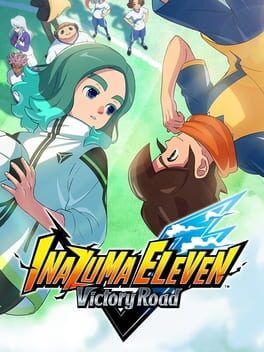
With Inazuma Eleven: Victory Road nearing 1 million sales and a major Ares & Fabled Seed update on the way, Level-5 is already scripting the next game. Here is how Victory Road rebooted the series, what fans want next and why Switch and Switch 2 could be its long-term home as a sports JRPG staple.
Inazuma Eleven has always lived on the overlap between school-club drama and wild, anime-styled football. After years of silence and a famously troubled development cycle, Inazuma Eleven: Victory Road finally arrived and quietly became exactly what the series needed: a reset that respects the past while sketching a new future.
That future is already taking shape. Victory Road is closing in on 1 million copies sold across platforms, Level-5 has announced a substantial Ares & Fabled Seed update, and CEO Akihiro Hino has confirmed he is already writing the scenario for the next game. After a lost decade of delays and reworks, Inazuma Eleven suddenly looks like a long-term player again.
Ares & Fabled Seed: Deepening Victory Road’s Foundation
The newly revealed Ares & Fabled Seed update is the clearest signal that Victory Road is not a one-and-done revival but the start of a new phase for the franchise.
On the Ares side, Level-5 is leaning into nostalgia by expanding the game’s celebration of Inazuma history. Victory Road already shipped with an enormous roster drawn from across the series, but the update digs deeper into the anime eras that defined the brand. More characters, more themed matches and more connective tissue between the original Ares no Tenbin concept and the final Victory Road structure turn the game into something closer to a playable museum of the franchise.
Fabled Seed points in the opposite direction and focuses firmly on the future. The update layers in fresh story content, new scenarios and additional training hooks that reinforce Victory Road’s pitch as a character-driven sports RPG rather than a simple arcade football title. Level-5 spent years rethinking how to blend on-pitch tactics with off-pitch progression, and the added narrative beats and systems give that design more room to breathe.
Paired together, Ares & Fabled Seed show Level-5’s current strategy: keep Victory Road alive with meaningful content, make sure legacy fans feel seen and use the game as a staging ground for ideas that will mature fully in the sequel.
Victory Road As A Reboot: What It Got Right
Victory Road had to achieve a lot at once. It needed to win back players burned by the long delay from the original Ares project, introduce new fans on Switch and modern consoles, and prove that the concept of a football JRPG still has commercial legs. Its near-million sales suggest Level-5 hit that mark.
The biggest success is how it handles tone and structure. The story refocuses on classic youth-sports themes: pressure, expectations, rivalry and friendship. That emotional core grounds the more extravagant special moves and over-the-top match situations. Where some later Inazuma entries drifted into escalation for escalation’s sake, Victory Road feels deliberately paced and willing to slow down for character moments instead of chasing constant escalation.
On the field, the hybrid of real-time movement and tactical command play finds a better balance than older games. Victory Road gives players more direct control while still letting the unique techniques and positional play shine. It is easy for newcomers to pick up but still offers room for fans to optimize formations, build synergy between favorite characters and experiment with unusual line-ups.
The other major win is the sheer density of content. By pulling in thousands of characters from across the series and letting players assemble dream teams that could never exist in the anime canon, Victory Road becomes the definitive crossover for the brand. It reassures long-time fans that their investment in earlier seasons and spin-offs still matters.
Technically, the game is not the most cutting-edge presentation on modern hardware, but it settles into a clean, colorful style that fits both handheld play and docked sessions on Switch. That visual identity feels intentional rather than compromised, which will matter more and more as Level-5 plans the series across the current Switch and the likely more powerful Switch 2.
Hino’s Sequel: A True Reiwa-Era Inazuma
The most important detail from Akihiro Hino’s recent livestreams is not just that a sequel is coming, but that he describes it as a new Inazuma Eleven that begins in the Reiwa era.
Victory Road is a game caught between times. It released in the Reiwa period, but its earliest design documents and the original Ares no Tenbin concept date back to 2016. Hino has been open about that long, difficult development, and his Reiwa comment reads as a promise that the next project will be built fresh instead of reworked from legacy plans.
Crucially, Hino has already started writing the script. For Inazuma Eleven, where off-pitch drama is as important as what happens on the field, having the scenario lead committed early suggests a clearer thematic direction. He has also reiterated that save data from Victory Road will carry forward in some form, hinting at a more direct continuity than the series has sometimes embraced.
The sequel is still at an early stage and likely several years away, but the public confirmation that work is underway turns Victory Road from a comeback into the first pillar of a new arc.
What Fans Want Next From Inazuma’s Follow-Up
With the immediate relief of finally getting a new game out of the way, the community has shifted to talking about what the sequel needs to do.
One recurring request is a stronger narrative throughline that stretches across the whole game rather than leaning heavily on crossover nostalgia. Fans love the huge roster, but many want a tighter main cast with more time to grow, with cameos and legendary players taking a slightly more selective role instead of overwhelming the story.
There is also a clear appetite for deeper tactical systems and more robust online infrastructure. Victory Road’s blend of action and command inputs works, yet players are already theorycrafting how a sequel on more powerful hardware could support smarter AI, richer formations and more expressive team-building. Long-term ranked ladders, seasonal tournaments and co-op club modes are high on wish lists for those who see Inazuma less as a one-off RPG and more as a lifestyle sports title.
Accessibility is another talking point. Victory Road is friendlier than some earlier entries, but a modern sequel on Switch and Switch 2 will need strong onboarding tools if it wants to hook younger players who may know Inazuma only through YouTube clips and not the original DS era. Streamlined tutorials, difficulty options and clearer team-building guidance are all popular suggestions.
Finally, collectors and anime fans are asking for renewed transmedia ambition. Victory Road launched without the kind of synchronized anime push that helped the first games become a cultural phenomenon. If the sequel is going to stake a claim as a Reiwa-era franchise, many players want to see coordinated anime seasons, manga tie-ins and live-service style in-game events that react to new episodes and arcs.
Switch, Switch 2 And The Long-Term JRPG Sports Plan
From a platform perspective, Inazuma Eleven’s future is increasingly tied to Nintendo’s ecosystem. Victory Road already feels designed around handheld-first play habits and short match sessions, and that structure will only make more sense on a potential Switch 2 with better online support and snappier load times.
Level-5’s strategy seems to be to treat Inazuma Eleven as a permanent sports JRPG pillar that can live across multiple hardware generations. Victory Road lays the groundwork with its colossal roster, progression systems and cross-era fan service. The sequel, written from the ground up in the Reiwa context Hino keeps mentioning, can refine those systems for stronger weekly engagement and more sustainable post-launch content.
Switch 2’s rumored performance jump would ease some of the constraints that defined Victory Road. Longer, more cinematic story sequences, more expressive stadium crowds, richer animation on special moves and fully featured online leagues all become more realistic targets. At the same time, retaining Switch compatibility ensures that the young audience that forms Inazuma’s core does not get left behind.
If Level-5 can keep the cadence going with steady updates like Ares & Fabled Seed while slowly teasing the sequel, the series can finally move from cycles of silence and reinvention to something more stable. Regular seasons of content, transferable save data between entries and a clear identity as the go-to fantasy football RPG would give Inazuma Eleven the same kind of long tail that other sports franchises enjoy, but with JRPG drama as its secret weapon.
A Franchise Back On The Front Foot
For years, Inazuma Eleven was defined more by what it might become than by what players could actually hold in their hands. Victory Road changes that conversation. It is a real, substantial game that recaptures what made the series special and proves there is still a market for turn-based emotions mixed with superpowered football.
The Ares & Fabled Seed update promises to deepen that foundation, and Akihiro Hino’s early work on the sequel shows that Level-5 is treating Victory Road not as a swan song, but as the start of a new phase. With the Switch family as its core home and Switch 2 on the horizon, Inazuma Eleven finally has the chance to evolve into what it always looked like on paper: a fixture of the sports and JRPG calendar, not just a nostalgic memory of the DS era.