
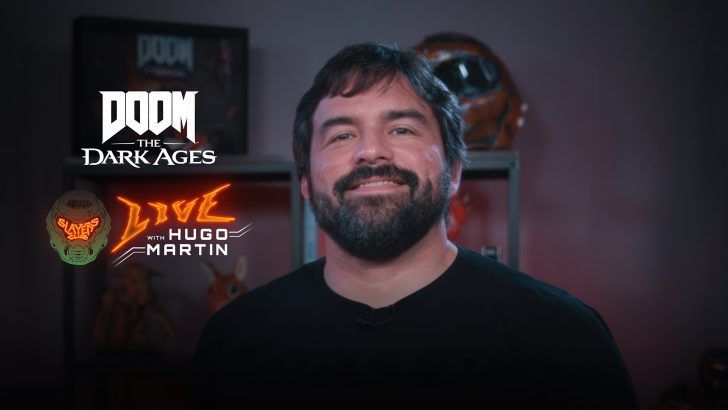

Current and former id Software developers are disputing Hugo Martin’s public reassurance after Xbox layoffs, raising sharper questions about Doom’s team, id Tech, and the studio’s future capacity.
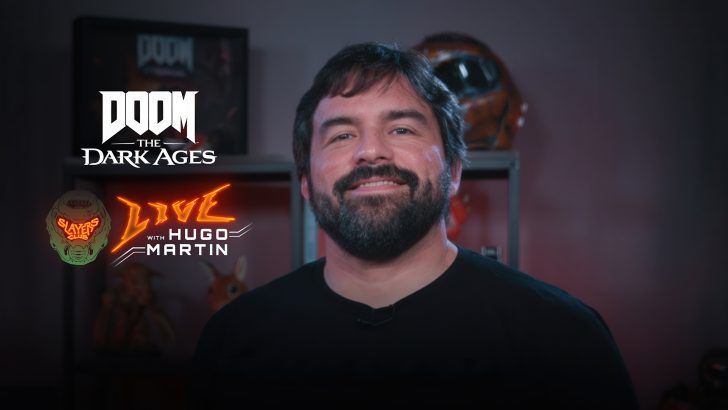
Image: wccftech.com
Developers push back after Martin says id was not gutted
The clearest development is that current and former id Software employees are now challenging Hugo Martin’s public reassurance about the Doom studio’s current state after Xbox’s latest cuts. Game Developer reported that multiple anonymous sources disagreed with Martin after he said during a Doom: The Dark Ages Revelations livestream that reports of id being “nerfed into the ground” or “gutted” were “not true.”
Martin’s position, as reported by IGN, Wccftech, Eurogamer, and Game Developer, is that id Software remains roughly the size it was when it made Doom (2016), that id Tech is “very much alive and well,” and that the Doom team is still present. He also said id has engineers working on id Tech in Frankfurt and at MachineGames, with collaboration across those groups.
The employees quoted by Game Developer are not disputing every part of that framing. Their argument is sharper: headcount comparisons can be technically true while still hiding the competitive damage done by losing experienced people. One current id Software employee told Game Developer, “If you cut a stat in half everyone would call that nerfed,” adding that “the team is half here, half thrown away.” That is the core tension for Doom players. Martin is talking about the studio’s ability to continue. The anonymous developers are talking about the cost of getting there.
The layoff numbers are messy, and that matters
The public record around id Software layoffs is not clean enough to reduce to one simple percentage. IGN reported that a WARN notice filed in Texas confirmed 96 workers were laid off in Richardson, Texas, where id Software is based, with another 40 remote roles cut. IGN described the cuts as estimated to have affected about half of id Software’s staff.
Game Developer also cited 136 people assigned to id Software’s Texas office, including 40 remote workers, as being laid off after Microsoft announced broader Xbox reductions. Eurogamer described Microsoft’s cuts as 3,200 layoffs affecting Xbox, while IGN framed the wider Microsoft gaming reset as beginning with 1,600 staff losing their jobs and another 1,600 set to follow during the rest of the financial year. Wccftech, using its own framing, said the cuts removed around 73.5 percent of staff at id’s Richardson home office.
Those figures point in the same direction, a severe reduction, but they measure different things: office-assigned roles, remote roles, total studio estimates, and home-office percentages. That distinction is important because Martin’s response leans on current operating capacity and distributed engine teams, while the developer criticism focuses on who was lost from the Doom team itself. A studio can have enough people to operate and still lose a damaging amount of institutional memory.
The Doom 2016 comparison is the fight, not the answer
Martin’s most important claim is that id is now around the size it was when Doom (2016) was made. On paper, that sounds like reassurance. Doom (2016) is the title that re-established the franchise’s modern identity, built around fast target prioritization, aggressive resource loops, readable arenas, and a combat rhythm that made the old shotgun-and-strafe language feel current again.
Game Developer’s sources argue that using Doom (2016) as a comfort point leaves out the painful production context. One source said Doom (2016), including the earlier Doom 4 reboot period, took about seven years and involved “an absurd amount of crunch.” The same source said several key individuals who worked unsafe hours to get that game finished were among those laid off.
Another former employee told Game Developer that id had suffered “massive turnover and exodus” around 2010 and 2011, leaving the studio in an “awful spot.” According to that source, hiring ramped up heavily around 2013 and 2014 for the final push, including the arrival of Crytek engine talent, support from Escalation Studios, and work from Certain Affinity, which the source described as consisting of around 140 developers at the time.
That changes how the Doom 2016 comparison lands. If the current studio resembles a previous low point before a major ramp-up, then the number alone is not a full health bar. For players, the question is not whether a smaller id can make a great shooter. The question is whether Microsoft, Bethesda, and id are prepared to fund and staff the next Doom or Quake-scale project at the level modern triple-A production demands.
id Tech is alive, but its structure is no longer a simple Texas story
The engine question is where Martin and Microsoft have offered the firmest pushback. IGN reported that Xbox confirmed there are “dozens of people working on id Tech across multiple locations” and said previous reports that only one person was left in Texas working on the engine were inaccurate. Martin also said id Tech engineers are in Frankfurt and at MachineGames, and that those teams collaborate.
That is a meaningful clarification. Doom’s feel is tied to technology in a way many shooter franchises are not. Frame pacing, animation responsiveness, hit feedback, traversal smoothness, enemy density, and arena readability all live or die on engineering decisions. id Tech is part of why modern Doom can push spectacle while still feeling immediate in the hands.
The unresolved part is whether a distributed id Tech group can replace the practical value of veteran developers sitting inside the Doom pipeline every day. Martin’s statement supports the claim that the engine is still staffed. Game Developer’s reporting supports the claim that veteran Doom developers, including people with Doom (2016) experience, were heavily affected. Both can be true at once. Engine survival does not automatically equal unchanged production capacity, especially when the next game’s scope, platform targets, and timeline have not been announced.
The Dark Ages gives id leverage, but not certainty
Martin also suggested Doom: The Dark Ages is performing well against expectations. IGN and Wccftech both reported his livestream comment that the game was “critical and commercially successful” and doing well relative to forecast. He connected that success to morale and to the people still at the studio, as well as those who were let go.
That matters because commercial performance is one of the few hard arguments a studio can bring into a corporate reset. Eurogamer noted that Doom: The Dark Ages recently received its expansion-sized Revelations DLC, and Wccftech tied Martin’s comments to a Slayer Club Live stream for that DLC. A successful release gives Xbox a reason to keep Doom visible, particularly if leadership is, as Eurogamer reported, interested in more Doom and Quake games.
Still, no source material confirms id Software’s next project, a release window, platforms, price, multiplayer plans, or whether the next Doom arc Martin mentioned will be greenlit in the form he wants. Martin said the team is excited to share more when it is “appropriate and approved.” That wording matters. It signals that whatever comes next is still behind corporate approval, messaging, and timing gates. For players, there is no announced game to pre-order, wishlist, or plan hardware around yet.
What Doom players can reasonably take from the dispute
The safest read is that id Software has not vanished, id Tech has not been officially abandoned, and Doom: The Dark Ages appears, by Martin’s account, to be meeting internal expectations. Those are confirmed or directly attributed claims from Martin, Xbox, IGN, and other reporting.
The equally important read is that developers quoted by Game Developer believe Martin’s comments understate the damage. Their concern is not fandom panic. It is production reality: losing experienced “multiple hat” developers, losing people who helped rescue Doom (2016), and comparing today’s studio size to a difficult historical period may all make the current situation look healthier than it feels inside the building.
If you are playing Doom: The Dark Ages or its Revelations DLC now, none of the reporting says current content is being removed or that the game is no longer supported. If you are waiting for the next Doom or Quake, patience is the correct posture. Treat any claim that id is finished as unsupported by Martin’s and Xbox’s statements. Treat any claim that nothing meaningful changed as disputed by current and former developers. The studio is still in the match, but the roster has taken hits, and for a shooter studio built on precision, iteration, and technical identity, roster losses can affect the next round long before players see the first trailer.