
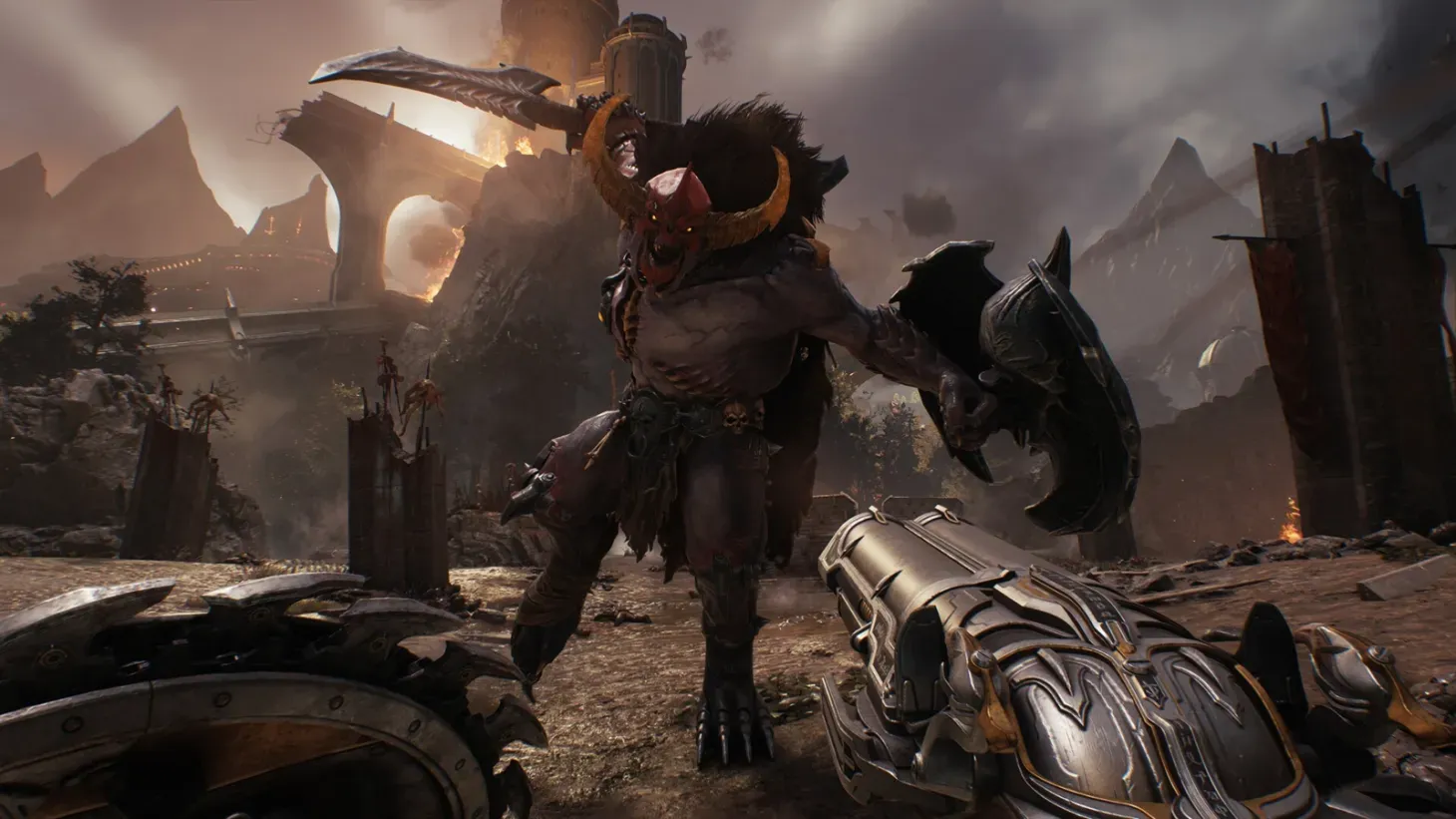

id Software programmer Chris Hays says Xbox cannot expect Doom-sized AAA games from a studio cut roughly in half, sharpening the dispute over layoffs, Game Pass metrics, and Microsoft's production strategy.
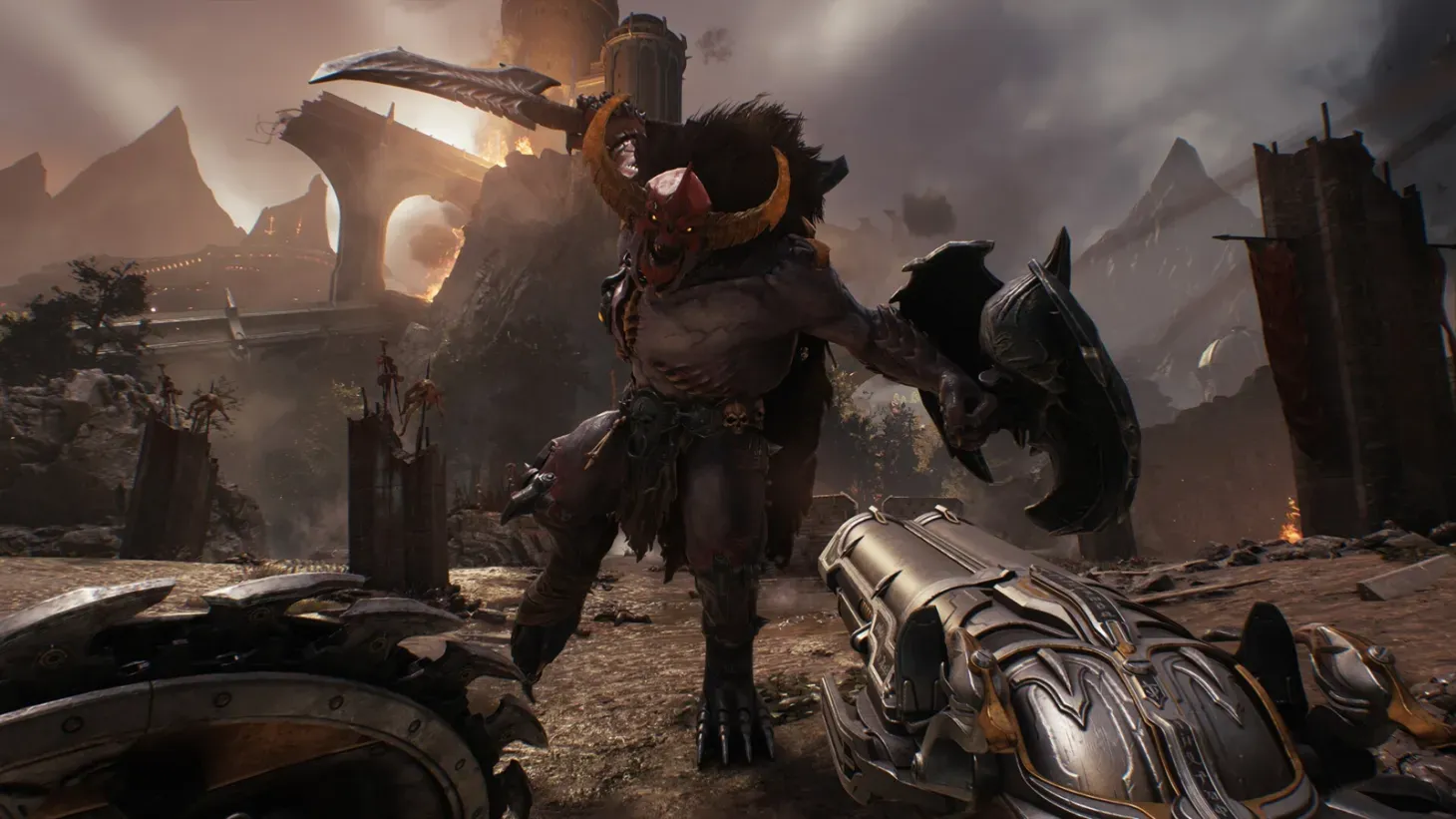
Image: gameinformer.com
A Doom veteran says the math no longer works
The sharpest new criticism of the id Software layoffs is coming from inside the studio. Chris Hays, id Software’s lead services programmer for more than 15 years and a developer credited by Kotaku and Console Creatures as having worked on Doom Eternal and Doom: The Dark Ages, said on the Well Played podcast that making another AAA game at the scale id has historically delivered is not realistic after the cuts.
"It is hard to make a game that is AAA that’s like we’ve done before with half the people. And by hard I mean impossible," Hays said, according to Kotaku and Console Creatures. His comment lands directly against the public reassurance from id Software and creative director Hugo Martin that the studio remains capable of building the games and technology it is known for.
The tension is not whether id Software still exists or whether Doom: The Dark Ages has ongoing support. IGN reported that Martin pushed back during a Doom: The Dark Ages DLC livestream against claims that id had been "nerfed into the ground" or reduced to 50 people. The tension is whether a studio can lose a large share of its staff, including reported veteran expertise and whole disciplines, and still be treated by Xbox leadership as functionally the same production machine.
The confirmed cuts are large, and the disputed part is capability
Game Developer reported that a Texas WARN notice confirmed 158 ZeniMax Media layoffs in the state, with 96 roles cut at id Software’s Richardson, Texas office and 40 remote workers reporting into that location also let go. That puts the confirmed id-linked total at 136 roles. Game Developer previously reported, citing multiple anonymous sources, that the cuts amounted to around 50 percent of the Texas-based studio.
Those figures sit inside a much larger Microsoft gaming layoffs story. Game Developer reported that Xbox planned to eliminate 3,200 roles across its video game division over the current fiscal year, beginning with 1,600 cuts. IGN described the reductions as part of new Xbox CEO Asha Sharma’s "reset" of Microsoft’s gaming business.
The public message from id has been steadier. In a statement reported by Game Developer, the studio said the changes were spread across teams and that it still had "the crew we need to build the games and tech we’re known for." The same statement said the team was "about the same size" as when it made Doom in 2016 and emphasized id’s flat studio structure, where "everyone is a maker."
Hays challenges the usefulness of that comparison. According to Kotaku, he said entire departments and disciplines had been gutted and added, "We’re not the same id. We’re half the same id." That is the core dispute. Microsoft and id leadership are framing the studio by present headcount and continuing capability. Hays and several anonymous sources cited by Game Developer are framing it by lost institutional knowledge, lost departments, and lost production capacity.
The Doom 2016 comparison cuts both ways
The claim that id is roughly back to its Doom 2016 size is doing a lot of work in Xbox’s defense, but the sources show why it is also controversial. Martin said during the Doom: The Dark Ages Revelations livestream, as reported by IGN and Game Developer, that id is the size it was when it made Doom 2016 and that id Tech is "very much alive and well." IGN also reported that Xbox said there are "dozens of people working on id Tech across multiple locations" and that reports of only one person left in Texas were inaccurate.
That answers one extreme fear, namely that id Tech has been abandoned. It does not fully answer the production question Hays is raising. Game Developer later reported, citing multiple anonymous current and former id sources, that around two thirds of the remaining staff who had worked on Doom 2016 were laid off in the latest round. One current id employee told Game Developer that if a stat were cut in half, players would call that a nerf, adding that "the team is half here, half thrown away."
Game Developer also reported source pushback on the clean Doom 2016 analogy. One affected source said Doom 2016 followed a difficult multi-year production, including the rebooted Doom 4 period, heavy hiring around 2013 and 2014, and support from external teams such as Escalation Studios and Certain Affinity. That history matters because "same size" can describe a spreadsheet while hiding differences in seniority, department mix, outsourcing, schedule pressure, and engine maturity.
From a production strategy view, this is the equivalent of comparing two army compositions by supply count while ignoring unit type, upgrades, map control, and economy. The number can be technically true and still miss the state of the game.
Hays links the layoffs to Xbox’s Game Pass accounting problem
Hays did not limit his criticism to staffing. Console Creatures reported that he also questioned how Xbox evaluates Bethesda studio performance under Game Pass. "I know that [id has] serious issues with how Game Pass is done," Hays said, according to the outlet. He asked what "poor sales" means in a subscription model, arguing that if Xbox is not running a traditional games-sold business model, then a low unit-sales figure does not necessarily describe a game’s real reach or value.
That point resonates because Doom: The Dark Ages is being discussed in the sources as a major id release rather than a failed experiment. IGN reported Martin saying the game was "doing very well related to the forecast" and was critically and commercially successful. OpenCritic, citing TheGamer, noted that Bethesda had previously described The Dark Ages as "the biggest launch" in id’s history, while also reporting former-developer anger that layoffs followed so soon after that milestone.
There is no public financial breakdown in the supplied sources that shows exactly how Microsoft measured Doom: The Dark Ages across sales, Game Pass engagement, DLC, retention, or platform reach. That is the missing information behind Hays’ complaint. If Microsoft wants first-party games to drive subscriptions and ecosystem engagement, then judging studios mainly by conventional sales would punish the very behavior the platform encourages. If Microsoft is using a broader internal model, it has not publicly resolved the perception gap described by Hays.
The "doesn’t understand art" comment is really about production cohesion
The most viral line from Hays is his claim that Xbox does not "understand art" or video games, as reported by Kotaku and Console Creatures. Stripped of the social-media heat, the argument is less abstract than it sounds. Hays is saying that large-scale game development depends on teams, disciplines, and trust built over time, not merely on a brand name and a headcount target.
Kotaku reported Hays saying management had been given "talking points" about what could and could not be said, and that internal reassurances mirrored public lines about id still being near its Doom 2016 size. He suggested Xbox wanted to prevent further departures by reassuring remaining staff that the studio had a future. That is a serious claim from an employee, but it should be read as his account of internal sentiment, not as a confirmed Microsoft policy document.
The broader evidence supports at least the production-risk part of his criticism. Game Developer reported confirmed layoffs of 136 id-linked roles. It also reported anonymous claims that QA was heavily affected and that many "multiple hat" developers tied to Doom 2016 were gone. IGN reported Xbox’s counterpoint that id Tech still has dozens of engineers across multiple locations. Put together, the picture is not a dead studio. It is a studio whose remaining capability is being contested by the people closest to the work.
Microsoft’s large-studio strategy now faces a credibility test
The id Software dispute is a case study in Microsoft’s current gaming problem. Bethesda president Jill Braff said in an email quoted by Game Developer that Bethesda was shifting from a planning model centered on what is next for each independent studio toward one focused on its strongest franchises and the content roadmap that best serves players and Bethesda as a whole. That is a portfolio strategy: allocate money, people, and schedules around the franchises expected to carry the business.
The risk is that a franchise-first model can underestimate the studio-specific craft behind those franchises. Doom is a valuable name, but Doom 2016, Doom Eternal, and Doom: The Dark Ages are also products of particular engine expertise, combat design iteration, audio-visual identity, QA knowledge, tools, and production leadership. If cuts remove too much of that connective tissue, the IP remains while the development meta changes.
That is why the id Software layoffs are resonating beyond Doom fans. They raise a forward-looking question for every Microsoft-owned studio working under tighter central control: can Xbox demand bigger audiences, recurring engagement, and franchise roadmaps while reducing the teams that create the work? Hays’ answer is no for Doom-scale AAA production. Martin and id’s official statement say the studio still has the people needed. The next concrete evidence will be what id can ship, how quickly it can ship it, and whether quality holds after the reset.
For Doom players, the near-term picture is clearer than the long-term one
Nothing in the supplied reporting says Doom: The Dark Ages has been pulled, delisted, or had its announced support canceled. IGN reported that Martin discussed the layoffs during a livestream tied to the Revelations DLC and said id would share more about future work when appropriate and approved. Xbox also told IGN that id Tech work continues across multiple locations.
For players, that means the immediate question is not whether Doom: The Dark Ages suddenly stops existing. It is whether future patches, expansions, engine work, or the next id project can maintain the pace and polish associated with the studio before the layoffs. The sources do not provide new platform, price, performance, or roadmap details, so any stronger buying advice would be speculation.
The practical read is cautious. If you are already playing Doom: The Dark Ages, the reported comments do not change access to the game. If you are waiting on long-term support or future id projects, the staffing dispute is worth watching because the people arguing about it are not outside commentators alone. They include a current lead services programmer, id’s creative director, anonymous current and former staff cited by Game Developer, and Xbox itself. That is why these Xbox developer comments have become a larger referendum on Microsoft gaming layoffs and the real cost of scaling down AAA teams.