
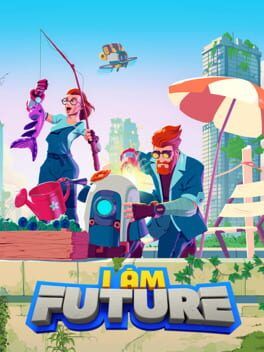
Mandragora’s laid‑back post‑apocalyptic survival sim I Am Future is heading to Nintendo Switch in January 2026, complete with all Early Access and 1.0 updates. Here’s how its rooftop rebuilding, automation, and exploration loop works on PC, why it’s a natural fit for handheld play, and the Switch‑specific features fans should hope to see.
I Am Future’s chilled take on the end of the world has been quietly winning people over on PC, and now its rooftop gardens and robot helpers are moving to Nintendo’s handheld hybrid. Publisher tinyBuild and developer Mandragora have confirmed that I Am Future: Cozy Apocalypse Survival lands on Nintendo Switch via the eShop on January 8, 2026, at a price of $19.99.
According to the announcement, the Switch release is not a cut‑down port. It is based on the 1.0 version that left Steam Early Access in November 2024 and includes all the major content updates and improvements the game has picked up since its initial Early Access launch in August 2023.
How the cozy apocalypse loop works on PC
I Am Future starts with a familiar survival premise framed in a very different tone. You wake up from cryosleep on a single rooftop in a flooded megacity, apparently one of the last humans left after an unexplained catastrophe. Instead of scrambling to stay alive minute‑to‑minute, you’re invited to slow down, clean up, and rebuild this rooftop into a strangely peaceful new home.
The core loop revolves around three things that naturally feed into each other: rebuilding your rooftop base, automating its day‑to‑day chores, and venturing out to explore the drowned city.
On PC, you begin by picking your way through a cluttered, derelict roof. You pull apart rusted furniture, busted electronics, and everyday relics from the old world by hand, stripping them down into scrap metal, plastic, circuitry, and other crafting materials. Those resources go straight into building workbenches, storage, comfy furniture, and eventually full production chains. As the hours go by, your rooftop shifts from junkyard to home, then into a multi‑level workshop and farm, complete with pathways, fences, and cozy lighting.
Survival systems are present but relaxed. You cook meals from your harvests and scavenged ingredients, keep a casual eye on your character’s needs, and protect your little garden from the occasional mutant pests that wander in. You are never racing a brutal hunger meter so much as you are managing a pleasant daily rhythm of gather, craft, cook, and rest.
Farming and crafting are the backbone that holds this rhythm together. You clear space for garden beds, plant fruits and vegetables, and later bring in trees and more advanced crops. These feed into cooking recipes that restore energy more efficiently and sometimes provide small bonuses. Crafting gradually expands from basic tools and building parts into more complex devices that open up new ways to shape the rooftop and automate chores.
That is where the game’s automation side really kicks in. As you progress, you unlock charming robot helpers and specialized structures. Little steel minions can be assigned to different roles: one might roam the roof gathering dropped materials and hauling them into storage, another might tend crops or handle basic production jobs at your machines. More advanced tech like upgraded presses, a nano‑forge, and improved power solutions give you a sense of industrial growth without ever tipping the mood into stressful management. You are still running a tiny, personal rooftop, not a factory.
Exploration happens in parallel. Early on, your world is confined to that first building, but story progression and tech upgrades let you send out a scouting drone to sweep across the flooded city. These expeditions uncover new rooftops, wrecks, and secrets, along with rare materials and blueprints that loop back into your base building plans. The narrative slowly unfolds through these forays as you dig into what happened to the city, what the megacorp Unicorp was doing, and whether anyone else survived.
The result is a loop that feels like a blend of survival sim, light automation game, and narrative exploration, with the tempo dialed down to something closer to a cozy life sim. You are always nudging your rooftop toward your ideal vision rather than fighting for each minute of existence.
Why I Am Future is such a strong fit for handheld play
The structure that makes I Am Future relaxing on PC also makes it surprisingly perfect for the Nintendo Switch.
Moment‑to‑moment, the game is built from small, self‑contained tasks that slot neatly into short play sessions. Clearing a section of roof, reorganizing storage chests, lining up a new row of crops, or tweaking the layout of your machines are all satisfying five‑to‑fifteen minute jobs. Those little projects are exactly the sort of thing players like to tackle on a commute, in bed, or while half‑watching a show with the Switch in hand.
Because health and survival demands are gentle, you can put the game down at almost any point without worrying that a missed day‑night cycle will ruin your run. That low pressure design pairs naturally with the Switch’s suspend feature and makes I Am Future as comfortable for bite‑sized sessions as it is for multi‑hour building sprints.
Its focus on a single, evolving space also plays well on a smaller screen. You are not constantly sprinting across a giant open world. Instead, you are returning to the same rooftop, steadily making it denser and more personal. That makes it easy to keep track of where everything is even in handheld mode and lets the game lean on clear silhouettes and readable UI rather than heavy detail.
Then there is the atmosphere. Cozy apocalypse is a tone that matches the Switch audience nicely. The soft lighting, bright colors, and gently melancholic music fall in the same comfort‑gaming category as titles like Spiritfarer or Stardew Valley. Playing I Am Future curled up on the couch or in bed seems like a natural extension of the fantasy of claiming a quiet corner of a ruined world and making it your own.
Finally, the automation layer gives handheld players a reason to hop in for quick check‑ins. Setting robots and machines up to run a production chain, then closing the system menu and putting the console to sleep after a final sweep of the rooftop feels satisfying in the same way that harvesting a crop or checking villagers in a life sim does. You are always one short session away from seeing your latest improvements in action.
Everything Early Access added, now bundled into the Switch version
I Am Future first landed on Steam in August 2023 and spent more than a year in Early Access before hitting version 1.0 on PC in November 2024. Over that period the game grew significantly, with Mandragora rolling out four major content updates plus a long list of smaller tweaks and fixes.
Across those updates, the rooftop itself expanded. New buildables, decorative pieces, and structural options gave players more freedom to shape their own layouts, while technology tiers were fleshed out with late‑game production equipment such as a third‑tier press and the nano‑forge for creating high‑end materials like techno‑wood, tungsten, advanced carbon components, and reactors. These additions deepened the crafting progression and made long‑term base planning more interesting.
Weather and environmental systems also became more sophisticated. A more complex weather model added variety to day‑to‑day play, influencing how you plan outdoor work and giving the rooftop fresh looks as conditions change. Environmental touches like improved lighting and effects supported the game’s already strong sense of place.
On the character side, updates brought new customization options, including additional appearance choices and the ability to create a female character, helping players better inhabit their rooftop survivor. Quality‑of‑life features arrived alongside those changes, smoothing out inventory management, controller support, and other friction points that early players had flagged.
Automation and traversal evolved too. Robot minions saw their behavior and roles refined, while expansion of the rooftop footprint made your base feel more like a tiny vertical neighborhood than a single flat platform. Teleporters arrived to make getting around sprawling late‑game builds easier, cutting back on the time spent jogging between distant corners of your camp.
Narrative and exploration content grew in step. New locations and story beats were layered into the city beyond your starting roof, fleshing out the mystery behind the flood and Unicorp’s experiments. Additional side encounters and oddball survivors gave the world more texture and gave your scouting drone more to discover.
By the time 1.0 arrived, I Am Future had matured into a far richer package than the initial Early Access build, with better pacing, more toys to tinker with, and more reasons to keep pushing your rooftop toward perfection.
The Switch release benefits from that entire development arc. As Nintendo Everything’s announcement confirms, the eShop version launching in January 2026 is based on the full 1.0 build and includes all the content and systems that came from Early Access, from the expanded base building and complex weather system to relationship building with other survivors and robot companions. Switch players are getting the complete, fully realized take on the cozy apocalypse, not a work‑in‑progress snapshot.
Switch features fans should watch for
The announced Switch version already looks feature‑complete, but there are a few platform‑specific touches that would make it feel truly at home on Nintendo’s hardware.
Touchscreen support sits at the top of that list. I Am Future’s interface revolves around inventories, grid‑based building, and arranging items in tight spaces. Being able to drag and drop components with a finger, tap to rotate furniture, or quickly assign tasks to robots through touch menus would fit the game’s tactile vibe and make handheld play smoother.
Performance and visual options also matter. A performance‑focused mode targeting a steady frame rate during busy late‑game rooftops would keep automation chains and large bases feeling responsive, while a quality mode could prioritize higher resolution and cleaner visuals when playing docked. Even simple toggles for things like depth of field or certain effects would give players control over how the game looks and runs on their particular model of Switch.
UI scaling and readability are worth keeping an eye on as well. Clear font options and slightly larger interaction icons in handheld mode would help keep the rooftop legible without sacrificing the game’s clean aesthetic. Smart use of rumble to underline key actions, like snapping a new structure into place or finishing a craft, could further anchor the game on the platform.
Mandragora has already proven that I Am Future works well with controllers on PC and even earned Steam Deck verification, which bodes well for the Switch port. If the team can layer thoughtful touch support and flexible performance settings on top of that existing groundwork, Nintendo players should be in for a very comfortable stay on their tiny post‑apocalyptic rooftop when I Am Future arrives in January 2026.