
Hytale’s cut‑rate $20 early access and Hollow Knight: Silksong’s $20 full launch show two very different strategies for ambitious indies trying to stand out next to $70 blockbusters. Here’s how expectations, scope, and pricing could shape both games’ early reputations.
Modern blockbusters are creeping up to $70 as a new standard, yet two of the most talked‑about indie projects are planting their flags at $20. Hytale is using that price for an unapologetically rough early access build. Hollow Knight: Silksong is treating the same tag as a full‑fat launch price for a long‑awaited sequel.
The shared number hides very different strategies. One is openly asking players to buy into something incomplete. The other is selling itself as an all‑in, premium follow‑up that still undercuts the AAA market. The contrast says a lot about how ambitious indies are trying to manage expectations and player sentiment in a landscape dominated by expensive, marketing‑heavy blockbusters.
Hytale: $20 as a public disclaimer
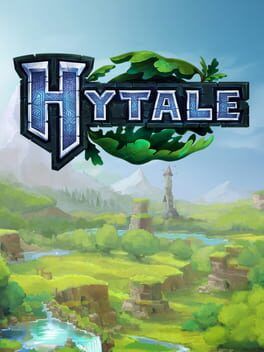
Hytale’s story has already been unusually dramatic. After years of hype and a stint under Riot Games, the project was effectively cancelled, then revived when original co‑founders bought the rights back. The new independent team is pushing forward with a version of Hytale built on a four‑year‑old branch of the game, staffed by roughly 50 people, and heading into early access at $20.
In an interview covered by Rock Paper Shotgun, Hypixel co‑founder Simon Collins‑Laflamme is very blunt about the state of the game. He says he has “aggressively” priced Hytale low because he does not think the game is good yet. Systems are missing, progression is not fully configured, and there are plenty of bugs. The aim is not to disguise this reality but to bake it into the price.
That turns the $20 tag into more than a number. It acts as a disclaimer you agree to the moment you click purchase. It tells you this is the game as it exists right now: messy, compromised, and still in the process of being rebuilt after a turbulent development history. The assumption is that anyone who jumps in for $20 understands they are paying to be part of a long road, not to receive a polished, feature‑complete sandbox.
In an industry where early access labels sometimes feel like a thin veneer over near‑finished products, Hytale’s honesty is almost aggressive. By saying “we don’t think it’s good yet” and tying that to the price, the team is trying to reshape the terms of criticism. Disappointment is harder to justify if the developers already told you it would be rough.
The risk is that cheap early access can also cap what players expect the game to become. If Hytale launches in a broken, barebones state, $20 criticism will still fly. Players may compare it to other $20 indies that are strikingly polished at launch, not to $70 sandboxes with massive budgets. And if the early sentiment hardens around words like clunky or half‑baked, that perception can cling to the project long after it improves.
Silksong: $20 as a promise of value
Hollow Knight: Silksong is coming at $20 from almost the opposite angle. Where Hytale is trying to manage doubt, Silksong is wrestling with years of rising expectation. Team Cherry turned a modest Kickstarter‑backed Metroidvania into one of the most celebrated indie games of the last decade. Silksong began life as Hollow Knight DLC before ballooning in scope to the point that it became a full sequel.
In Nintendo Everything’s coverage, Team Cherry’s Ari Gibson explains that the studio likes to price their games at a reasonable level and that they have a habit of expanding them into something quite large. Silksong’s $20 price is not positioned as a discount for missing content but as a continuation of the original game’s philosophy: sell a huge, handcrafted adventure for a price that feels almost old‑fashioned in the $70 era.
That turns the same $20 figure into a promise. Players expect that Silksong will be dense, polished, and replayable, not something they are helping to finish. The upgrade path reinforces that mindset. A free Upgrade Pack and hints at post‑launch content mean that the base $20 purchase is framed as the foundation of a long relationship with the game instead of an entry ticket to a work‑in‑progress.
Silksong’s price also pushes against the logic that bigger sequels must ask for more money. Team Cherry could almost certainly charge $30 or $40 and still ride a wave of goodwill, especially with ports across Switch, PC, PlayStation, and Xbox. Sticking to $20 quietly argues that value is not just about budget size or marketing spend. It is about the experience players carry with them when they are done.
Two ways to set expectations
Put side by side, Hytale and Silksong show how the same price can set very different tones.
For Hytale, $20 is a shield. It lowers expectations and gives the studio room to fail in public. When the co‑founder tells you the game is not good yet, he is inviting you to calibrate your standards around a messy, in‑progress sandbox. Players who opt in are, in theory, self‑selecting into a more forgiving mindset. They are buying into potential rather than paying for a finished roadmap.
For Silksong, $20 is a signal of confidence. It tells players that Team Cherry believes it can deliver a sequel that matches or surpasses the original Hollow Knight while asking for no more money. It leans on the studio’s reputation and on a kind of retro sensibility where a complete, substantial game does not need to chase a higher sticker price just because the industry has shifted around it.
The key difference is how each game wants to frame player expectations on day one. Hytale stresses its limitations. Silksong leans on its strengths. Both approaches are responses to the same market conditions, where $70 action games crowd storefronts and many smaller titles struggle to gain oxygen.
Content scope in a $20 frame
Content expectations are where the two strategies diverge most sharply. Hytale has always presented itself as something ambitious a Minecraft‑like with RPG depth, procedural worlds, and extensive creation tools for mods and minigames. That promise naturally invites comparison with massive sandboxes that took years and huge teams to mature. Asking $20 for early access is a way to acknowledge that Hytale is not there yet, that its currently shipped feature set will be narrower or less stable than the marketing dream.
The important nuance is what players think they are really paying for. Some will treat $20 as a cheap ticket to experiment with the building tools, toy around with friends, and then step away until a future milestone. Others will see it as a long‑term investment in a platform game where community feedback will shape systems over years. Either way, the content conversation is not about how much there is at launch but how much might arrive later.
Silksong’s content pitch is more straightforward. It is a curated, single player action platformer. Players expect a long main path, side areas full of secrets, tough bosses, and systems that reward multiple playthroughs. Team Cherry’s own habit of overdelivering on content already sets that bar high. Pricing it at $20 implicitly suggests that this sequel will be at least as generous as the original Hollow Knight, and that the expansion from DLC concept to full game was driven by scope, not by a desire to charge more.
In practical terms, both games are selling ambition. Hytale is selling the ambition of a system rich sandbox that may take years to reach its peak. Silksong is selling the ambition of a densely designed journey that aims to feel complete on day one and then grow further with post‑launch updates.
Shaping early player sentiment
Pricing is one of the earliest pieces of information players internalize about a game. In a world of $70 releases, a $20 tag instantly puts both Hytale and Silksong in a particular mental bucket: ambitious, but still indie. What happens next comes down to whether they meet or surpass what players assume comes with that label.
Hytale’s greatest challenge will be to turn early access buyers into long term advocates instead of frustrated skeptics. If the launch build feels undercooked in ways that frustrate the core sandbox fantasy, cheap pricing will not save it from backlash. Players are increasingly used to polished $20 experiences that ship complete or very close to it, from rogue‑likes to platformers and survival games. Early footage and first impressions will matter more than the price tag once streams and community videos start circulating.
The upside is that honest communication gives Hypixel Studios a clearer path to recovery if things go wrong. By foregrounding the game’s unfinished state and linking it directly to the low price, the team builds a narrative in which every major update can be framed as value added over that initial $20 spend. The early adopters are not only paying customers, they are collaborators in the game’s rebirth after a cancelled phase under Riot.
For Silksong, the $20 price may actually raise the bar rather than lower it. Years of anticipation and the original game’s status as a modern classic mean that any perceived compromise in scope or polish will cut deeper. Players will compare Silksong not just to other $20 indies, but to their memories of a game they may have put dozens of hours into. If the sequel hits or exceeds those expectations, the low price will feel almost celebratory, a reward for loyal fans. If it stumbles, the low price will not prevent disappointment. It might even fuel questions about whether the studio undervalued its own work.
The crucial point is that Silksong’s early reputation will be built on whether that $20 feels like too little for what is delivered, not whether it is enough to excuse missing pieces.
Fighting back against $70 with trust and timing
Neither Hytale nor Silksong can outspend or outadvertise a big budget action game. What they can do is make pricing part of a broader trust play.
Hytale’s approach leans on transparency and the promise of long term support. It asks players to trust that a discounted early access ticket is the start of a climb toward the ambitious sandbox they have been imagining for nearly a decade. The low entry point reduces financial risk for curious players, in the hope that word of mouth will turn into a community that supports the game’s evolution.
Silksong leans on past trust already earned. Team Cherry’s decision to keep the price low despite swelling scope is a quiet message that they still see themselves as a small studio making passion projects, not as a brand milking a sequel. Fans who remember how much Hollow Knight offered for its price are primed to believe this philosophy has not changed.
In a marketplace built around big numbers and prestige editions, both strategies feel like small acts of resistance. They suggest that ambitious indies can compete less by mimicking blockbuster economics and more by building long term relationships with players. A $20 early access sandbox and a $20 genre‑defining sequel arrive at the same price point from opposite directions, but both rely on the same fragile thing: the belief that players will recognize value even when it does not come with a $70 label.
As both games get into players’ hands, the real test will be whether that belief holds. If Hytale can grow into the game its community has been dreaming about, its cheap early years might be remembered fondly as a rare moment of honest early access. If Silksong can live up to its legend, its $20 price may become one more reason fans hold it up as a model for how to treat players. In either case, the battle against $70 blockbusters is being fought not with cinematics and ad buys, but with the simple, pointed choice to keep the entry fee low and let the games do the talking.