
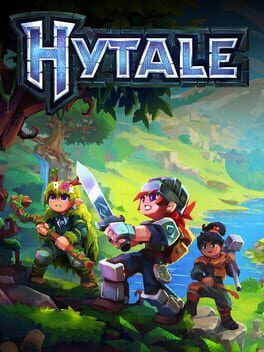
Weeks after launch, Hytale’s most ambitious servers are pushing it toward full-blown MMORPG territory. Here’s how projects like Runeteria are redefining the game’s identity, and how players can safely dive into these MMO-like worlds.
Hytale has barely had time to settle into players’ libraries, yet its community is already treating it less like a pure sandbox and more like a foundation for full-blown online RPGs. The headlines about “MMO-style servers” weren’t exaggerating. In just a few weeks, projects like Runeteria have gone from concepts to live worlds with dungeons, boss encounters, and persistent progression that look a lot more like a lightweight MMORPG than a casual building server.
This rapid shift is starting to answer one of the biggest pre-launch questions around Hytale: is it destined to be the next great creative sandbox, or is it quietly on track to become an MMO platform in disguise?
Runeteria: The early blueprint for Hytale as an online RPG
Runeteria is one of the first servers to really test how far Hytale’s systems can be pushed toward MMO territory. Officially, the team brands it as a “Survivor Multiplayer” server and an Early Access project, not a full MMORPG. In practice, it is already hitting a checklist that will feel familiar to anyone who has sunk time into online RPGs.
The core experience revolves around structured dungeons and group boss encounters. Instead of simply sharing a sandbox world and improvising your own goals, players are funneled toward curated challenges that rely on combat roles, coordination, and repeat runs. The early content is limited, but the shape of the design is clear: this is a server built around progression, not just presence.
That focus is reinforced by the team’s public roadmap. Short-term goals lean into server survival basics like stability, optimization, and quality-of-life features. Long-term plans are much more revealing: guild systems, a more defined RPG gameplay loop, and expanded PvE content that nudges the server closer to the structure of a traditional MMO. The conversation around Runeteria already draws comparisons to projects like Wynncraft in Minecraft, where a single server evolves into a self-contained RPG that uses a sandbox engine as its chassis.
The crucial detail is timing. That a server like this exists only weeks after launch says as much about Hytale’s tooling as it does about community enthusiasm. Modders are not waiting for years of patch cycles; they are treating the base game as malleable from day one.
Dungeons, bosses, and why they matter for Hytale’s identity
Dungeons and boss fights are not just flashy features. They signal a philosophical shift in how people approach Hytale. A dungeon implies designed pacing, curated rewards, and a sense of repeatable challenge. A group boss implies roles, builds, and social friction: who tanks, who heals, who brings crowd control, who knows the mechanics.
Hytale’s own pitch leans on the blend of sandbox building and adventure, but when community servers lean heavily into instanced combat content and gear-based progression, the dominant fantasy stops being “I can build anything” and starts becoming “I can gear up and raid with my friends.” In other words, the center of gravity moves from creation to progression.
Runeteria’s early dungeon content is a proof-of-concept for Hytale as a framework for lightweight MMOs. The tools are flexible enough for server owners to script encounters, tune enemy behavior, and attach meaningful rewards to specific activities. That puts Hytale in a different lane than a purely creative sandbox where combat is mostly incidental.
Beyond Runeteria: Labyrinth and the single-shard dream
While Runeteria currently represents the most visible example of an MMO-flavored server, it is not alone. The Labyrinth project is aiming even more directly at MMO territory by talking about a single-shard design rather than a patchwork of disconnected private servers.
A single-shard approach changes expectations dramatically. Instead of hopping between themed worlds or whitelisted communities, the ideal is one persistent population, one evolving economy, and one shared sense of history. The team behind Labyrinth has been teasing a world built around multiple dungeons and monsters with the intent of supporting that style of long-term, shared progression.
Labyrinth’s early target launch window has already slipped, which underlines a key point. Turning Hytale into something resembling an MMO is complex, even with powerful tools. Balancing population density, performance, content cadence, and progression pacing is a very different problem than hosting a casual survival world for friends. The fact that projects are publicly aiming for this level of ambition so soon after launch suggests that many in the community see Hytale as a potential MMO substrate, not just a building toy.
Sandbox builder or MMO platform: what the mod scene is telling us
The emerging pattern is clear. On one side are creative builders and role-players using Hytale as a block-by-block canvas, experimenting with scripted adventures, minigames, and custom biomes. On the other side are teams like Runeteria and Labyrinth, pushing the tech toward persistent RPG loops, structured PvE, and social systems like guilds.
Crucially, these are not mutually exclusive identities. In practice, Hytale is being treated as a spectrum. A pure sandbox server might focus on building, light exploration, and player-driven stories, with combat as a side activity. An MMO-like server shifts the emphasis to long-term character growth, crafted encounters, and social hierarchies.
What the early mod scene shows is that Hytale’s engine comfortably supports both ends of this spectrum. The fact that the MMO-leaning projects are the ones grabbing headlines hints at where much of the community excitement lies. Players want a world where they can build a house, yes, but they also want a reason to log in tomorrow beyond “finish the roof.” Dailies, raids, seasons, and guild progression are all design tools that answer that craving.
There is also a subtle ecosystem effect. As more players congregate around MMO-like servers, creators have more incentive to build content for those ecosystems: custom encounters, gear sets, and scripted storylines. Over time, that can push the broader perception of Hytale toward “the game where you join big RPG servers,” even if the vanilla experience remains closer to a hybrid sandbox.
How the mod tools are shaping this MMO-leaning future
The speed of these projects is not an accident. Hytale’s mod and server tools are designed around accessibility. Scripting systems, content packs, and server-side customization make it far easier for teams to prototype ideas like dungeons and bosses without extensive engine-level coding.
Because these pieces are modular, server owners can layer MMO features gradually. Start with custom mobs and loot tables, then experiment with simple dungeons, then add lightweight progression and guild features. That staircase of complexity is exactly what enables Early Access-style servers like Runeteria to go live quickly and grow in public.
There is a trade-off. As servers evolve into more demanding MMO-like experiences, they also take on MMO-like responsibilities. Performance optimization becomes critical when dozens of players converge on a boss. Security, anti-cheat, database stability, and backup policies start to matter in a way they do not for a small friends-only world. The teams that can handle that operational load are the ones most likely to define what “endgame Hytale” looks like for a lot of players.
Joining MMO-style Hytale servers safely
For curious players, the temptation to jump straight into servers like Runeteria is understandable. Before you do, it is worth taking a few precautions so your first adventure into Hytale’s MMO-leaning ecosystem is a good one.
Start by treating official community channels as your primary discovery tools. The safest path is usually through links shared on Hytale’s official social feeds or in verified community hubs and Discord servers that are openly acknowledged by the developers. When a project like Runeteria is amplified by recognizable figures from Hypixel or the wider Hytale community, it is not a guarantee of safety, but it is a useful signal that the server is operating in the open and under some degree of public scrutiny.
Once you have a server name in mind, take time to investigate it outside of the game client. Look for a dedicated website, an active Discord, and a clearly articulated ruleset and privacy policy. Credible MMO-style servers tend to be transparent about how they handle donations or monetization, what data they log, and how they plan to manage wipes or major balance changes. If a project is asking for money but offers little information about who is running it or how it operates, that is a sign to be cautious.
Always connect using the in-game browser or directly entering the server address you obtained from official or well-established community sources. Avoid downloading custom launchers or executables unless they are widely vetted and required by many known servers. Hytale’s native mod and content systems should handle most of what you need. Adding unsolicited external software multiplies your risk of malware or account compromise.
It is also smart to treat your Hytale account credentials as strictly off-limits. Reputable servers will never ask you to log into a web panel using your game login, nor will they request two-factor codes or other sensitive data under the guise of “account verification.” Any such request is a red flag and a reason to disconnect and report the server to community moderators.
Finally, remember that MMO-style servers are ongoing experiments. Early Access labels are not just marketing; they are warnings that progression may reset, exploits may occur, and balance may shift dramatically from patch to patch. If you care deeply about long-term progression, keep an eye on how often a server wipes characters or worlds and whether the admins are honest about their roadmap.
What comes next for Hytale’s MMO-like future
The current crop of RPG-focused servers is almost certainly the first wave. As more tools mature and more creators gain experience, Hytale is likely to see a stratification of server types: casual creative worlds, minigame hubs, progression-heavy RPGs, and, eventually, attempts at true single-shard virtual worlds.
Whether Hytale ultimately becomes known primarily as a sandbox builder or an MMO platform will not be decided by Hypixel alone. It will be shaped by which servers sustain active populations over years, which experiences streamers and content creators showcase, and which styles of play prove most resilient to burnout.
Right now, the momentum is clearly with the MMO-shaped experiments. Runeteria’s dungeons and boss fights, Labyrinth’s single-shard ambitions, and the broader wave of RPG storytelling all point in the same direction: Hytale is evolving into a playground where building is just the beginning and where the most memorable stories might come from persistent, shared worlds that look a lot like MMOs in everything but name.