
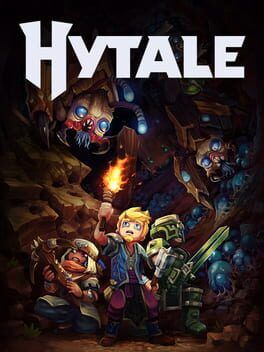
From Doom and Windows 95 to full Minecraft crossplay, Hytale’s emerging mod scene is already bending the game into something stranger and more powerful than a Minecraft clone.
Hytale isn’t even out yet, and modders are already breaking it
Hytale was pitched as a sandbox RPG with deep building, combat and adventure. What it is rapidly becoming in the hands of modders looks closer to a universal sandbox operating system, where the question “can it run Doom?” is just the warmup.
Before the game’s full release, early access builds and internal tools have already been wrestled into doing things that feel barely plausible. Modders have booted up classic Doom inside Hytale, coaxed Windows 95 into life as a fully interactable in-game desktop, and now, courtesy of a deeply cursed proof of concept from modder Sadat Sahib (aka ssquadteam), Hytale can literally host Minecraft players in the same world.
This is not just a fun party trick. The way it is being done, the APIs and scripting hooks it leans on, and the ambitions behind it all hint at a future where Hytale’s identity is defined less by its official survival RPG and more by the chaos of what people build on top of it.
Doom, Windows 95 and Hytale inside Hytale
The first wave of viral Hytale hacks came from modders asking the oldest question in PC gaming: can it run Doom? The answer was yes, and not as a simple video playing on a texture. Modders wired up actual input and rendering inside the game’s engine so Doom became a playable experience on an in-world screen. The Hytale client was driving both its own 3D sandbox and a fully simulated 2D shooter at the same time.
Not long after, someone escalated straight into hobbyist madness by getting Windows 95 running as a virtual machine exposed through Hytale. That demo showed a functioning desktop, draggable windows and classic apps navigable through your in-game avatar. It was essentially a full emulator viewport inside the blocky fantasy world. Under the hood this meant piping keyboard and mouse inputs from Hytale’s scripting layer into a virtualized OS, then capturing that OS’s video output back onto an in-game surface.
The point was not practicality. Nobody needs to check Minesweeper from inside a fantasy RPG. The point was to prove that Hytale’s modding hooks can be bent into hosting entirely foreign software stacks. If you can marshal enough control over rendering, input and networking to run a 1990s operating system, the door is open to almost anything that speaks in pixels and packets.
The Minecraft x Hytale crossplay mod that should not exist
That brings us to Sadat Sahib and the mod that has caught the attention of both Minecraft and Hytale communities. In a series of clips shared on social media and Reddit, Sahib shows Minecraft Java, Minecraft Bedrock and Hytale all linked into the same session. Move in one, and a character moves in the other. Place blocks in Hytale, and equivalent structures appear in Minecraft.
In Sahib’s current prototype, Hytale acts as the host. The Hytale server is the authoritative world, and Minecraft clients effectively connect as weirdly translated visitors. Terrain generated in Hytale is mirrored over as Minecraft-appropriate block data, then rendered by the Minecraft client using its own textures and lighting. From the player’s perspective, you are walking through the same valleys and towers with different art styles layered on top.
Right now, the bridge works primarily in one direction. A Hytale player can run around and place blocks, which the mod translates into the closest matching blocks on the Minecraft side. Movement is synchronized both ways, so each client sees a remote avatar representing the other. Minecraft players are more limited in what they can build or interact with, and lots of systems from inventories to entities are fragile or simply disabled. Sahib himself describes much of it as “Broken” and stresses that this is a proof of concept, not a ready-made public mod.
Even in this rough form, the footage is uncannily convincing. Within roughly a day of his first demo going public, Sahib had already layered in cross-game chat, basic combat interactions and synchronized animations. It is still jank, but it is working jank, and that is far more than anyone reasonably expected from an unreleased sandbox sharing a session with a decade-plus old juggernaut.
How do you even make Hytale talk to Minecraft?
On the surface, Minecraft and Hytale do not share much beyond a love of blocks. They are written against different engines, have different network protocols and expose their internals in different ways. Making them cooperate requires attacking the problem at several layers at once: game logic, networking, data translation and presentation.
The first ingredient is that Hytale’s team has been explicit about building deep modding support directly into the game. Hytale exposes scripting through a high level API similar to what Minecraft’s larger mod frameworks offer, but baked into the engine from day one instead of bolted on after the fact. Scripts can hook into entity updates, block events, world generation and networking. They can create custom UI, intercept input and push or receive data from external services.
Sahib’s crossplay bridge leans heavily on this scripting layer. On the Hytale side, scripts watch for world changes like block placements and chunk generation, then serialize these into a neutral data format. That data is shipped through a bespoke network layer toward a translation server that understands the Minecraft protocol. On the Minecraft side, code pretends to be a normal server, handshaking with Java or Bedrock clients as usual, but it feeds them world and entity data that actually originated in Hytale.
The trickiest part is the translation between game vocabularies. Every block in Hytale has to be mapped to a plausible Minecraft equivalent. Some one to one matches are easy, like grass to grass, stone to stone. Others are compromises, especially when Hytale uses shapes or decorative blocks that simply do not exist in Minecraft’s palette. The bridge has to maintain a mapping table and a set of rules for how to collapse Hytale richness into Minecraft’s more rigid set.
Entities and players are another problem category. Hytale and Minecraft have different animation rigs, combat models and physics. Rather than try to fully simulate each other, the mod settles for higher level abstractions. It syncs positions, orientations and high level actions like swinging a weapon or jumping, and then lets each client render those actions as best it can.
The final component is world generation. At this stage, the mod does not run the same generator on both sides. Instead, Hytale generates the canonical world and the bridge drips out chunks of that world to Minecraft clients as they explore. When you push into new territory in Minecraft, the bridge asks Hytale what should exist at those coordinates and constructs a best effort replica using Minecraft blocks. It is a reactive mirror instead of a synchronized seed.
The tools and APIs that make this possible
These feats are not happening in a vacuum. They rely on an ecosystem of tools and design decisions that make Hytale unusually pliable compared with many commercial games.
On the Hytale side, there is the built in content creation suite that Hypixel Studios has been touting since the game’s reveal. Modders can access the same editor used to build the base game, with timeline based animation tools, visual scripting, asset import pipelines and live reloading. Instead of reverse engineering the engine through memory hacking, creators can rely on documented hooks to spawn entities, alter physics and describe entirely new game modes.
Networking is a first class concern in that toolset. Hytale’s scripting API is structured to let creators define server side logic and client side presentation separately, which is crucial for something like crossplay. You can run authoritative logic on the Hytale server while exposing only sanitized state to the Minecraft side. That keeps the bridge flexible while still letting Hytale’s anti cheat and security model do its job on home turf.
Outside the game, modders lean on the usual constellation of open source libraries and packet analyzers. Minecraft’s network protocol has been dissected for years by projects like Geyser that already bridge Java and Bedrock. Concepts from those efforts can be repurposed, even if the code itself is different, to stand up a proxy server that speaks fluent Minecraft on one side and a custom Hytale friendly schema on the other.
The Doom and Windows 95 experiments similarly mash up Hytale’s scripting and rendering hooks with mature emulation frameworks. Instead of writing a Doom engine from scratch, modders can embed an existing software renderer as a native module and let Hytale handle the outer world. The fact that this is even practical hints at engine level affordances for plugging in foreign render targets and input sinks.
What this means for Hytale’s identity
All of this raises an uncomfortable question for Hypixel Studios. If Hytale can already pretend to be a Minecraft server, a DOS machine and a retro Windows PC, what is Hytale really? Is it a game, or is it a toolkit that happens to ship with a game attached?
Minecraft’s identity has always been tightly bound to its survival and creative modes. Modding grew around that core, extending it rather than overshadowing it. Hytale is arriving later to the party into a world where sandbox players already expect infinite configurability. When the first big community stories about your game are about crossplaying with Minecraft and booting another operating system inside it, it shifts expectations.
One likely outcome is that Hytale becomes the place people go to build things they cannot easily achieve in Minecraft. Complex RPG servers, fully custom PvP experiences, strange genre hybrids, even non game social spaces sit squarely in Hypixel’s wheelhouse. That does not require abandoning the official adventure. Instead, it frames that adventure as the flagship demo that shows off what the engine can do.
The crossplay mod in particular positions Hytale as a kind of interoperability layer. If Minecraft players can drop into a Hytale hosted world without abandoning their familiar clients, server owners have a powerful incentive to target Hytale’s toolchain while still catering to Minecraft’s enormous audience. Even a partial, janky version of that reality would be transformative for custom servers.
The risk is that Hytale gets typecast as “the modding platform that also has a campaign” rather than a must play game in its own right. Players might dip in for novelty, or to visit a server their Minecraft friends talk about, but never engage with the curated dungeons and lore Hypixel has spent years building. Balancing engine flexibility with a strong authored identity will be one of the game’s long term challenges.
A glimpse of a very strange future sandbox
Modders turning unreleased games into forbidden compatibility layers is not new, but the pace and ambition around Hytale is remarkable. Within a brief early access period, creators have already treated it as a host for classic shooters, vintage operating systems and now live linked sessions with Minecraft.
If Hypixel leans into this energy instead of clamping down, Hytale could end up occupying a unique spot in the sandbox ecosystem. Minecraft will likely remain the cultural monolith, the Lego of games. Hytale could become the high powered workbench next to it: the place you go when you want to weld different toys together, script your own rules and maybe boot a 30 year old OS on a blocky monitor in the corner of your base.
That vision depends on continued investment in open, well documented APIs, mod friendly policies and the willingness to let players do things that look a little terrifying from a traditional game design perspective. The Minecraft crossplay prototype shows how far one determined modder can go with the tools already available. The next few years will show whether Hytale truly embraces being the sandbox of sandboxes, or reins it in to protect a more conventional identity.