
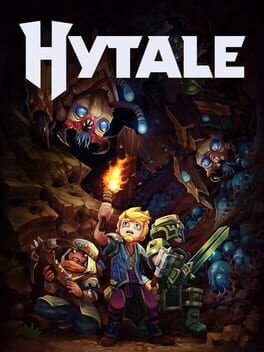

After Riot pulled the plug on the original Hytale, a 50-person team rebuilt the game, self-financed through pre-orders, and shipped a very different kind of sandbox/RPG hybrid. Here’s how it survived, what it actually is in Early Access, and why its tools could matter as much as its quests.
Hytale was supposed to be the next big thing in blocky sandboxes, then it quietly became one of the highest-profile cancellations of the live service era. That it has now re-emerged in Early Access, under a smaller team and largely bankrolled by its own community, is one of the stranger comeback stories in recent PC gaming.
This is not the same project Riot canceled. It is a leaner, more grounded sandbox/RPG hybrid that asks a different question than it did in 2018: not "how do we beat Minecraft at its own game," but "how do we build a moddable adventure platform we can actually sustain?"
From viral trailer to a hard reset
Hytale began as the natural next step for the Hypixel team, who had already turned a Minecraft server into one of the world’s largest minigame hubs. A standalone, voxel-based RPG-sandbox with built-in tools and creator support looked like a direct evolution of what they were already good at.
The 2018 reveal trailer went wildly viral, and expectations followed. What had started as a scrappy project ballooned into something closer to a cross between Minecraft, an MMO, and a full story-driven RPG. The team chased a bespoke engine, a huge adventure mode, deep systems for modding and scripting, and live-service ambitions on top.
That combination turned out to be toxic for the project’s health. As the GameSpot postmortem outlines, Riot’s acquisition of Hypixel gave Hytale breathing room, but it also raised the bar. If this was going to be a long-running, Riot-scale live game, the underlying tech and scope had to be bulletproof. They weren’t.
Technical debt piled up around the custom engine. Features kept colliding with the reality of maintaining a moddable sandbox, a networked RPG and a live-service platform all at once. Internally, it became clear the version of Hytale in production would not hit Riot’s quality and reliability targets without an open-ended death march.
So Riot did what most large publishers won’t publicly admit to: it canceled that version outright.
Cancellation without collapse
The word "canceled" usually precedes layoffs, asset write-offs and a quiet burial. Hytale’s story diverges here. Riot didn’t torch the IP, and Hypixel’s leadership didn’t walk away. Instead they used the cancellation as a brutal but necessary line in the sand.
The long rebuild that followed was about subtraction as much as design. The team re-examined what actually mattered about Hytale after the dust settled. The core answer was consistent: a highly moddable, social sandbox with more RPG structure than Minecraft, and a coherent, hand-crafted world that could sit on top of that.
Riot’s decision created space to rethink fundamentals instead of shipping a compromised product. That rethink eventually led to an outcome that would have been hard to predict at the height of the acquisition: Hytale separating from Riot’s orbit entirely and heading to Early Access as an independent production.
A 50-person studio funded by its own community
By the time Hytale reached Early Access in January 2026, the developer headcount had settled at around 50 people. That is small by the standards of modern live games, especially for one that still aims to be both a creative sandbox and an online RPG.
In the run-up to launch, the team made a point of talking openly about money. In the GamesRadar interview, Hytale’s leadership notes that pre-orders alone have funded the studio for roughly the next two years. In an industry climate defined by layoffs and short runway, that figure matters.
This is not a case of a platform holder footing the bill behind the scenes. Pre-sales of Early Access copies, founder’s packs and cosmetic bundles are what make the current development plan viable. That externalizes some risk onto the community but also means the team is not beholden to a larger publisher’s quarterly priorities. The runway is finite, but it belongs to the people making and buying the game.
It also explains some of the design decisions in this Early Access version. Systems are scoped for iteration rather than spectacle. Live operations are planned around a 50-person studio, not a hundred-developer behemoth. When the team talks about sustainability now, it is as much about not over-hiring as it is about not over-promising.
So what actually shipped? Hytale’s current identity
The Early Access build answers one of the community’s longest-running questions: is Hytale a "Minecraft killer," an MMO, or something else entirely?
Right now it plays like a three-way split between survival sandbox, action RPG and creator platform.
On the survival side, you get the familiar loop of chopping trees, mining ore, crafting tools and building shelters out of chunky voxels. Biomes are more authored than Minecraft’s noise-based worlds, with clearly themed regions, scripted landmarks and handcrafted dungeons. Each zone has its own creatures, resources and environmental rules that make progression feel more like moving through acts in an RPG than climbing a single, amorphous difficulty slope.
The RPG layer sits on top of that. There are defined combat roles, gear tiers, stat progression and enemy encounters built around attacks, dodges and abilities rather than simple click-spam. Boss structures and dungeon layouts borrow more from instanced MMO dungeons and action RPG set-pieces than from emergent sandbox caves.
Importantly, the game stops short of full MMO territory. Servers can host persistent communities, and there are social hubs and minigames, but Hytale in Early Access is closer to a multiplayer survival RPG in the Rust or Valheim mold than a traditional subscription MMO. It wants long-running worlds and communities, not a single shared shard for every player.
The third identity, creator platform, is where Hytale leans hardest on its Hypixel roots.
Tools first: how Hytale is built to be modded
From the beginning, Hypixel’s advantage has been tooling. The Hypixel Minecraft server thrived because its team could build and ship new minigames quickly in someone else’s sandbox. Hytale is the attempt to own that entire stack themselves.
That philosophy survives into Early Access. The client and server are built around making it easy to alter rules, assets and logic without touching the engine’s deepest layers. Hytale ships with an editor that lets creators sculpt terrain, place prefabs, wire up interactions and tune encounters directly in the world, rather than forcing them through external tools or opaque config files.
Scripting support is presented as a first-class feature instead of an afterthought. Where Minecraft’s modding scene is a sprawling ecosystem of Forge, Fabric, datapacks and custom launchers, Hytale focuses on having a singular, supported path for extending the game. That includes clear hooks for server-side logic, custom items and entirely new game modes.
Crucially, these tools are not reserved for studios or power users. The interface resembles a game engine editor crossed with familiar in-game creative tools, so players who have only ever built adventure maps in Minecraft can still get traction. The pipeline from "idea" to "playable prototype" is intended to be much shorter.
This is where Hytale most directly answers Minecraft and the broader survival sandbox field. Minecraft remains the de facto canvas for blocky creativity, but its toolchain was never designed as a turnkey game-creation platform. Roblox, on the other hand, is a dedicated platform for user-made experiences but leans heavily on a younger audience and a very specific economic model.
Hytale aims to split the difference: give creators professional-grade control and a moddable RPG framework, without requiring them to learn a heavyweight engine or buy into a closed platform economy.
The Minecraft comparison, and where Hytale diverges
Superficially Hytale still looks like "Minecraft, but with more RPG." You punch trees, you place blocks, you fight spiders and skeletons. The block size, the palettes, the familiar silhouettes all trade on that lineage.
Underneath, the design goals are different enough to matter.
Minecraft’s survival mode is a canvas for emergent stories with very little authored structure. Its progression is mostly self-imposed. Hytale’s adventure layer is more directed. Biomes are arranged to create arcs, dungeon layouts are hand-tuned, and narrative threads guide you into and through content instead of leaving you to stumble on everything by chance.
On the tech and tooling side, Minecraft’s mod scene evolved around a game that never set out to be a generalized engine. Hytale is trying to build that generality into its foundations. Server operators get a cleaner path to custom rule sets and minigames, modders get a supported scripting environment and asset tools, and players get a launch experience that treats custom content almost like built-in modes rather than a bolt-on curiosity.
Against more hardcore survival sandboxes like Rust, Ark or Conan Exiles, Hytale differentiates itself through tone and structure. It shares the familiar rhythms of gathering, crafting and building but wraps them in a brighter, more approachable aesthetic and a heavier emphasis on PvE co-op rather than brutal PvP. It wants to be a social hub as much as a survival challenge.
Living with Early Access constraints
None of this arrives fully formed. The first Early Access build is intentionally incomplete. Systems like high-tier progression, long-term endgame and some of the more exotic biomes are either missing or sketched out. Networked play is a work in progress, and some of the loftier modding goals will be tested in the wild for the first time.
The key difference from the pre-cancellation era is that these gaps are part of an acknowledged plan rather than signs of a project unraveling. With roughly two years of pre-order-funded runway, Hypixel can afford to iterate in public instead of vanishing for long stretches.
That carries its own pressures. A community that literally paid for the runway will expect visible progress, responsiveness to feedback and a cadence of updates. The team’s challenge now is to resist the temptation to chase every feature request at the expense of stability and long-term viability.
For players, the trade is clear. Buying into Hytale today is less about getting a finished alternative to Minecraft and more about boarding a work-in-progress platform. The question is not just whether the current content is worth the ticket price, but whether you believe in the studio’s ability to keep building without repeating the mistakes that led to Riot’s cancellation.
A comeback measured in tools, not trailers
Hytale’s road back from cancellation is not a neat redemption arc. Years of work were thrown away, an entire engine strategy was rethought, and the version of the game that lit up YouTube in 2018 will never exist in quite that form.
What has emerged in its place is smaller, sharper and more honest about what a 50-person studio can sustain. It is a sandbox RPG that measures its ambition not in square kilometers of map or teraflops of tech, but in how many different kinds of games other people will be able to build on top of it.
If the Early Access chapter goes well, Hytale could end up less as a "Minecraft killer" and more as a companion piece: a place where survival fans go when they want a little more authored adventure, and where creators go when they want their tools baked in instead of hacked on.
Given where this project was two years ago, even getting to ask that question again counts as a quiet kind of miracle.