
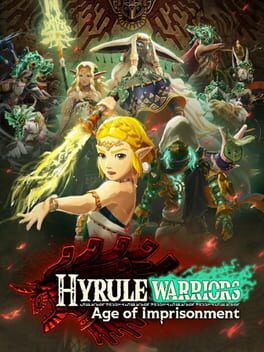

Nintendo and Koei Tecmo’s December 18 Version 1.0.3 update sharpens Hyrule Warriors: Age of Imprisonment with a brutal new Taboo difficulty, Phantom Mode invasions, fresh late‑game challenges, and welcome quality‑of‑life tweaks – all arriving just weeks after the game charted in the U.S. top 20 and quietly became a post‑Tears of the Kingdom obsession.
Hyrule Warriors: Age of Imprisonment has already carved out a surprising niche. Launching in early November as a Tears of the Kingdom prequel musou, it managed to break into Circana’s U.S. top 20 sellers for the month and land just outside the top ten, sitting at number eleven on dollar sales despite Nintendo’s physical‑only reporting. For a spin‑off that leans hard into fan‑service, lore and crowd‑control chaos, that is a strong start.
Nintendo and Koei Tecmo are not wasting any time capitalising on that momentum. Version 1.0.3 arrives on December 18 and reads like a patch built squarely for players who have already rolled credits and still want a reason to log in every night. Rather than headline‑grabbing new characters, the update digs into systemic difficulty, replay incentives and quality‑of‑life, trying to turn Age of Imprisonment into a long‑term comfort game for musou diehards and Zelda fans still chasing a post‑TotK fix.
A new ceiling: Taboo difficulty
At the heart of Version 1.0.3 is the new Taboo difficulty setting, which sits above Very Hard and is aimed at players who have already mastered the game’s enemy patterns and crowd control. This is not just a flat numbers bump. Taboo pushes encounter density and damage expectations high enough that familiar habits like panic‑spamming special gauges or relying on generous healing become less reliable.
The reward structure is tuned around this spike. Clearing multiple battles on Taboo difficulty yields extra High‑Purity Zonanium Steel, the late‑game upgrade material that bottlenecks weapon optimization. It also raises the carry limit for Special Food, which subtly shifts the meta for stamina and survival in the toughest missions. In other words, the mode is designed as a loop for endgame progression rather than a one‑time novelty: suffer through nastier battle variants, cash out in materials, then reinvest those gains into more precise builds.
For players who wrung every drop out of Hyrule Warriors: Age of Calamity or Dynasty Warriors crossovers, Taboo difficulty is the invitation to engage with Age of Imprisonment’s systems at a deeper level. It turns damage optimization and risk management into the main game rather than optional postscript.
Phantom Mode keeps old battles scary
If Taboo sets a new top end for difficulty, Phantom Mode makes sure the rest of the map never feels entirely safe again. Once Version 1.0.3 is installed, previously cleared battles gain a chance to shift into Phantom variants, where standard enemy layouts are disturbed by new threat types.
The patch introduces Dangerous Species and Miasma Enemies that replace some regular mobs, reshaping familiar flows. Chuchu and Lizalfos get highlighted as particularly nasty specimens, appearing in congested clusters or flanking more durable foes. The real wildcard is Phantom Ganon, who can manifest when you defeat strong enemies and turn a routine clean‑up into a high‑stakes boss encounter.
This structure rewards veteran players who know map routes by heart. Instead of running the same battle for materials with muscle memory switched on, you have to constantly read the battlefield, react to surprise spawns and adapt your loadout around threats that may or may not appear. To sweeten the deal, Phantom Mode bumps the drop rate of High‑Purity Zonanium Steel, giving a concrete reason to farm in this more volatile state.
In a musou context, it is a clever halfway point between roguelike unpredictability and traditional fixed stages. You keep the authored phase structure but never quite know how spicy the enemy composition will get.
New challenges: post‑story content with teeth
Version 1.0.3 adds a new wave of Battle Challenges and Hyrule Challenges that unlock once you finish the main story. This is explicitly endgame content. These missions are framed around two main ideas: battles that spotlight specific warriors and what the patch notes tease as a deadly confrontation with a certain formidable enemy.
For character‑focused stages, expect scenarios that sharpen your understanding of individual move sets and unique actions. When a mission is built around a single warrior or a fixed squad, it exposes the full depth of tools that can get lost in chaotic mixed‑roster missions. If you are the kind of player who has a favourite Sage or partner from Tears of the Kingdom and wants to feel like you have truly mastered them, these challenges are the optimal training ground.
The more ominous category sounds like the patch’s bespoke boss challenge content. Combined with the introduction of Phantom Ganon and the Taboo difficulty layer, Version 1.0.3 seems intent on giving high‑skill players a definitive skill check that you can point to and say: this is where the build‑crafting and reflex training actually pay off.
Completing these new challenges is also how you unlock several of the update’s other additions. It gives the late game a structure beyond simply replaying story battles for marginal gains.
Training Hall and three‑player Sync Strikes
On the systems side, the update introduces a Training Hall on Sky Island, available once the new content is unlocked. This location functions as a hub for more focused practice and experimentation but also hides one of the most intriguing features in Version 1.0.3: the ability to execute Sync Strikes by entering with two other players.
Three‑player coordination has always been a flashy fantasy in musou titles, especially in Zelda crossovers that frame heroes as legendary teams. Here, Sync Strikes give co‑op squads a mechanical payoff for tight teamwork. Timed correctly, this kind of group attack compresses the spectacle of Age of Imprisonment’s combat into a single cinematic burst and gives friends running the hardest content a reason to communicate rather than just occupying separate corners of the minimap.
It is a subtle but important feature if Koei Tecmo wants the game to have legs as a hangout title alongside more loot‑driven co‑op staples. If word of mouth around Taboo runs and Phantom challenges catches on, the Training Hall might become the place where late‑night groups test high‑risk strategies before taking them into the wild.
New skills and a forbidden blade
A big draw for the update is the expansion of weapon options for the enigmatic Mysterious Golem. Version 1.0.3 introduces new unique skills for the One‑Handed Sword, Two‑Handed Sword and Spear categories, all tied to the newly added challenge content.
One highlight called out in the translated notes is Shield Charge for the One‑Handed Sword. It lets you advance with your shield raised, and if you time the movement to catch an incoming attack you trigger a powerful spinning slash counter. There is a clear lineage here from Tears of the Kingdom’s parry and flurry rush systems, translated into a musou environment that has to handle dozens of enemies at once. The emphasis is on reading tells and committing to forward momentum instead of constantly rolling away.
Layered on top of this is the Forbidden Sword, a one‑handed miasma‑tainted weapon that any of the game’s warriors, including Mysterious Golems, can wield. You obtain it by clearing the new battles bundled into the patch, which effectively makes it a trophy for those committing to Version 1.0.3’s toughest content.
A miasma‑dripping blade is inherently on‑brand for a Tears of the Kingdom prequel, and how it folds into build crafting will be interesting. If its traits skew toward high‑risk, high‑reward damage output or unique interactions with miasma‑infused foes, it could become the iconic late‑game weapon that defines a whole wave of post‑patch videos and community theorycrafting.
Quality‑of‑life patches the rough edges
Where the previous sections are about headline systems, Version 1.0.3 also makes a series of smaller adjustments that should make the daily rhythm of play smoother.
Challenges that require Sync Strikes will now register completion even if the finishing blow comes from a non‑controlled character, which cuts out frustrating failed runs where the AI accidentally steals a requirement. Gallery viewing is less rigid, letting you back out of Special Conversations with the B button instead of waiting them out.
Tutorial prompts around guarding and evasion have been tuned so that newcomers and returning players get clearer guidance on the core defensive tools. Given how crucial perfect guards and dodges will be on Taboo difficulty, this subtle nudge doubles as onboarding for the exact skills the update expects you to develop.
There are backend tweaks to resource handling too. If your stockpile of Zonanium Steel has already hit the cap, the game will still let you engage in post‑battle weapon strengthening options like Max Blacksmith or Erase engraving, rather than locking off those menus until you spend or discard materials. It is a small but important change for anyone deep in the crafting and min‑maxing loop.
Finally, Nintendo and Koei Tecmo call out a handful of bug fixes, from material sensors pointing to the wrong battles for Electric Lizalfos drops, to extra conditions mis‑gating the Sword Flashing in the Desert mission, to missing attack sound effects in split‑screen co‑op. None of these are glamorous, but together they shore up confidence that the team is listening to early players and smoothing over the friction points in day‑to‑day play.
Riding strong November sales into long‑term relevance
Context matters for an update like this. Circana’s November 2025 U.S. sales chart placed Hyrule Warriors: Age of Imprisonment at number eleven overall on dollar sales, behind heavy hitters like Call of Duty: Black Ops 7 and Battlefield 6, but alongside other big new Nintendo releases such as Kirby Air Riders and Donkey Kong Bananza. Since Nintendo does not share digital sales data with Circana, that physical‑only eleventh place likely understates the game’s true performance.
For a musou spin‑off on new hardware, that is an encouraging signal. There is a sizeable audience hungry for more Hyrule after Tears of the Kingdom, and the idea of reliving the Demon King’s invasion with gigantic set‑piece battles and exaggerated movesets clearly resonates. Version 1.0.3 essentially acknowledges that audience and tries to keep them locked in for the long haul.
In that sense, Age of Imprisonment is filling a role that Age of Calamity did not fully occupy. Where the previous Hyrule Warriors entry felt like a one‑and‑done story detour, this new game is slowly positioning itself as a standing pillar of Zelda fandom: something you can come back to every few months for a new difficulty tier, a fresh gauntlet, or a weapon chase that ties back into the main series’ themes.
For musou veterans, it is a rare example of a licensed spin‑off that respects their desire for challenge and mechanical expression rather than stopping at surface‑level spectacle. For Zelda players nursing withdrawal from Tears of the Kingdom’s mix of systemic combat, build crafting and eerie gloom, Version 1.0.3 offers a different but thematically adjacent way to stay in that headspace.
A sharper, meaner Age of Imprisonment
Version 1.0.3 will not sell anyone on Hyrule Warriors: Age of Imprisonment who already bounced off the musou formula. It does not add flashy new characters or rewrite the story. What it does do is tighten the feedback loop for the dedicated players who carried it into the November charts, making their favourite parts of the game more demanding, more rewarding and more flexible.
With Taboo difficulty, Phantom Mode invasions, late‑game challenges, new combat tools and welcome quality‑of‑life tweaks all landing on December 18, Age of Imprisonment looks set to become a more robust and replayable companion to Tears of the Kingdom’s story of ancient Hyrule. If you have been waiting for a reason to dust off your Zonai contraptions and dive back into armies of corrupted monsters, this update is shaping up to be exactly that moment.