
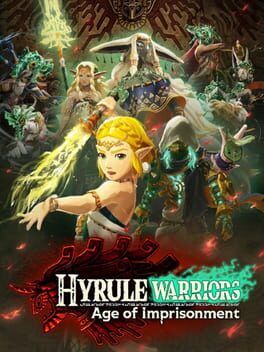

Age of Imprisonment clears 1 million on Switch 2 in under two months, cementing Musou-style Zelda stories as a core pillar of the series and hinting at where Nintendo and Koei Tecmo may take spin-offs next.
Hyrule Warriors: Age of Imprisonment has raced past one million copies sold on Nintendo Switch 2 in under two months, and that milestone says as much about the health of The Legend of Zelda’s spin-off ecosystem as it does about one game’s success.
According to Koei Tecmo’s latest financial report, Age of Imprisonment cleared the one‑million mark worldwide by December 31, 2025, after launching in early November. That makes it one of the first Switch 2 exclusives to hit seven figures and confirms that Zelda Musou is no longer a curious experiment. It is now a dependable pillar that can headline a new Nintendo system, carry key pieces of Hyrule’s history, and still move serious numbers.
This is a celebratory moment for a subseries that started as an oddball collaboration a decade ago. To understand why Age of Imprisonment connected so quickly, and what its performance suggests for the future, it helps to zoom out and look at how Zelda spin-offs have grown into structural support for the franchise.
From Curiosity To Canon: How Zelda Spin-Offs Got Here
The original Hyrule Warriors on Wii U and later 3DS and Switch was pitched as a crossover between Koei Tecmo’s Warriors blueprint and Zelda’s world. It pulled in characters and locations from across the series and did well enough to justify ports and definitive editions, but it was still treated as a side dish next to mainline releases.
Age of Calamity in 2020 changed the stakes. Tied directly to Breath of the Wild, it quickly became the best-selling game in the entire Warriors metaseries, pushing past 4 million units by early 2022. It proved that when a spin-off is allowed to sit close to the heart of the Zelda fanbase, players will show up in droves, even for a combat style that some find repetitive on paper.
Age of Imprisonment goes one step further. Set during the Imprisoning War glimpsed in Tears of the Kingdom, it delivers what the mainline game only hinted at: the full-scale invasion of ancient Hyrule, the rise of Demon King Ganondorf, and the desperate stand of Rauru and the Sages. For the first time, a spin-off is not just brushing up against canon, but being framed as the complete, official telling of a crucial historical event.
In other words, Zelda spin-offs have climbed from novelty to narrative cornerstone. Age of Imprisonment’s sales confirm that players are willing to follow the series there.
Why Age Of Imprisonment Hit One Million So Fast On Switch 2
There is no single reason Age of Imprisonment crossed seven figures so quickly, but several factors stand out when you line up the available data with how the project was positioned.
First is the timing and platform. Switch 2 launched with a hungry audience and a relatively lean lineup of large-scale, first-party action games. In Japan, Famitsu data shows Age of Imprisonment opening at over 73,000 physical units in its first week, topping the charts and giving Switch 2 hardware a meaningful bump. That is a strong result for a spin-off in an early-generation window, and it set the tone for the global rollout.
Second is the narrative hook. Tears of the Kingdom left players fascinated by the brief Imprisoning War flashbacks. Age of Imprisonment markets itself clearly as “the untold story” of that conflict, finally showing Ganondorf’s invasion of a thriving, pre-ruin Hyrule. Reviews consistently highlight how this frame gives context and emotional payoff to characters like Rauru, Mineru, and Zelda herself, turning what could have been a loose prequel into a genuine draw for story-focused fans.
Third is the way Koei Tecmo and Nintendo tuned the Musou formula to Switch 2’s strengths. Technical analysis and reviews note:
Stable performance and sharper visuals compared to Age of Calamity, which struggled on original Switch during heavier encounters.
Expanded combat depth, including character-specific mechanics for Sages and Zonai constructs that add layers beyond button-mashing.
Snappier loading and smoother split-screen co-op, which makes the classic “let’s clear a map together” Musou appeal easier to enjoy.
This matters because one of the main criticisms of Musou crossovers is fatigue. By making Age of Imprisonment a showcase for Switch 2’s horsepower and a more nuanced take on large-scale battles, Koei Tecmo turned a potential barrier into a selling point.
Last is the trust built by the previous Hyrule Warriors entries. Age of Calamity’s rapid success broadened the audience for Musou-style Zelda to millions. For many players, Age of Imprisonment wasn’t “a new genre to try” but another chapter in a style they already understood and enjoyed. The sales curve suggests a front-loaded audience that knew what they were getting and wanted in early, even without a long tail of discounts.
What One Million On Switch 2 Says About Musou-Style Zelda Demand
Crossing a million on a young platform is meaningful on its own, but the surrounding context makes it more interesting.
First, it validates Musou as a recurring storytelling vehicle for Zelda. Across Hyrule Warriors, Age of Calamity, and now Age of Imprisonment, the series has repeatedly used the Warriors template to explore moments of large-scale conflict that would be difficult to realize in a traditional adventure structure. These games let players control multiple heroes, defend or capture territory, and feel the sweep of war in a way mainline titles usually avoid.
The sales data shows that there is sustained appetite for that angle, provided the stories feel consequential. Age of Calamity tied tightly to Breath of the Wild and set a precedent for canon-adjacent Musou. Age of Imprisonment, explicitly canon and placed in a heavily requested era, confirms that appetite has not been exhausted by one attempt.
Second, it suggests that Musou Zelda is developing its own identity rather than just riding the parent brand. Reviews and player discussion point to expectations specific to this subseries: bigger rosters, more experimental movesets, co-op-friendly mission design, and storylines that enrich the larger saga instead of diverting from it. Age of Imprisonment hits those notes with a sprawling cast of Sages and allies, bespoke maps pulled from ancient Hyrule’s architecture, and scenarios that echo events fans already half-know from Tears of the Kingdom.
Third, it demonstrates that Switch 2 can support Musou at a level of technical quality that broadens appeal. Age of Imprisonment does not need to apologize for framerate drops or blurred visuals in the way some earlier Warriors games did on Switch 1. That alone makes it easier to recommend and likely increases attachment and word-of-mouth, which are crucial for crossing from early adopters to a wider audience.
Taken together, a million units in under two months on new hardware with a genre that has historically been niche is a visible sign that Zelda Musou has moved from side experiment to “expected” part of the lineup. Fans no longer ask if there will be another one, but where and when it will fit.
Where Nintendo And Koei Tecmo Might Experiment Next
Age of Imprisonment’s success will not just encourage more of the same, it opens the door for measured experimentation across eras, subgenres, and co-op structures, all within the broader spin-off lane that Zelda has carved out.
One likely path is continued exploration of distinct historical periods. The Imprisoning War and the Great Calamity are now fully realized as interactive epics. That leaves other corners of Hyrule’s long history that could lend themselves to large battles and multi-character casts. The lesson from Age of Imprisonment is clear: when a spin-off steps into an era that fans have seen but not fully inhabited, interest spikes, especially if the game is marketed as filling in a specific narrative gap rather than existing in a vague “what if” space.
Another avenue is further refining genre hybrids while keeping the core Musou structure. Age of Imprisonment already folds in more adventure elements and environmental interactions than the original Hyrule Warriors, with Zonai devices, verticality, and light puzzle hooks that nod toward mainline Zelda design without slowing the pace. Future projects could push this balance toward more exploration, light stealth, or base-building systems to reflect different kinds of conflicts, while still centering the catharsis of sweeping through armies.
Co-op is also an area with room to grow, especially on Switch 2. Age of Imprisonment benefits from stronger hardware that makes split-screen smoother and online connections more stable. With this technical foundation in place, Nintendo and Koei Tecmo could experiment with mission types that assume coordinated play, such as asymmetrical roles across linked battlefields or dynamic objectives that demand players divide and conquer rather than simply sharing the same space.
Beyond the Musou format, Age of Imprisonment’s success reinforces a broader pattern: Zelda spin-offs can handle big ideas and big stories without weakening the mainline series. From Hyrule Warriors to rhythm experiments and crossovers in other genres, these projects let Nintendo explore mechanical extremes and narrative side alleys while keeping the numbered adventures focused. A muscular launch on Switch 2 suggests that structure is working.
A New Pillar For The Legend Of Zelda
Hyrule Warriors: Age of Imprisonment hitting one million units is not just a line in Koei Tecmo’s earnings report. It is a marker of how far Zelda spin-offs have come and how strategically Nintendo now treats them.
In less than three console generations, the series has gone from tentative collaborations to canon-touching action epics that can anchor a new platform’s library and attract both story-driven players and combat-focused fans. Age of Imprisonment benefits from that evolution and pushes it forward, proving that there is substantial demand for Musou-style journeys through key moments in Hyrule’s history.
As Switch 2’s library grows, more experiments will crowd the stage, but this early success secures Zelda Musou a prominent seat. Whatever form the next spin-off takes, it will be entering a space that Age of Imprisonment helped solidify: a space where side stories are not side-lined, and where a million players will show up to swing the Master Sword through history all over again.