
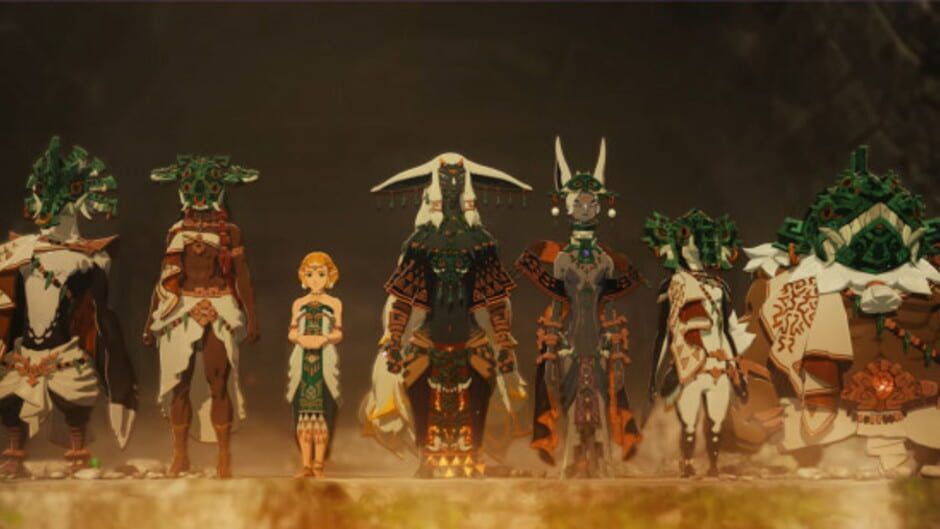
Nintendo’s first free content drop for Hyrule Warriors: Age of Imprisonment does more than add new weapons and Sync Strikes. It quietly tackles pacing gripes, smooths out performance on Switch 2, and hints at how the game will be supported after launch.
Nintendo and Koei Tecmo are wasting no time tuning Hyrule Warriors: Age of Imprisonment. Barely three weeks after its Switch 2 launch, the first free content update lands on November 27, bringing fresh weapons, new Sync Strikes, extra enemy types and some low‑key but important pacing and performance tweaks.
New weapons that matter for late‑game builds
The update’s headliners are its new weapons, and they are not just throwaway sidegrades. Post‑launch feedback from high‑level players has been consistent: once you discovered a few optimal Zonai‑infused setups, much of the roster blurred together. These new tools are clearly built to shake that up.
Several hero‑specific weapons drop into the late‑game mission pool with passive traits that lean harder into Age of Imprisonment’s zoning and crowd‑control systems. Think wider frontal cones, longer combo strings built around fusing Zonai devices, and stronger elemental payoff when you juggle Stasis, Recall and basic attacks. In practice, that means you can finally build characters that specialize in keeping bosses locked in your tempo rather than simply spamming Sync Strikes on cooldown.
They also arrive tuned for endgame grinding. Higher base power combined with better growth curves makes them viable candidates for players who are already cleaning up post‑story challenges. Instead of reforging another copy of your existing favorite, the new drops are worth slotting in and testing, which goes a long way toward keeping the late game from feeling like busywork.
Zelda and Calamo’s Sync Strike is pure fan service
The flashiest addition in the patch is a new Sync Strike that pairs Princess Zelda with Korok Calamo. On paper it sounds like simple fan service for players who fell in love with the new Korok character, but it actually plugs into the game’s rhythm in a useful way.
Zelda already skews toward mid‑range zoning, peeling enemies off objectives with wide beams and runes. Calamo folds in extra crowd control and chip damage during Sync Strike windows, making it easier to keep combo chains alive in dense waves without losing sight of priority targets. The result is a more fluid loop for players who felt Zelda’s base Sync Strikes were a bit too stiff when pushing into higher difficulty stages.
Cosmetically it also leans into Age of Imprisonment’s lighter story beats, something players wanted more of after the campaign’s relentless early pacing. The new animation sequence sells the bond between Zelda and her Korok ally and helps make repeated Sync Strikes less visually repetitive over long play sessions.
Block Golem co‑op Sync Strike changes how you approach elites
The patch’s second new Sync Strike lets your hero temporarily team up with the Block Golem. This one is less about charm and more about tactical utility.
The Block Golem’s moves emphasize verticality and stagger. When woven into your combos through Sync Strike windows, they can interrupt armored elites and mini‑bosses that previously pushed straight through lighter attacks. That has a noticeable impact on missions that stack multiple captains or throw elites into tight arenas, situations that previously exposed some of the game’s camera and readability issues.
By letting you borrow the Golem’s toolkit in short bursts, the update gives melee‑focused characters a way to manage space without completely rewriting their move lists. It is a relatively small mechanical addition, but it meaningfully widens the number of builds that feel viable when the difficulty spikes.
New enemies and the “serious battle with Rauru” shake up the map
On the content side, the update injects new enemies, extra challenges and several fresh battle scenarios into the adventure map. The standout is a scenario billed as “A serious battle with Rauru.”
Where the launch game leaned heavily on remixing familiar enemy packs, this mission angles for a more focused duel vibe. Rauru’s attack patterns emphasize punish windows and positioning over raw stat checks, which suits players who were asking for encounters that feel closer to a Zelda boss fight than an anonymous Musou brawl.
The additional enemy types that accompany this and other new stages help vary up the rhythm of combat. Mixes of aerial threats with shielded ground units force more frequent use of mobility options and Zonai device deployment, which in turn makes the new weapons and Sync Strikes feel more necessary rather than optional.
The extra challenges also feed into the endgame loop by dripping out stronger materials. That tweak alone speaks directly to criticism that the grind to fully upgrade favorite characters felt a bit flat after credits. With more powerful drops tied to distinct scenarios, there is now a clearer sense of progression beyond simply watching numbers rise.
Quiet but crucial pacing fixes
Under the hood, this patch quietly targets some of the most common pacing complaints from early adopters.
Tutorial prompts that used to appear once and vanish are now recorded in a dedicated list, accessible from the map. Given how dense Age of Imprisonment is with mechanical micro‑systems, having an in‑game reference finally reduces the friction of returning to older features after a break.
The map itself has been made more readable. Previews now show which areas you can reclaim at a glance, making it easier to string together a satisfying route of missions without toggling through menus. Combined with the new challenges, this small change helps each play session feel less like hunting for icons and more like planning an actual campaign across Hyrule.
Another subtle tweak is the preview of how much health you will recover. That one line of information minimizes time spent over‑healing or diving into menus to double‑check risk levels, especially on higher difficulties where a single mistake against a boss like Rauru or a champion‑class foe can send you back to a checkpoint.
None of these adjustments sound dramatic in patch notes, but in aggregate they smooth the stop‑start feel that some fans disliked at launch.
Performance on Switch 2 is smoother, though not perfect
Performance was a sticking point for the original Hyrule Warriors: Age of Calamity on Switch, and Age of Imprisonment entered the spotlight carrying that baggage. Early player feedback highlighted two main issues on Switch 2: uneven frame pacing during the busiest set‑piece battles and occasional camera jitter in split screen.
This first update does not revolutionize the tech, yet it does appear to address the worst spikes. GPU‑heavy scenes with large numbers of enemies and multiple synced effects now hold closer to the game’s target frame rate, and the brief hitches that occurred when triggering certain Sync Strikes are noticeably reduced. The result is that battles feel more consistent, which matters more in a Musou title than chasing a higher peak frame count.
In split screen, camera jitter during fast lateral movement has been toned down, though not eliminated. Given that this is a free update arriving just weeks after launch, it is reasonable to view it as the first step in an ongoing optimization pass rather than a final word on performance.
What is important is the message it sends. Nintendo and Koei Tecmo are not ignoring performance reports, and they are clearly willing to devote post‑launch resources to tuning the Switch 2 version, which should reassure players who remember how long it took Age of Calamity to reach a stable state.
Responding to early fan criticism
Beyond the raw patch notes, this update reads as a direct response to early community feedback highlighted across fan forums and coverage. Reviews and player impressions converged on a few recurring themes: the opening hours felt dense and front‑loaded, progression systems were opaque, and the grind after the main story blurred together too quickly.
By expanding the pool of high‑level weapons and Sync Strikes, the update gives veterans new toys to chase without locking them behind paid DLC. New enemies and battle scenarios provide a sharper structure to the post‑credits map and a clearer sense of challenge escalation. Quality‑of‑life features reduce friction between missions, lowering the cognitive load that came with juggling tutorials, reclaimable areas and resource planning.
Taken together, these changes do not rewrite the game’s core design, but they do sand down many of the rough edges that frustrated early adopters. Fans who bounced off after credits may find that the combination of stronger rewards, more varied encounters and improved pacing is enough to justify a return.
What this says about post‑launch support
Perhaps the most interesting aspect of this patch is what it implies about the future of Age of Imprisonment. Previous Hyrule Warriors titles leaned on paid Expansion Passes with big roster updates and story content. Here, the messaging from Nintendo has been clear: expect a series of smaller, free updates instead of one huge, premium DLC wave.
This first content drop fits that philosophy. It layers meaningful mechanical and structural refinements on top of compact slices of new content, rather than dangling an entirely new campaign arc. For players, that means the game is more likely to evolve iteratively over its first year, with each patch nudging balance, performance and variety forward.
For Nintendo, it positions Age of Imprisonment as a stable pillar in the early Switch 2 library. A steady trickle of free updates keeps the game visible and addresses issues in real time without fragmenting the player base or selling competitive advantages.
If this debut update is any indication, future support will probably continue in the same vein: targeted tweaks to pacing and performance, themed Sync Strikes that spotlight fan‑favorite characters, and occasional challenge drops that give dedicated players reasons to return without overwhelming them with systems bloat.
Should you come back for the update?
If you are still working through the campaign, this patch slots right into your experience. The new weapons and Sync Strikes open up alternative playstyles before the map fully sprawls out, and the pacing fixes make progression smoother. If you already cleared the story and walked away, it may not be the massive expansion that pulls everyone back, but it is a strong signal that the developers are listening.
Age of Imprisonment is not being rebuilt in the image of its predecessors, and its support plan looks more modest than a full Expansion Pass. Yet this first free update feels smartly targeted, shoring up launch weaknesses while adding enough new toys and challenges to keep Hyrule’s battlefields worth revisiting on Switch 2.