
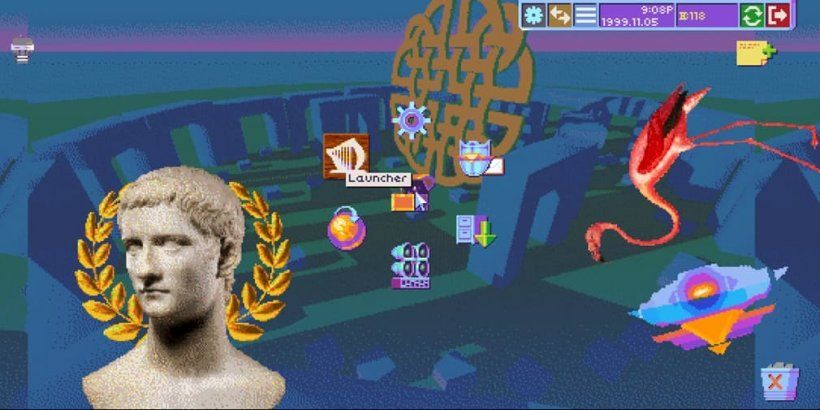

Hypnospace Outlaw is now on iOS and Android, but its mobile port has a tricky job: preserving a deliberately clunky desktop parody while making it work on touchscreens.
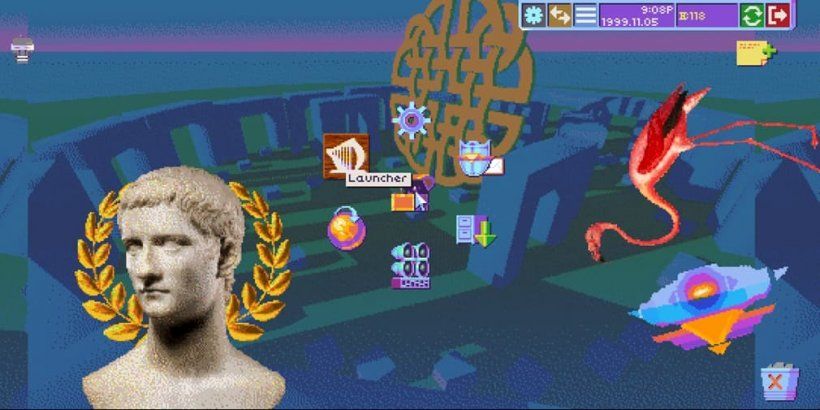
Image: pocketgamer.com
Hypnospace Outlaw is finally pocket-sized, with one big interface question
Hypnospace Outlaw is now available on iOS and Android, bringing Tendershoot’s 1999 internet simulator to phones with a free-to-try model and a $4.99 full-game unlock, according to Pocket Gamer and Droid Gamers. That is the concrete news. The tension is built into the game itself: Hypnospace Outlaw is a desktop operating system parody, a deliberately clunky Windows 98-style detective game about clicking through fake websites, closing pop-ups, downloading files, and reading people’s messy online lives. Now it has to make sense under a thumb.
Publisher No More Robots and developer Tendershoot have not simply dropped the old interface onto a smaller screen, at least according to the available reporting. Notebookcheck, citing the mobile announcement and store listings, says the mobile version has native touch controls and a revamped user interface, with actions such as dragging files, closing pop-up windows, and navigating complex web pages adapted for smartphones and tablets. Droid Gamers similarly reports that the Android version has been optimized for mobile with full touch controls and a revamped UI.
That adaptation is the story. Hypnospace Outlaw’s charm has always lived in the friction of its fake operating system: slow pages, ugly layouts, dodgy downloads, obnoxious windows, and the joy of following a breadcrumb trail through a handcrafted web that feels lovingly wrong. Pocket Gamer’s early Hypnospace Outlaw first impressions on mobile praise exactly that quality, describing the first boot into HypnOS as a kind of time travel, complete with a blocky X button and cursor trails that recall Windows 98. For a phone release, the question is whether touch makes that friction playful, or whether the smaller screen turns the joke into work.
The mobile release is confirmed, but the timeline is oddly messy
The reliable practical answer for players is simple: Hypnospace Outlaw mobile is available now on both the App Store and Google Play, according to Pocket Gamer’s launch coverage. Droid Gamers also reports that No More Robots has dropped the game on mobile and points Android players to Google Play. Pocket Gamer says the release uses a free-to-try model, while Droid Gamers says it is free to download with a single $4.99 in-app purchase to unlock the full game. Notebookcheck describes the same model as free-to-start, with opening chapters available for free and a one-time in-app purchase for the full narrative experience.
The exact release-date record is less clean. Notebookcheck reported ahead of launch that No More Robots and Tendershoot announced a July 23, 2026 release for iOS and Android. Wikipedia’s page for Hypnospace Outlaw also lists July 23, 2026 for iOS and Android. Pocket Gamer’s launch article says the game released “today” for both platforms, but the provided source text does not include a full calendar date beyond its relative timestamp. MiniReview conflicts with those accounts by listing July 22, 2026 for Android and April 29, 2026 for iOS. Because the provided material does not include direct App Store or Google Play metadata beyond linked listings, the safest reading is that the game is available now on both mobile platforms, while secondary listings disagree on the precise platform-by-platform date history.
There is one more useful store detail. Notebookcheck reports that the mobile edition contains no real-world advertisements, meaning the adware players deal with is part of the fictional operating system rather than the monetization model. For a game built around hostile pop-ups, viruses, and trashy downloadable utilities, that distinction matters. It means the mobile version can preserve the comedy of digital clutter without asking players to endure actual ad breaks in the wrapper around it.
A desktop parody that depends on being awkward
Hypnospace Outlaw, first released for Windows, macOS, and Linux in March 2019 and later brought to Nintendo Switch, PlayStation 4, and Xbox One in August 2020 according to Wikipedia and Droid Gamers, is framed as a simulation and puzzle game. Its fiction is an alternate-history 1999 where people browse the internet in their sleep through a Hypnospace Headband running the HypnOS operating system. Players work as a Hypnospace Enforcer for Merchantsoft, the fictional company behind the service, investigating copyright violations, harassment, malicious software, and other rule-breaking behavior.
The game’s interface is the point of entry. Wikipedia describes Hypnospace Outlaw as using a desktop operating system-style graphical interface, with an in-game browser called Hypnospace Explorer that evokes Internet Explorer. Pocket Gamer’s first impressions emphasize how physical interaction sells the nostalgia: the game does not simply show the old web as a themed backdrop, it makes players operate it. Stephen Gregson-Wood writes that it feels clunky, ugly, and slow, and treats that as a compliment because those qualities recreate the texture of the era.
That makes Hypnospace Outlaw a strange candidate for mobile in a good way. Many ports improve themselves by sanding away old friction. Hypnospace Outlaw risks losing part of its identity if it becomes too smooth. The ugly fonts, automatic music, fake GeoCities-style blogs, weird personal pages, malware grifts, and overdesigned desktop decorations all need enough inconvenience to feel like the early web, but not so much that players are fighting the phone rather than solving the case. The mobile port’s success will likely rest on that narrow craft problem: keeping the simulation of bad usability while removing actual bad usability.
Early mobile impressions point to personality over puzzle-box neatness
Pocket Gamer’s new first-impressions piece is the clearest early read on how Hypnospace Outlaw mobile is landing with press. Gregson-Wood comes away struck less by the case structure than by the atmosphere and writing. He describes the player’s role as internet police, sent cases that require trawling forums and websites for copyright infringement, harassment, extralegal commerce, profanity, or malicious software. Reporting violations earns in-game currency, which can be spent on items such as screensavers.
As a puzzle game, Pocket Gamer says the work involves following clues and hunting for unlisted pages where users have tried to hide what they are doing. The source calls that process fun and harder than it might first seem, but it also argues that the real star is the personality embedded in each page. That is important for anyone searching for Hypnospace Outlaw first impressions before downloading the mobile version. The appeal is not a clean room of logic puzzles. It is observation, digital archaeology, and learning how fictional communities expose themselves through bad layouts, old jokes, petty grudges, and suspicious links.
Droid Gamers’ coverage lines up with that reading by emphasizing the constant digital hazards and distractions. It notes pop-ups, adware, toolbars, hackers, viruses, and untrustworthy emails, alongside collectible GIFs, MIDI files, wallpapers, themes, skins, screensavers, virtual pets, and helper bots. Those elements are cosmetic on the surface, but they also define the rhythm of play. Hypnospace Outlaw asks players to read interfaces as evidence. A desktop theme, a page title, a download, or a deliberately terrible song can be texture, clue, joke, or trap.
For indie puzzle fans, that is the craft hook. Hypnospace Outlaw is not leaning only on recognition of a Windows 98 game mobile aesthetic. It uses the social habits of that era as its puzzle language. If you grew up around personal webpages, garish fonts, looping music, guestbook energy, and suspicious downloads, Pocket Gamer’s impressions suggest the mobile version still hits that memory nerve. If you did not, the mystery structure gives the weirdness a job: browse, infer, report, and keep asking why someone would hide something in such a ridiculous place.
Where touch controls could help the joke land
The strongest argument for Hypnospace Outlaw Android and Hypnospace Outlaw iOS is that touch can make its fake web feel tactile. Notebookcheck specifically says the port adapts dragging files, closing pop-ups, and navigating complex web pages for smaller smartphones and tablets. Those are not minor inputs in this game. They are the verbs of the simulation. Every closed pop-up and every moved file is part of inhabiting HypnOS.
On a desktop, a cursor carries the memory of old computing. On a phone, tapping a fake desktop window could make the whole thing feel like rummaging through a tiny, cursed appliance. That could suit Hypnospace Outlaw beautifully. The game’s world is about private spaces made public: personal homepages, secret pages, weird downloads, and communities that feel handmade. Phones are also intimate devices, so the act of investigating people’s dream-internet pages on one could sharpen the nosy, uncomfortable pleasure of being an Enforcer.
The free-to-start structure also gives the mobile version a fairer path than many premium ports. Pocket Gamer and Notebookcheck both report that players can try the opening portion before paying for the full experience. That matters because interface tolerance is personal. Some players will delight in fake pop-ups and clumsy web pages on a touchscreen. Others may decide quickly that they would rather play on a larger display. The pricing model lets that judgment happen before the $4.99 unlock.
For tablets, the case is especially easy to imagine. The sources do not provide device-specific performance notes or screen-size recommendations, so no firm claim can be made about the best hardware. Still, because Notebookcheck says the mobile UI was adapted for smartphones and tablets, and because the original design is built around dense pages and overlapping windows, larger touchscreens may naturally give HypnOS more room to breathe.
Where the phone version could struggle
The danger is equally clear. Hypnospace Outlaw’s pages are supposed to be crowded, ugly, and sometimes hostile. Pocket Gamer calls the simulated web clunky, ugly, and slow in a positive sense, but those qualities are easier to appreciate when the player can separate deliberate parody from practical discomfort. On a small phone, a dense fake webpage, multiple pop-ups, desktop decorations, and investigative reading could become cramped if the revamped UI does not do enough work.
This is where the port has to walk a careful line. If buttons, windows, and text are enlarged too aggressively, the desktop parody may lose some of its old-computer character. If they remain too faithful to the original desktop scale, the player’s fingers become the wrong tool for the job. Notebookcheck’s report that the interface was revamped from the ground up for touchscreens is encouraging, but that is a design promise rather than a guarantee of comfort across every device.
There is also the issue of pacing. Hypnospace Outlaw’s detective work rewards patience: reading pages, noticing phrasing, searching for hidden material, and returning to earlier leads with new context. Mobile play often happens in shorter bursts. The sources do not say whether the mobile version adds quality-of-life changes beyond touch controls and UI changes, nor do they provide save-system details or performance benchmarks. Players who want to treat the game as a sit-down mystery may still prefer a tablet or another platform unless phone impressions continue to show that the browsing flow survives in smaller sessions.
The good news is that the potential failure points are visible right away. Because the opening chapters are free according to Notebookcheck and the mobile release coverage, players can test the reading comfort, tapping accuracy, and general feel before buying. For this specific port, that trial is unusually valuable. You are not only sampling the story. You are testing whether a fake 1999 desktop belongs in your hand.
Who should download Hypnospace Outlaw mobile now
If you want a compact, strange investigative game and you are curious about the old web as a playable space, Hypnospace Outlaw mobile is worth trying now, especially because Pocket Gamer and Droid Gamers report that the download is free with a single full-game unlock. It is available on both iOS and Android, and the reported $4.99 price makes the risk low once you know the interface works for you.
Players coming from PC or console should treat this as a port with a specific design question rather than a simple replacement. The core fantasy remains the same across the sources: you are an Enforcer browsing Hypnospace, policing violations, avoiding digital junk, earning HypnoCoins, and decorating a fake desktop with the spoils of your work. The mobile version’s added significance is its control layer. Touch could make the browsing feel immediate and toy-like, or it could expose how much the original depended on desktop space and pointer precision.
For newcomers searching for a Windows 98 game mobile experience, the most useful expectation is this: Hypnospace Outlaw is satire, mystery, and interface comedy bundled together. Its early mobile reception from Pocket Gamer highlights immersion, personality, and writing over pure puzzle neatness. The game wants you to laugh at a terrible page, then realize the terrible page contains exactly the clue you needed.
That is why the phone release is fascinating. Many mobile ports are judged by whether they disappear cleanly onto a touchscreen. Hypnospace Outlaw mobile has a harder and more interesting task. It has to make an intentionally awkward internet feel comfortable enough to investigate, while leaving enough awkwardness intact for the joke to bite.