
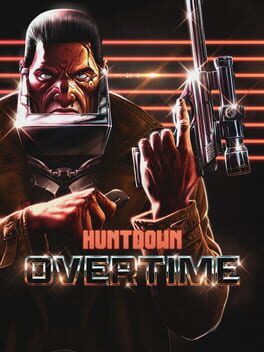

A first-look preview at Huntdown: Overtime, the VHS-smeared roguelite prequel that stretches the original’s tight arcade gunplay into a run-based bounty-hunting grind, and what to expect from its upcoming Steam Early Access launch.
Huntdown always felt like the best level of a fictional lost arcade cabinet from 1989, stretched into a full game. It was tight, curated and stubbornly old-school, a side-scrolling shooter that prized strong encounter design over sheer volume.
Huntdown: Overtime is what happens when you take that same foundation and throw it into a meat grinder of procedural streets, permanent upgrades and a protagonist who literally becomes less human every run.
Set before the events of the original, Overtime is a roguelite prequel following John Sawyer on his way from grizzled bounty hunter to the chrome-plated executioner fans met in Huntdown. It keeps the chunky pixel violence, the one-liner swagger and the 80s VHS grime, but retools almost everything else into a run-based structure built for repetition.
This is not just more Huntdown. It is Huntdown pulled apart and rebuilt as a run-and-gun roguelite, with Early Access on Steam planned for 2026.
Run, gun, die, rebuild
The original Huntdown lived and died on hand-authored levels and specific boss fights. Overtime instead drops Sawyer into a shifting New Detroit, where each run is a fresh slice of gangland streets and bounty contracts.
You still move across horizontal stages, sliding into cover, popping up to unload a shotgun blast, and dancing between grenades and molotov cocktails. That core Easy Trigger feel looks intact in the reveal footage and press materials: tight hitboxes, heavy recoil, enemies that fire in sharp patterns rather than random sprays.
The difference is what happens when you inevitably die.
Each failed run feeds a meta-progression layer where your busted-up bounty hunter gets rebuilt with new cybernetics. Instead of simply retrying a level, you are sent back to the chop shop to bolt on new limbs, tweak implants and expand your arsenal. The marketing pitches it bluntly: every strategic upgrade "strips away more flesh and builds a cybernetic fighter one chrome limb at a time."
Expect that loop to define Overtime. Hunt, die, spend what you earned, come back slightly more brutal. The key question for series fans is whether Easy Trigger can keep the original’s sharp combat feel while embracing the chaos and repetition of roguelites. Early footage, and the way enemies still telegraph attacks clearly, suggests they know better than to abandon that precision.
VHS 80s grime turned up to eleven
Huntdown already looked like a forgotten action cartoon that burned out a CRT. Overtime pushes that aesthetic even harder.
The reveal trailer leans into a full VHS presentation, right down to fuzzy filters, scanlines and color bleed. New Detroit glows with sickly neons that smear as you sprint, while explosions leave the screen briefly drowning in bloom and glitch. Coffee Stain and Easy Trigger are very clearly chasing the fantasy of playing a bootleg Robocop tape at 3 a.m. on a battered living-room TV.
Character art doubles down on grindhouse theatrics. Sawyer is less sleek cyborg and more walking crime-scene, a trench-coated brick of a man gradually festooned with visible chrome. Enemies range from leather-clad street punks to corporate shock troops, the sort of gangs that look like they walked out of The Warriors, Predator and a forgotten Cannon Films B-movie at the same time.
Importantly, this isn’t just window dressing. The VHS veneer feeds into the game’s identity as a run-based score-chasing experience. The UI, mission boards and interstitial scenes look like they were ripped from a tape your older cousin swore you were too young to watch. When a run ends, it does not feel like a clean game over. It feels like rewinding the tape and slamming play again.
From tight stages to repeatable contracts
The biggest design shift is structural. Where Huntdown was a linear tour of bespoke levels, Overtime is organized around repeatable bounty contracts.
Runs are framed as cases for John Sawyer to work through, with each contract offering a different mix of gangs, objectives and rewards. In practice this means:
You take a contract, push through several interconnected arenas, pick up side bounties and occasionally face a mid-run boss or elite enemy. Between sections there are chances to restock, swap weapons or draft new upgrades, lending the game a rhythm closer to Hades or Dead Cells than a pure arcade shooter.
The mission variety looks broader than the original. Where Huntdown often boiled down to crossing a stage and flattening whoever waited at the far side, Overtime toys with multi-part objectives, optional targets and risk-versus-reward branches. Do you take a detour into a gang’s warehouse for a big payday at the cost of burning health and ammo, or do you beeline for the contract’s main mark so you can actually survive long enough to cash out?
Over multiple runs this structure should nudge you to experiment instead of just mastering a single optimal route. The more you play, the more contracts you unlock, and the more ways Overtime can remix its building blocks.
Weapons that define the run
Gunplay is still the star, but in Overtime your weapon choices are far more tightly woven into the roguelite loop.
The arsenal once again leans into 80s action clichés. Big-shouldered shotguns, scything SMGs, belt-fed monstrosities, flame-spewers and hilariously unsafe explosives all show up early in marketing materials. Many of these weapons return from Huntdown but are threaded into a more dynamic system where what you pick at the start of a run and what you find mid-mission can dramatically alter your approach.
Sawyer can carry a primary weapon, throwables and situational pickups, but Overtime emphasizes synergies with your cybernetic upgrades. A run where you spec into close-range survivability might tilt you toward pump shotguns and melee finishers, sliding through gunfire and sending enemies flying. A more cautious setup could lean into scoped rifles, drones and defensive gadgets.
Because you are unlocking new parts for Sawyer over time, the same shotgun can feel very different on run ten than it did on run one. Maybe you pick up a leg upgrade that turns every slide into a mini-charge, or an arm implant that speeds reloads to cartoon levels. Those layers are what separate Overtime from simply being “Huntdown with random rooms.”
The trick will be maintaining clarity. The original excelled at making every projectile readable despite the screen chaos, and early footage of Overtime suggests that philosophy remains. Enemies still telegraph big attacks, explosives are outlined clearly and your own firepower remains punchy and distinct despite the added modifiers.
Cybernetics and long-term progression
The roguelite dressing isn’t purely cosmetic. Under the hood, Huntdown: Overtime is a game about slowly discarding what is left of Sawyer’s humanity in favor of efficiency.
Each run earns you currency and resources tied to your performance: bounties collected, contracts completed, optional marks taken down. Back at base, you spend those spoils at grim little clinics and underground workshops that turn progression into surgery.
New limbs unlock fresh movement options, from longer slides to higher vaults and potentially entirely new traversal tricks. Torso and head upgrades tweak survivability, damage and special abilities. Arms impact recoil control, melee strength and handling. The exact details will be hammered out in Early Access, but the broad direction is clear: you are speccing Sawyer into your flavor of VHS killing machine.
Crucially, cybernetics are permanent unlocks across runs, not quick throwaway augments. Over time you carve out a favored build, then push its limits with new weapon combinations and more punishing contracts. Roguelite fans should recognize the arc, while Huntdown veterans get a more involved way to invest in a character they already know.
How it expands on Huntdown’s arcade roots
On paper, converting such a curated shooter into a roguelite could easily flatten what made it special. So far though, Overtime looks like a careful expansion rather than a replacement.
The heart of the original was its friction. Enemies were few but specific, arenas were compact and bosses were essentially rhythm puzzles disguised as duels. Easy Trigger appears intent on preserving that handcrafted feel within procedural shells. Streets are made of hand-built chunks, bosses still arrive with unique attack patterns and there is space between the noise for moments of theatrical staging.
Where it meaningfully expands is in how many different ways you can chew through that content. Instead of mastering a fixed sequence of stages, you are mastering a language of combat and using it to survive different combinations of threats. The VHS aesthetic, mission structure and upgrade framework all conspire to make repeated runs feel like parallel videotapes of the same nightmare city rather than a single story replayed over and over.
It also gives John Sawyer a clearer arc. In the original, he was already the finished product. Here, every new cybernetic graft is a tangible step toward that end-state, with the player responsible for crossing each ethical line in the pursuit of a cleaner run.
What to expect from Steam Early Access
Huntdown: Overtime is slated to hit Steam Early Access in 2026, with Q2 being the current target window.
Coffee Stain and Easy Trigger are positioning Early Access as a way to stress-test the roguelite structure rather than to build the combat from scratch. The shooting and movement look already close to the original’s level of polish, so the focus will likely be on tuning progression, balancing weapon and upgrade synergies, and fleshing out the pool of contracts and bosses.
You can reasonably expect a limited but replayable slice at launch: a core set of gangs, a few biomes of New Detroit, and a defined starting pool of weapons and cybernetics. Over the course of Early Access, the plan is to add new contract types, expand the arsenal and broaden the ways Sawyer can be rebuilt between runs.
If you bounced off Huntdown because it was too linear or too short, Overtime looks like the antidote, turning that same crunchy gunfeel into something you can live in for dozens of hours. If you adored the original’s precision, the big question is whether all this roguelite scaffolding will complement that core rather than bury it.
From what we have seen so far, Huntdown: Overtime is not just replayable Huntdown. It is a grimy, VHS-smeared autopsy of its own hero, spliced together as a run-based shooter that might finally give John Sawyer the endlessly looping action movie he always deserved.