
Milestone is taking Hot Wheels off the rails and into an open world. Here is how Infinite Rush rewires the toybox formula, how it stacks up to Unleashed, and why arcade racing fans should pay attention.
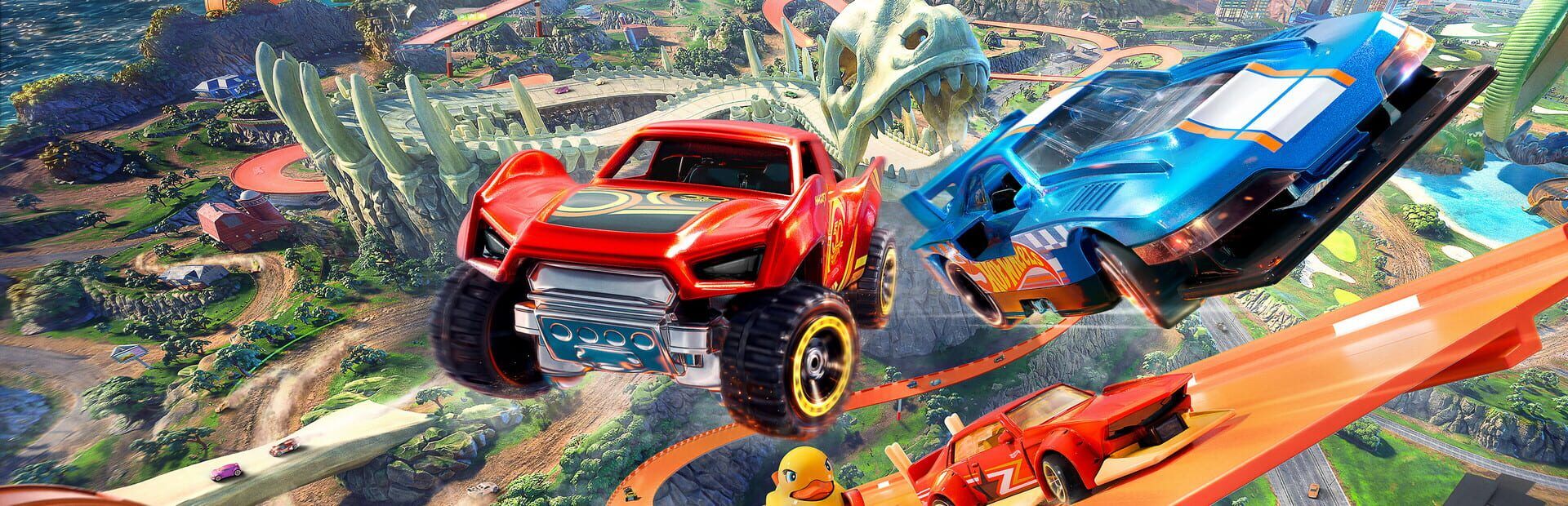
Hot Wheels Infinite Rush is Milestone’s next swing at Mattel’s die-cast dynasty, and this time the orange track spills out into a full open world. Revealed at Summer Game Fest and due on September 24, 2026 for PS5, Xbox Series X|S, PC, and Nintendo Switch 2, it shifts the series away from menu-driven track lists toward a toy-city you can actually cruise.
From plastic circuits to a Hot Wheels world
Previous Milestone games like Hot Wheels Unleashed and Unleashed 2: Turbocharged were structured as traditional arcade racers. You picked an event from a grid, loaded into a bespoke ribbon of track laid across kitchen counters, garages, or skate parks, then bounced back to a menu. The magic came from tight handling and wild layouts rather than from any sense of place.
Infinite Rush keeps the exaggerated plastic, loops, and boosters, but wraps them around an explorable world made up of four themed islands. Instead of warping directly into a race, you drive to it, threading through city streets built at Hot Wheels scale, jumping off ramps welded into skyscrapers, and chaining boosters that are just sitting in the world. Events, secrets, and collectibles are sprinkled across these hubs, so even “downtime” is essentially more stunt driving.
This takes the brand closer to an arcade take on an open-world racer like Forza Horizon, only with toy physics and gravity-defying track modules stitched into the landscape. It is less about simulated roads and more about turning the entire map into a looping, branching playground.
How the open world actually works
Milestone is positioning Infinite Rush’s open world as the backbone for everything you do. The four islands act like big zones, each with its own visual identity and preferred race types. They are linked by chunky stretches of orange track, so transitions between grounded roads and plastic highways are constant. You build a “Rush Squad” of favorite cars, then swap between them as you chase different objectives across the map.
The IGN and Eurogamer previews highlight a structure built around activities rather than just start grids. You will roll up to proper races with starting gates, but also to drift score challenges, stunt chains, time-limited collectibles, and multiplayer hotspots. Expect fast-travel for convenience, though Milestone clearly wants you to keep driving between icons, hitting incidental ramps and shortcuts that crisscross each island.
Crucially, the world also doubles as a canvas for the track builder. Instead of floating courses in abstract space, Infinite Rush uses a new “ground-snapping” system that lets your created pieces latch directly onto the environment. You can snake a custom track around a canyon wall, then loop it back through a highway, and it will inherit the terrain’s contours instead of hovering in a void. The idea is that the boundary between free-roam world and “proper” track blurs over time.
Comparing Infinite Rush to Unleashed and Unleashed 2
Structurally, this is the biggest shift the Hot Wheels games have seen. Unleashed focused on contained circuits laid across giant dioramas. Even its campaign “city” was essentially a menu map, not a place you drove through. Unleashed 2 layered in more mechanics, drift depth, and bike-like vehicles, but you still lived on isolated runs.
Infinite Rush instead treats the world like one enormous track that just happens to hold lots of races. Where Unleashed hinged on perfecting individual layouts you selected from lists, Infinite Rush adds context: you see where a ridiculous corkscrew sits relative to the city around it, then later blaze past that same structure on a different route while free roaming with friends.
There is also a shake-up in vehicle philosophy. Unleashed sorted cars mostly by rarity and performance stats. Infinite Rush groups its 150-plus vehicles into four clear archetypes: Versatiles, Titans, Drifters, and Speeders. Versatiles are all-rounders, Titans are heavyweights with chunky bodies that can bully lighter cars, Drifters are tail-happy corner carvers, and Speeders are point-and-shoot rockets that trade stability for raw pace.
That simple classification gives the garage more identity than a wall of similar icons. It is easier to imagine planning a Rush Squad that covers multiple disciplines in a way Unleashed’s looser categories never fully supported.
New gameplay systems and mechanical tweaks
Under the hood, Infinite Rush remains an unapologetic arcade racer, but Milestone is folding several new ideas into the template.
The first is how those four vehicle classes alter the feel of the open world. Versatiles can handle a bit of everything, making them ideal for casual exploration. Titans carry weight that makes landings feel thuddier and encourages a more aggressive style when you are jostling through traffic. Drifters seem tuned for long, exaggerated slides that make street corners and mountain hairpins fun even when you are not officially in a drift event. Speeders excel at long straights, making the plastic highways that link islands feel like drag strips.
Each car can be customized and upgraded, but Infinite Rush is putting more emphasis on expression. Livery and sticker editors return and are expanded with wheel customization, which was strangely absent from earlier games given how iconic Hot Wheels rims are. Between visual tweaks and performance upgrades, building a Rush Squad should feel closer to assembling a favorite toy collection than just chasing meta stats.
The track builder is the other big pillar. Milestone’s earlier toolkit was already robust, letting dedicated players recreate official sets or build cursed monstrosities. Infinite Rush’s builder now benefits from that ground-snapping system, better object placement, and sharing that is planned across every supported platform. The vision is of an evolving catalogue of player-made challenges dotted around the world, extending the life of the game long after launch.
There are also quality-of-life nods aimed at pick-up-and-play sessions. Previews mention a cleaner interface for bouncing from solo to co-op and competitive multiplayer, and the structure of four islands hints at a campaign flow that rises in difficulty rather than just listing everything at once. How sticky those systems feel will depend on event variety and reward pacing, but Milestone seems aware that an open world demands more layered progression than a track menu.
Visual tone and performance expectations
Milestone is not chasing photorealism. Infinite Rush doubles down on the toy aesthetic with oversized props, brightly lit cityscapes, and plastic sheen on track pieces. Buildings bend to accommodate loops and boosters, so entire neighborhoods feel like they were built around the course rather than the other way around.
That cartoony approach is not just about style. It also gives the developer room to prioritize responsiveness and clear readability, which is key at arcade speeds. Expect bold color coding on track modules, exaggerated telegraphing for jumps and hazards, and a camera tuned for spectacle. On current-gen consoles and PC the target is smooth performance with fast streaming, which is critical now that you can blast through connected islands without hard loading breaks.
Is Infinite Rush built for arcade racing fans?
For fans of arcade racers, Infinite Rush checks several important boxes. It is class-based but not bogged down in simulation, so you can immediately feel the difference between vehicles without memorizing tuning sheets. It offers a shared open world for casual cruising, but routes are still packed with aggressive boosters and trick spots that reward skillful driving.
The game also lands at a time when big-budget arcade racers are relatively rare. If Milestone can deliver responsive handling on par with Unleashed while avoiding open-world bloat, Infinite Rush could become a go-to comfort racer for players who bounce between Forza Horizon, The Crew Motorfest, and more toy-like experiences such as LEGO 2K Drive.
There are still questions. Open worlds can easily turn into cluttered checklists, and a toy-car license does not automatically fix repetition. The long-term appeal will depend on how often the game surprises you with new event types, how rewarding the Rush Squad progression feels, and whether the world itself evolves with live updates.
Even so, the early pitch is strong. Hot Wheels Infinite Rush takes a series that already understood the joy of tiny cars on impossible tracks and simply gives those tracks a home you can live in. For players who just want to drop into a loud, colorful racer, pick a ridiculous toy, and spend an hour bouncing between stunts and races with friends, it is shaping up to be one of the more intriguing arcade releases on the horizon.