
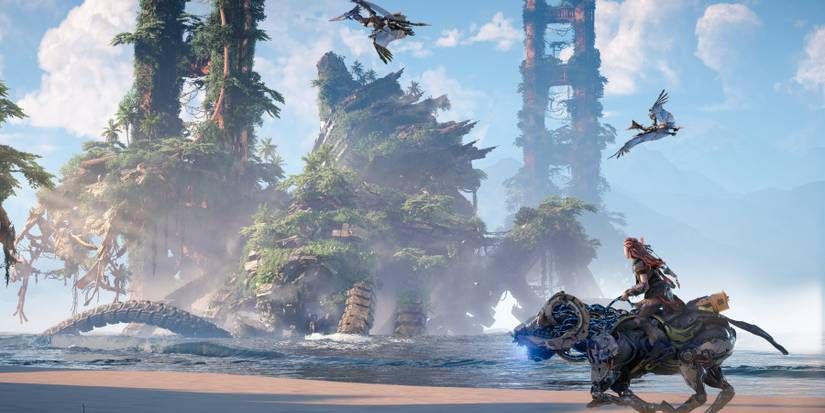

Bloomberg reports Guerrilla Games is stripping live-service elements from Horizon Hunters Gathering after poor private test feedback, raising new questions about Sony's multiplayer strategy and the long wait for Horizon 3.
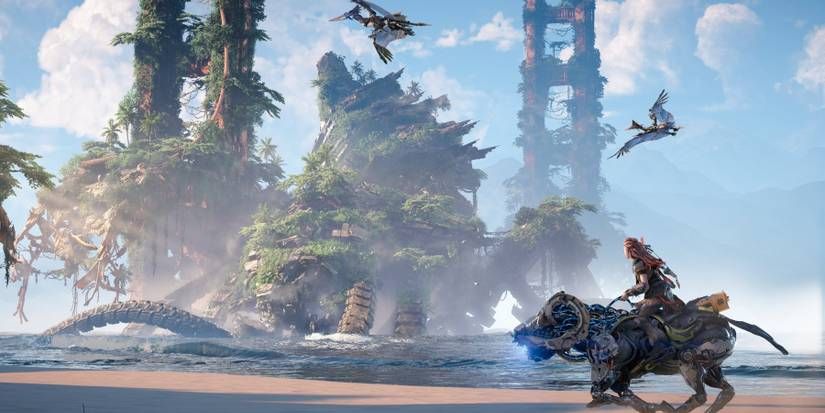
Image: gamerant.com
Reported reboot puts Horizon’s multiplayer bet on a December clock
The Horizon multiplayer game that Sony announced earlier this year is reportedly being reworked after poor private test feedback, with Guerrilla Games now planning to remove its live-service elements and reshape Horizon Hunters Gathering into a smaller cooperative game with a story mode. Bloomberg reported on August 19 that Guerrilla has been working on the reboot since June, citing people familiar with Sony’s plans who were not authorized to speak publicly.
That is the strongest concrete development here: the project has not reportedly been canceled, but its design target has changed. Bloomberg says staff were told the team has until December to impress PlayStation executives with its next milestone. Push Square, GameSpot, Kotaku, Twisted Voxel, and GG.deals all attribute the core report to Bloomberg’s Jason Schreier, with Twisted Voxel adding that PlayStation declined to comment.
For readers tracking the next Horizon game, the report carries a second consequence. Bloomberg says only a tiny team at Guerrilla has been working on the next single-player Horizon entry, and that it remains years away. Twisted Voxel separately cites Schreier saying on Bluesky that almost all of Guerrilla has been focused on Horizon Hunters Gathering for the last few years. Taken together, the reported resource allocation explains why the mainline series may be quiet for a long stretch even if the multiplayer pivot succeeds.
From service loop to contained co-op, the design problem changes
Before the reported reboot, Horizon Hunters Gathering was positioned as a multiplayer extension of Guerrilla’s machine-hunting formula. GameSpot says the game was announced in February as a Horizon universe multiplayer game for groups of up to three players. The same report notes that its revealed look was markedly different from the mainline games, with more vibrant visuals and an energy that GameSpot compared to Fortnite. Guerrilla described its combat, according to GameSpot, as “tactical, reactive, and deeply skill-based.”
The Bloomberg report changes the read on that pitch. A live-service game has to solve retention, progression, reward cadence, monetization pressure, seasonal content, onboarding, matchmaking, and long-term balance all at once. A traditional co-op multiplayer game with a story mode can narrow the job. It still needs satisfying combat and replay value, but it does not have to carry the same forever-game economy that has crushed many expensive multiplayer bets.
That shift may be practical rather than cosmetic. Bloomberg’s reported plan includes a far smaller scope, and GameSpot says some developers are being reassigned to another project because of that paring down. If the Horizon live service reboot is real, it suggests Sony and Guerrilla are no longer trying to force Horizon Hunters Gathering to compete on the same strategic layer as the biggest service games. They may be trying to salvage the strongest parts of the pitch, namely co-op machine combat and a story wrapper, while cutting the most expensive and risky operating model.
Sony’s live-service retreat is no longer theoretical
Sony’s wider live-service plan gives this report its weight. GameSpot notes that PlayStation once planned around a dozen live-service games before later cutting that number in half in the name of quality. The same source lists The Last of Us Online among the canceled projects and says Sony also canceled a live-service God of War project and another live-service title from Bend. Push Square frames Horizon Hunters Gathering as another problem in a PS5 generation where Sony’s live-service ambitions have repeatedly stumbled.
There have been exceptions. Kotaku points to Helldivers 2 as a success in Sony’s multiplayer push. But the broader pattern in the provided reporting is one of triage. Push Square notes Sony spent $3.6 billion to acquire Bungie, the Destiny 2 developer, while arguing that the deal has not worked out as hoped. Kotaku describes Sony’s path toward service-game revenue as filled with canceled or sunset projects and closed studios, including references to Bluepoint’s reported God of War live-service work and Naughty Dog’s abandoned Last of Us multiplayer game.
The Horizon multiplayer game now appears to sit inside that same portfolio correction. This is not a confirmed corporate strategy announcement from Sony. It is a reported project-level reboot. Still, the reported decision to strip service elements from one of PlayStation’s major internal franchises would fit the visible direction of travel: fewer high-risk service plays, more pressure on milestones, and a greater willingness to shrink projects before they become public failures.
The co-op version could fit Horizon better, but it has less room to hide
A smaller Guerrilla Games multiplayer project may actually be a cleaner strategic fit for Horizon. The series already has readable enemy roles, distinct machine behaviors, elemental interactions, trap setups, weak-point targeting, and escalating encounters. Those systems translate naturally into co-op if players can coordinate roles, stagger machines, exploit components, and manage risk together.
A live-service layer can distort that kind of combat if progression becomes the main reason to keep playing. Balance starts bending around loot cadence, daily objectives, cosmetics, battle-pass pacing, event churn, and economy sinks. A story-driven co-op game, by contrast, can focus on encounter design and campaign structure. For Horizon, that could mean fewer artificial reasons to hunt and more attention on whether three players fighting machines together feels skillful and reactive in the way Guerrilla has described.
The tradeoff is exposure. A service game can improve over time if the launch survives, but a smaller story co-op game has fewer second chances. If Horizon Hunters Gathering loses the service scaffold, the first playable impression matters even more. The December milestone reported by Bloomberg is therefore less like a marketing checkpoint and more like a design verdict: does the core loop work when the retention machinery is stripped away?
Horizon 3 being years away follows the resource math
Fans waiting for the next mainline Horizon should treat the Bloomberg report as a timing warning. Push Square says Schreier reported that a tiny team has been working on Horizon 3, with the next single-player entry still years away from launch. GameSpot similarly reports that a tiny team at Guerrilla is plotting out the next single-player Horizon game, but that sources said it is years from being done.
That does not confirm a platform, title, release window, price, or feature set for Horizon 3. The provided sources do not include an announcement from Sony or Guerrilla for the next mainline game. What they do support is a production picture: Guerrilla’s recent focus has reportedly been on Horizon Hunters Gathering, and the single-player sequel has not yet reached the kind of development maturity that would make a near-term launch plausible.
From a strategy standpoint, this matters for expectations around PlayStation’s calendar. A rebooted co-op project will need time to prove its new direction, while the mainline Horizon team reportedly remains small. Even if developers are reassigned away from Hunters Gathering, Bloomberg says that other project is also due to be evaluated at the end of the year. That is not the shape of a franchise about to announce a mainline sequel for imminent release.
What is confirmed, what is reported, and what players should watch next
Confirmed publicly from the source set is limited. Horizon Hunters Gathering was announced earlier this year, according to GameSpot, as a multiplayer Horizon game supporting up to three players in a group. GameSpot also reports that Guerrilla described the combat as tactical, reactive, and deeply skill-based. The specific reboot details, including the removal of live-service elements, the smaller scope, the story mode direction, the June rework, the December milestone, and the tiny Horizon 3 team, all come from Bloomberg’s reporting and outlets summarizing that report.
There is no supported release date in the provided material. There is no supported price. The sources do not establish final platforms beyond Push Square’s framing of the project as a PS5 game and GameSpot’s discussion of the announced title. The sources also do not establish whether any previous tests, sign-ups, or announced features will carry forward after the reported reboot.
The next useful signal will be whether Sony or Guerrilla publicly reintroduces Horizon Hunters Gathering with a new pitch. If the language changes from ongoing service to co-op story campaign, Bloomberg’s report will look less like background noise and more like a visible product reset. If the game disappears until after December, that would align with the reported executive milestone pressure. For now, the safest read is that the Horizon multiplayer game is alive but under review, Sony live service games are still being filtered hard, and the next Horizon game in the single-player line should not be expected soon.