
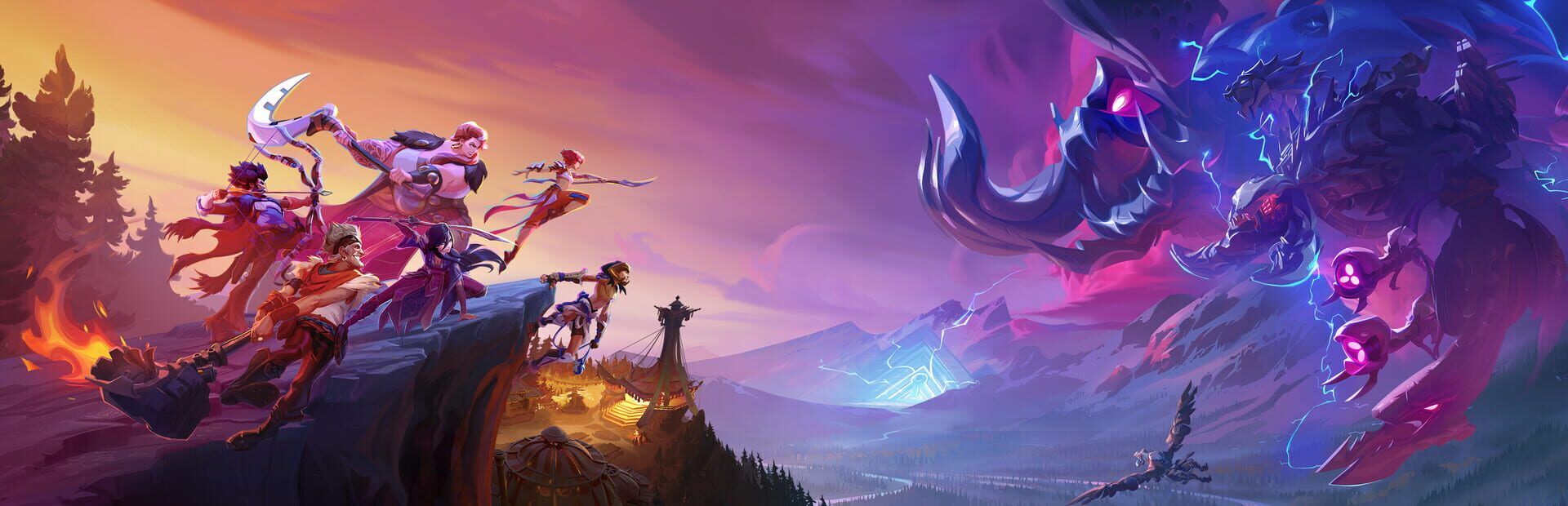

How Guerrilla is turning Horizon into a 3‑player tactical hunting game, what sets it apart from Monster Hunter and Dauntless, and why fans are nervous about art style, live service, and monetization.
Horizon was always a power fantasy about one hunter versus the wild. Horizon Hunters Gathering rewires that idea into three hunters versus the system.
Instead of a sprawling open world and a single, upgradeable protagonist, Guerrilla’s new spin off is a focused, session based co op game built around repeatable hunts, roguelite build crafting, and live service updates. It is the studio’s first full game designed from the ground up around multiplayer, not a bolt on mode.
That shift has fans excited and anxious in equal measure.
How Horizon Hunters Gathering actually plays
Hunters Gathering is a three player tactical co op action game for PS5 and PC that you can also play solo with AI partners. Structurally, it sits much closer to Monster Hunter, Dauntless, and other hub‑and‑hunt games than to Zero Dawn or Forbidden West.
You pick a prebuilt Hunter from a roster, each with a distinct weapon focus and role. Some lean into melee combos, others emphasize ranged bow work or more support oriented abilities. On top of that, you choose a role that plugs into a roguelite perk system, letting you stack temporary buffs, synergies, and modifiers across a run. Instead of slowly sculpting one character over a 60 hour story, you are tweaking builds run to run to fit your squad and the mission.
At launch Guerrilla has outlined two core modes that define the loop.
Machine Incursion is the faster, more arcade inspired mode. Machines pour out of underground gateways as you fight under pressure from a shrinking safe zone and an encroaching hazard, more like a PvE extraction or horde mode than a classic boss hunt. You are managing the timer, controlling space, and dealing with waves that culminate in a boss encounter.
Cauldron Descent is the longer, more traditional dungeon run. It breaks into multiple stages made up of changing rooms inside a cauldron, Horizon’s ancient machine forges. One room might throw you into a brutal brawl with elite machines, another leans into platforming and traversal challenges, another hides optional doors and secrets you can open if you are willing to take on extra risk for extra power. The roguelite perks you pick up as you progress are designed to push you into wild builds that only exist for that run.
Moment to moment, combat is pitched as tactical, reactive, and skill based. You are still targeting machine weak points, stripping armor plates, and combining elemental status effects, but Hunters Gathering is built around a small, coordinated team. Abilities fire off quickly, mobility is snappier than in the mainline games, and cooldown driven skills add another layer on top of Horizon’s trademark bows, tripwires, and gadgets.
How it differs from Monster Hunter and Dauntless
If you watched the announcement trailer with the sound off, you could easily mistake Hunters Gathering for a cousin of Monster Hunter World or Dauntless. Three players, one very large mechanical problem, a hub, a forge, repeatable hunts. Underneath, though, Guerrilla is building something that sits slightly off to the side of both.
Monster Hunter is all about weapon mastery and long term progression. You pick a weapon class and live with it for dozens of hours, learning animation timing and matchups while grinding out armor sets and decorations. Most of its depth is locked inside that weapon move set and in the long tail of crafting rare pieces.
Hunters Gathering, by contrast, leans more into discrete runs and mid run adaptation than grinding one loadout over weeks. The roguelite perk system and more class defined Hunters suggest you will experiment with different characters and builds frequently rather than maining a single weapon. The modes themselves are also more authored and objective heavy than a straight “drop into a map, find the monster, kill it” structure.
Compared to Dauntless, the DNA looks even closer, but there are some key divergences. Phoenix Labs’ co op hunter was faster and more arcadey than Monster Hunter, with flashy weapon tech, interrupts that let you punish telegraphed attacks, and smaller, snappier arenas. It was built around quick matchmaking and frequent gear upgrades in a free to play framework.
Hunters Gathering does adopt the quicker, more readable combat language and the focus on repeatable hunts. The early footage highlights high mobility, clear telegraphs, and loud, visually distinct abilities that make sense in co op chaos. But where Dauntless largely kept to one main hunt loop on a single arena at a time, Guerrilla is building multi stage dungeons and modes that play with space, pacing, and pacing modifiers like the encroaching barrier in Machine Incursion.
Another important difference is narrative posture. Dauntless had lore and a world, but it was a light MMO style backdrop for the next hunt. Guerrilla is heavily implying a stronger narrative spine, with the studio talking about story that will not stop at launch. Exactly how that weaves into a run based structure is still unclear, but if any studio is likely to over deliver on worldbuilding in a live co op game, it is the one that made Meridian and the Tenakth clans feel like real cultures.
The big swing in art direction
The most immediate shock for Horizon fans is visual. The mainline games built their identity on dense, photoreal landscapes and grounded, tactile machine designs that almost felt like National Geographic documentaries set after the fall.
Hunters Gathering tosses that out for a stylized, chunky, almost Saturday morning cartoon look. Proportions are exaggerated, silhouettes are bolder, and animation is more elastic. Armor reads more like class silhouettes than scavenged gear, and abilities explode in cleanly color coded effects. Machines still draw from the same animalistic inspirations, but detailing is simplified and contrast pushed so you can parse threats at a glance as three players throw out particles.
Guerrilla’s studio director has said explicitly that this art shift is in service of co op readability and energy. Faster, more expressive animation and clear silhouettes make it easier to track teammates, enemies, and ability synergies in the middle of particle soup. The tone is looser to match the heightened, ability heavy combat.
For some players, though, this reads as a deliberate Fortnite adjacent pivot. Comparisons to Dauntless and various hero shooters came fast on social media, with some fans arguing that if you took the Horizon name off the trailer, they would not know this was part of the same universe. Others worry that a cartoony aesthetic has become shorthand for live service monetization and a throwaway spin off rather than a serious expansion of the IP.
That tension between readability and brand identity will be one of the most important factors in how the game lands with existing Horizon fans.
Live service structure and monetization worries
Sony has not fully detailed the business model yet, but the language around Hunters Gathering is unambiguously live service. Guerrilla is promising ongoing story updates, more Hunters added post launch, and a framework built for replayable hunts and long term engagement.
That alone has set off alarm bells in parts of the community, especially given broader fatigue around live service games that launch light and hope to grow later. Fans are already debating whether Hunters Gathering will be free to play or a premium purchase with a battle pass or cosmetic store layered on top. There is no confirmed answer yet either way.
The structure of the game itself practically demands some form of ongoing monetization. A roster of distinct Hunters with strong silhouettes, a stylized art style that suits skins, and a hub‑and‑hunt loop all map neatly onto cosmetics, seasonal events, and rotating challenges. At the same time, Dauntless looms over the conversation as both template and cautionary tale.
Former Dauntless developers have been blunt about how management decisions, chasing a small loud subset of community feedback, and ego driven monetization eroded that game’s identity. Players saw unpopular overhauls, grindy systems, and a live service cadence that sometimes seemed more interested in selling cosmetics than nurturing the core hunt experience. With Hunters Gathering occupying similar genre space and aesthetic territory, fans are understandably wary of history repeating.
Guerrilla has not talked specifics like paid Hunters versus free unlocks, gacha elements, or battle pass structures. Until it does, a lot of discourse will be hypothetical. What is clear is that expectations are higher now for live service games to justify their time and money asks, and Horizon’s name cuts both ways. It guarantees attention and a base audience but also raises the bar on how fair and substantial the live service model needs to feel.
What Horizon fans are worried about
Strip away the memes and the ratioed trailer comments and you can boil fan anxiety down to four main threads.
First is the art direction. For players who fell in love with the grounded, tribal tech look of Aloy’s world, the sudden pivot to chunky, expressive character models and brighter, cleaner palettes feels like a brand split. Some worry that Horizon could lose its visual identity if this spin off becomes a big pillar of the franchise.
Second is tone and world cohesion. The footage so far plays up quips, flashy abilities, and a more lighthearted vibe. That does not inherently break Horizon’s world, but it does walk a fine line between expanding the universe and turning it into a generic hero shooter setting with robot dinosaurs as a backdrop. Fans want reassurance that this still feels like the same post‑post‑apocalypse, not just a skin.
Third is live service fatigue. Sony’s wider push into ongoing multiplayer games has had a rocky reception, and players are understandably skeptical of any new project that leans heavily on phrases like ongoing narrative and post launch content. The fear is not just that Hunters Gathering will be grindy or monetized aggressively, but that resources might be siphoned away from the single player entries that made people care about Horizon in the first place.
Finally there is concern about longevity. Dauntless, Anthem, Babylon’s Fall, countless other live service co op titles have launched, churned, and died. Committing to a new multiplayer grind is a big ask in 2026, especially on PC where competition is brutal. Fans want to know that if they invest, Guerrilla and Sony are in it for the long haul and will avoid the kind of abrupt shutdown stories that have become common.
Guerrilla’s message: single player Horizon is not going away
Guerrilla knows exactly what people are afraid of here, and it has been unusually direct in its messaging around Hunters Gathering.
Studio leadership has been clear that big, story driven, single player Horizon games remain a huge part of the studio’s identity and roadmap. Hunters Gathering is framed not as a replacement for those games, but as a parallel pillar that lets the team explore systems and co op fantasy the mainline titles cannot easily support.
That stance matters. Guerrilla is one of Sony’s flagship narrative studios, and it benefits more than most from reassuring fans that Aloy’s adventures and other large scale single player projects are still core to its future. The co op game lets different teams inside the studio flex different muscles, from systemic combat design to live operations, while the narrative group continues to chart the future of the main saga.
From a player perspective, the healthiest way to read Hunters Gathering may be as an experiment in expanding what Horizon can be without shouldering the entire future of the IP. If it works, Guerrilla gets a long lived co op platform to iterate on cool machine fights with friends. If it stumbles, the mainline series still carries the torch.
Where that leaves Horizon Hunters Gathering
Taken on its own terms, Horizon Hunters Gathering is one of the more intriguing stabs at the hunt genre in years. A three player, tactical, roguelite inflected take on machine hunting from a studio that has already proven it can build satisfying robot combat is an easy sell on paper.
Its success will come down to a handful of crucial execution points. The build crafting needs real depth without drowning players in grind. The art style has to win people over in motion, not just in thumbnails. Live service systems must feel like support beams, not shackles. And perhaps most importantly, Guerrilla needs to show that it can make Horizon feel like Horizon even when you are sharing the battlefield with two friends and a spray of neon abilities.
For now, Hunters Gathering sits at a strange crossroads. It is familiar enough to draw immediate comparisons to Monster Hunter and Dauntless but different enough in structure and tone to stand apart if Guerrilla sticks the landing. With a playtest on the horizon and more details still to come, the next few months will determine whether this is Horizon’s co op future or just an interesting what if in the franchise’s history.