
Breaking down Horizon Hunters Gathering’s three‑player hunt structure, progression, and live‑service blueprint – and how this co‑op spin‑off can bridge the long wait for Horizon 3 without replacing it.
Sony and Guerrilla have finally lifted the lid on Horizon Hunters Gathering, the long‑rumored multiplayer project that will arrive on PS5 and PC well before a full‑fat Horizon 3. It is not a side mode bolted onto Forbidden West, and it is not a stealth early access test for the next mainline sequel. Hunters Gathering is a purpose‑built three‑player co‑op action game with live‑service ambitions, meant to sit alongside Horizon 3 rather than in front of it.
Guerrilla studio director Jan‑Bart van Beek has already tried to steady nerves by reiterating that the team still “absolutely love making single‑player games” and plan to keep doing so. Reporting from Jason Schreier and others backs up that Horizon 3 exists, but it is “far, far away” while the bulk of the studio focuses on Hunters Gathering. That reality makes this spin‑off more than a curiosity. For Horizon fans staring down another long wait between numbered entries, Hunters Gathering is likely to be the connective tissue that keeps the universe relevant and evolving.
A new foundation built around three‑player hunts
At the core of Hunters Gathering is a tight three‑player squad structure that reimagines Horizon’s combat for a game that lives and dies on replayable encounters instead of a sprawling open world. Rather than roaming a contiguous map as Aloy, you assemble short, focused excursions out of a central social hub called the Hunters Gathering, then drop into bespoke machine hunts.
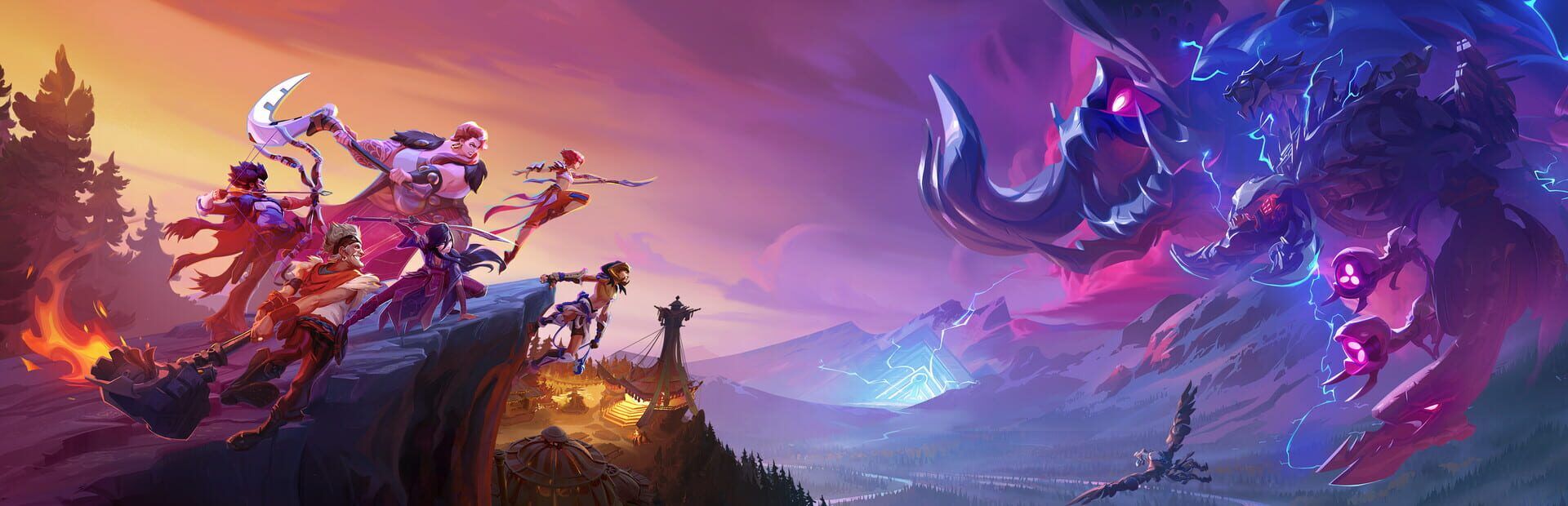
Each run revolves around up to three Hunters, not three Aloy reskins. Guerrilla is leaning into a roster of distinct heroes with their own silhouettes, weapons, and animations. Some specialize in up‑close melee, chaining heavy spear combos and crowd control abilities, while others lean into classic Horizon ranged play with bows, elemental arrows, and explosive gadgets. Every squad is built from a mix of melee and ranged archetypes, and success comes from overlapping those roles cleanly.
This three‑Hunter structure serves a few purposes at once. From a design standpoint it avoids the visual noise of four‑player chaos, keeps communications manageable, and lets enemy behavior stay readable. For longtime Horizon fans it also preserves some of the series’ trademark precision. With three players, there is room for deliberate part‑breaking, trap placement, and elemental setups without the fight devolving into pure spam.
Guerrilla is also designing around flexible participation. You can play solo with AI companions or fill out the full three‑player team with friends or matchmaking. That matters for a franchise whose audience is used to single‑player. Guerrilla is not abandoning players who prefer to go it alone, but they are nudging those players into a structure where teamwork, positioning, and role complement still define the rhythm of combat.
Machine Incursions, Cauldron Descents, and the hunt loop
Instead of a traditional main quest line, Hunters Gathering is structured around repeatable PvE activities that sit somewhere between Monster Hunter hunts and Destiny strikes. Guerrilla has announced two pillar modes so far.
Machine Incursions are the headline hunts. These are combat‑heavy missions where your squad drops into one of several large maps, tracks a specific machine threat, and then executes on a layered boss encounter. The emphasis is on tactical play: studying weak points, coordinating elemental debuffs, and using the environment for cover and high ground. The combat draws directly from Zero Dawn and Forbidden West, but with encounter spaces and enemy behaviors tuned to three people acting in concert.
Cauldron Descents shift the tone toward puzzle‑tinged dungeons. Cauldrons were already some of the most memorable bespoke spaces in the mainline games, and here they become repeatable multi‑phase runs that mix platforming, light traversal puzzles, and escalating waves of corrupted machines. They are also a natural place for Guerrilla to experiment with modifiers, mutators, and seasonal twists that change how your usual builds perform.
What ties these modes together is the loop anchored on the Hunters Gathering hub. Between missions you return to this social space to craft, upgrade, and plan. Vendors, quest‑givers, and cosmetic stands all live here, but so do the narrative hooks that tie individual hunts into a broader, post‑Forbidden West conflict. It is a structural pivot away from roaming a giant map, but if Guerrilla nails the density of activity in that hub and its surrounding regions, the game still has room to feel like an evolving world rather than a menu of arenas.
Progression as roguelite‑infused builds, not MMORPG bloat
Live‑service games live or die on their progression hooks. Guerrilla talks about Hunters Gathering as a tactical, reactive action game wrapped in a “rogue‑lite perk system” rather than a traditional MMO treadmill. The distinction matters.
Each Hunter has a baked‑in combat identity driven by weapon choice and core abilities. On top of that you assign a role before heading out, which behaves like a lightweight class kit: tankier frontline bruisers with taunts and damage reduction, support‑leaning builds with crowd control and team buffs, or high‑risk ranged glass cannons.
Perks and gear then twist those frameworks on a per‑run basis. As you complete objectives during a hunt, you unlock perk choices that can significantly warp your playstyle for that session. One run might lean into trap‑centric crowd control, turning you into a zone denial specialist, while another leans into sustained burning damage to help your team strip armor off a Tremortusk faster. Because these bonuses are framed as roguelite‑style decisions rather than permanent talent trees, Guerrilla can keep the long‑term progression cleaner.
Persistent progression comes through weapon upgrades, mod crafting, and account‑wide unlocks that broaden your options roster‑wide. The goal is to create a sense of long‑term investment without making new players feel permanently behind. If Guerrilla follows through on the promise of cross‑play and cross‑progression between PS5 and PC, that investment also becomes more flexible. You are not locking builds into a single platform, which is a key ingredient for any live‑service aiming for multi‑year retention.
This is where Hunters Gathering’s design can quietly serve Horizon 3. Guerrilla is effectively pressure‑testing new forms of buildcraft, elemental interactions, and team synergies at a much higher iteration speed than a single‑player RPG campaign allows. Any combat ideas that resonate here are strong candidates to feed back into Horizon 3’s systems in refined form.
Story as an ongoing thread between Forbidden West and Horizon 3
On paper, a co‑op live‑service game set after Forbidden West sounds like a lore minefield, but Guerrilla is not treating Hunters Gathering as a non‑canon offshoot. The studio has been clear that there is a story campaign here that can be played solo or in co‑op, that it introduces new characters and mysteries, and that it will expand over time.
The choice to make that story canon is significant. It signals that Guerrilla sees Hunters Gathering as a central branch in the Horizon timeline rather than a throwaway experiment. It also gives them space to explore the wider world without having to wrap every plot thread around Aloy. A cast of original Hunters from different tribes and backgrounds can pull in perspectives we have only glimpsed in the main games.
Practically, this lets Guerrilla set up pieces for Horizon 3 long before that game is ready. New machine types, emergent factions, or hints about the state of the world after Forbidden West and Burning Shores can all debut here, then be picked up years later in the next single‑player epic. That is the same connective tissue idea that Destiny and Final Fantasy XIV use to seed future arcs, but it is new territory for this franchise.
The risk is obvious. If the writing feels thin or gated behind repetitive grinds, fans will treat Hunters Gathering’s story beats as homework they would rather skip and catch up on via YouTube. If Guerrilla keeps narrative drops digestible, plays to their strengths in environmental storytelling, and avoids locking key lore behind razor‑thin seasonal windows, the game can deepen the universe instead of fragmenting it.
Live‑service plans and how Sony will measure success
Sony’s live‑service strategy has already been under scrutiny, especially after the high‑profile stumble of Concord. Hunters Gathering arrives in a climate of fatigue around “another ongoing game you have to check every week.” Guerrilla is entering that space with a couple of advantages and one glaring challenge.
First, the Horizon IP genuinely fits the hunt‑driven, gear‑chasing structure that many successful live‑service titles lean on. Giant machines are natural raid bosses. Elemental status effects and part‑breaking map well to buildcraft and long‑term optimization. The studio also has a history with co‑op and multiplayer from its Killzone days, so this is not a team going online for the very first time.
Second, Guerrilla is not pretending this is a pure side project with no expectations. Public messaging around cross‑play, cross‑progression, and a closed playtest signals a multi‑year roadmap in the making. You do not invest in PC parity, long‑tail support pipelines, and a fully realized social hub just for a short spin‑off.
The challenge is how aggressive that roadmap becomes. Season passes, battle passes, and time‑limited loot are where even mechanically strong live‑service games fracture their communities. Sony will be looking for recurring revenue, but Guerrilla has some levers to make that less abrasive: heavy leaning on cosmetics, ensuring meaningful new Hunters and machines are earnable through play, and using narrative updates to entice lapsed players back without overwhelming them with FOMO.
If Hunters Gathering can maintain a cadence of new machines, Hunts, and roles that reward both a few hours a week and deep engagement, it has a chance to stabilize Sony’s live‑service slate. If it chases the most aggressive monetization models in a market already skeptical of them, it risks souring sentiment around Horizon just as the brand is expanding into Lego spin‑offs, VR, and more.
Bridging the long wait to Horizon 3 rather than replacing it
The blunt reality is that Horizon 3 is not coming any time soon. Most of Guerrilla’s developers are currently on Hunters Gathering, and the five‑year gap between Zero Dawn and Forbidden West suggests the studio takes its time on numbered entries. In that context, Hunters Gathering becomes the bridge that either keeps fans invested or accelerates fatigue.
There are a few ways this co‑op pivot can meaningfully soften the wait.
First, it keeps the feel of Horizon’s combat in players’ hands. Even with a more colorful art style and stylized character designs, the underlying gameplay is still about reading attack tells, exploiting elemental weaknesses, and strategically dismantling machines. Regularly updated hunts keep that loop fresh instead of letting it sit dormant for half a decade.
Second, it gives Guerrilla a public test bed. Live‑service players will ruthlessly stress every edge case in Hunter builds, elemental combos, and encounter design. That data can quietly inform Horizon 3’s balance from day one. Systems that prove fun in a three‑player context can be re‑tuned for a single‑player campaign, while failed experiments can be abandoned without derailing a massive story‑driven project.
Third, it broadens the audience. Co‑op action games with cross‑play and cross‑progression tend to reach players who might never sit down for a 40‑hour RPG. If Hunters Gathering converts some of those players into fans of the setting and machines, Horizon 3 launches into a bigger potential audience.
The key is clarity. Guerrilla needs to keep repeating that Horizon 3 is still coming and show, through updates and interviews, that the single‑player team has a protected space within the studio. Any hint that Hunters Gathering’s metrics could dictate the future of mainline Horizon will only inflame skepticism.
What success looks like for Guerrilla’s co‑op era
Hunters Gathering is not a guaranteed slam dunk, but it is also not a cynical reskin of a generic live‑service template. It is a focused attempt to reframe Horizon’s strengths into a three‑player format while giving Sony a flagship co‑op title that does not feel divorced from its single‑player roots.
If Guerrilla can nail a few core pillars – precise, readable combat tuned for trios, satisfying roguelite‑flavored progression, and a live‑service model that feels additive rather than extractive – Hunters Gathering can do more than just fill a gap. It can act as a living laboratory for the ideas, enemies, and narrative threads that will eventually define Horizon 3.
For fans, the choice will not be between supporting this spin‑off or “voting with your wallet” for single‑player. Guerrilla has already committed to both paths. The real question is whether Hunters Gathering can earn a place in the series’ identity as the co‑op companion to Aloy’s adventures, rather than the awkward live‑service experiment everyone tries to forget when Horizon 3 finally arrives.