
A breakdown of what Guerrilla is trying to do with Horizon Hunters Gathering, how its tactical co‑op structure differs from Zero Dawn and Forbidden West, and what the first PS5/PC closed beta weekend offers alongside Marathon’s server slam.
Horizon is about to step into live‑service territory with Horizon Hunters Gathering, a tactical co‑op spin off that trades Aloy’s sprawling open worlds for tight, repeatable hunts. With the first closed beta landing on PS5 and PC right as Bungie runs its Marathon server slam, it is a busy weekend for anyone who lives inside Sony’s ecosystem.
If you are a Horizon fan who managed to snag a beta invite, here is what Guerrilla is actually experimenting with, how it differs from Zero Dawn and Forbidden West, and what kind of mission flow, progression and live‑service hooks you should expect, all without touching anything covered by NDA.
What Guerrilla Is Building With Hunters Gathering
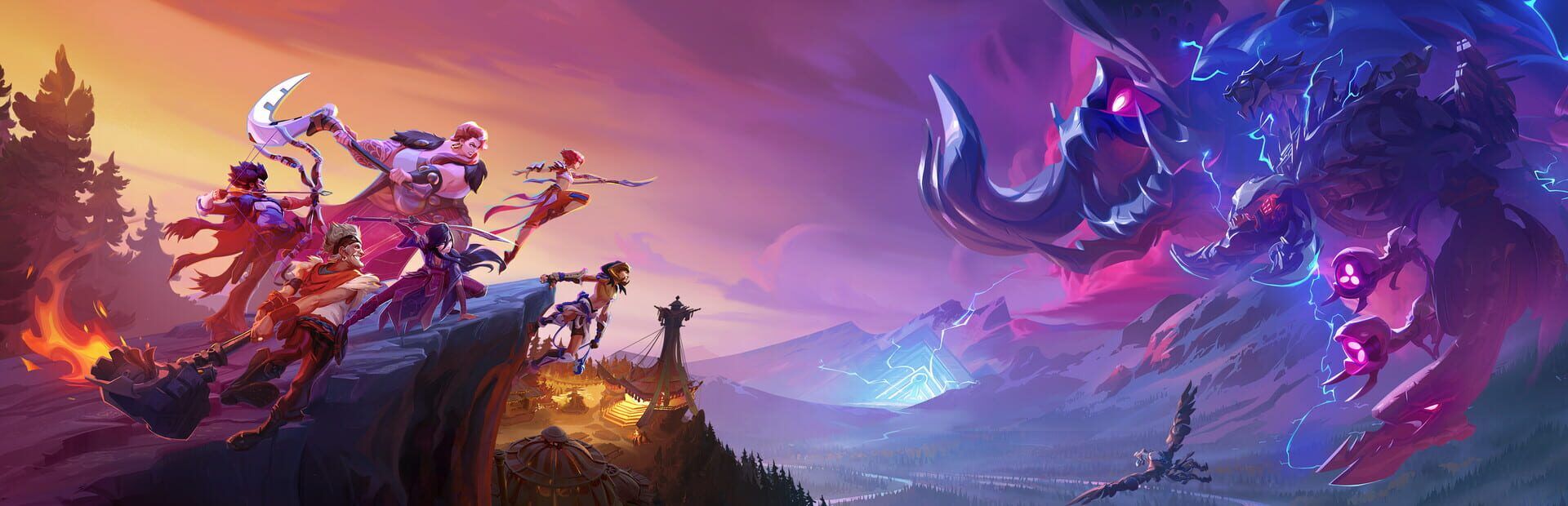
Hunters Gathering is a three player co‑op action game set in the same post‑apocalyptic world as the mainline Horizon titles. Instead of a single hero pushing through a long narrative, it is built around short, contained missions where small squads take on increasingly dangerous machines.
Guerrilla has talked about it as a tactical co‑op experience. The studio is essentially lifting the precision machine combat that made Aloy’s adventures work and rebuilding it around teamwork, role composition and repeatable encounters. Where Zero Dawn and Forbidden West are story first action RPGs, Hunters Gathering is clearly designed as a live‑service platform with session based play, cross‑play between PS5 and PC and cross‑progression via PSN.
Crucially, this is not the NCSoft developed Horizon MMO that has been mentioned separately. Hunters Gathering is a smaller, match based spin off that still sits inside the Horizon canon but is focused on cooperative monster hunting rather than a persistent world.
Structure vs Zero Dawn and Forbidden West
If you are coming in from the mainline games, the first big adjustment is structure. There is no contiguous open world to wander across for hours. Instead, everything is built around a loop that looks closer to something like Monster Hunter, Helldivers 2 or Destiny’s strikes than it does a traditional Horizon campaign.
You start from a social hub known as the Gathering, party up as a trio and then launch into discrete missions that send you into specific regions such as Colorado Springs. These missions have clear win and fail states, defined goals and an expectation that you will replay them as your gear and team coordination improve.
Character identity is also different. Rather than creating or deeply customizing a single hero, Guerrilla has introduced a roster of named Hunters. Early materials highlight Sun, Rem and Axle as distinct playable characters. Each brings a role‑leaning kit that pushes the tactical side of the game. A squad benefits from mixing abilities that control space, apply debuffs, protect allies or pour on damage, instead of every player trying to be a one person army the way Aloy often feels in single player.
Narratively, the spin off still sits in the Horizon universe, but you should not expect a sprawling, cutscene heavy epic on the level of Forbidden West. Lore, character moments and world building are there to frame the hunts, not to replace a mainline sequel.
Mission Flow: Machine Incursion and Cauldron Descent
Ahead of release Guerrilla has outlined two key mission types that define Hunters Gathering’s early identity.
Machine Incursion is the straightforward side of the game. Squads drop into an arena style area, face waves of increasingly dangerous machines and juggle limited resources, positioning and crowd control. Think of it as a survival test designed to highlight how quickly a coordinated team can strip armor plates, target weak points and chain abilities.
Cauldron Descent is closer to a mini dungeon. Players push through a multi stage gauntlet of challenges inside a Cauldron, with combat encounters layered between traversal and objective based tasks. Guerrilla describes it as ever changing, which suggests a mix of randomized elements and rotating modifiers that keep runs from feeling identical. For long time Horizon players, Cauldrons were already some of the most interesting pieces of PvE content in the single player games, so centering a co‑op mode around them makes thematic sense.
Between missions you return to the Gathering hub. This is where you regroup, swap characters, tweak builds, pick up new activities and socialize. It fills the same role the Base did in Forbidden West, but with a focus on player interaction and matchmaking rather than companion conversations and side quests.
Progression: How Your Hunter Grows
Even without peeking at any leaked details, the broad strokes of progression are clear from Guerrilla’s marketing and partner coverage.
Hunters Gathering is a live‑service game, so each mission you complete feeds into multiple progression tracks. Your Hunters gain levels and unlock new abilities or enhancements that push them further toward specific combat roles. Gear and weapons can be earned and upgraded, presumably using resources gained from dismantling machines and completing tasks.
Because the game supports cross‑play between PS5 and PC and ties progress to your PSN account, you can freely move between platforms without restarting your grind. That is a small but important quality of life touch, especially for players who split time between a living room console and a PC setup.
Guerrilla has been careful not to spell out every system yet, but the positioning is clear. You are meant to log in regularly, pick up a few missions with friends or matchmade teammates, push your build a little further and then come back for new gear, new modifiers and, over time, new machines and new regions.
Cosmetics and Live‑Service Hooks
Any live‑service Horizon game will live or die on its long term engagement loop, and Hunters Gathering is being framed with exactly that in mind.
Cosmetics play a starring role. Expect different armor looks, weapon skins and visual flourishes for your Hunters that let trios stand out in the hub and in missions. Nothing in the pre‑beta messaging suggests aggressive pay to win mechanics. Instead, the emphasis is on cosmetic customization and the kind of seasonal refresh that has become standard for co‑op action games.
On the structural side, Hunters Gathering follows the familiar live‑service blueprint. There will be regular updates, in game events, and likely some form of seasonal track or battle pass layered over the core progression. Articles discussing the closed test have already raised the possibility that the full release could opt for a premium box price with optional passes, or a more traditional free to play model with strong cosmetic monetization. Sony has not locked that in publicly yet, so players in the beta are primarily stress testing the foundation rather than any store or monetization features.
For series fans, the key takeaway is that Hunters Gathering trades mainline Horizon’s one and done narrative completion for an evolving service. Instead of finishing a 60 hour story and shelving the disc, you will be checking back in for new hunts, new modifiers and new gear over months and potentially years.
What This Weekend’s Closed Beta Offers on PS5 and PC
The first closed beta is described as a small scale technical test. It runs from February 27 to March 1 and is limited to players who registered through the PlayStation Beta Program and received an invite. Access is split between PS5 and PC via Steam, and everything is running under a strict NDA. That means no streaming, no public footage and no detailed discussion of specific encounters.
Within those boundaries, Guerrilla has said enough to set expectations. The test lets players choose between Sun, Rem and Axle, visit the Gathering hub, and then queue into modes like Machine Incursion and Cauldron Descent in the Colorado Springs environment. Cross‑play and cross‑progression are active, which lets Guerrilla gather data on matchmaking, platform parity and network stability right out of the gate.
From a player experience standpoint, think of this beta as a vertical slice rather than a content buffet. You are there to get a feel for how it feels to land hits on machines as a trio, how readable enemy telegraphs are in the chaos of co‑op, and how satisfying the early progression loop feels, not to binge the entire game.
Overlapping With Bungie’s Marathon Server Slam
One of the more curious angles around this test is its timing. Sony is putting Guerrilla’s first public outing for Hunters Gathering directly on top of Bungie’s Marathon server slam weekend. Both games are live‑service projects under the same corporate umbrella, and both are trying to convince players that they are worth investing in long term.
For players, that could create an interesting dilemma. If you are into sci fi shooters, extraction style design and PvP, Marathon’s open stress test may be the bigger draw. If you are a Horizon fan who loves fighting robot dinosaurs, Hunters Gathering offers something closer to a PvE comfort zone. The overlap also gives Sony a rare chance to observe how its audience splits between two very different live‑service pitches running side by side.
For Guerrilla, landing Hunters Gathering in the same window as a high profile Bungie event is a statement of confidence. Even as a closed beta with limited slots, it signals that Sony sees the Horizon co‑op project as a pillar rather than an experiment to quietly bury.
What Horizon Fans Should Expect If They Get In
If you are lucky enough to get into the test, the biggest mental shift is treating this as a tactical co‑op game first and a Horizon story experience second.
Expect shorter, more intense sessions rather than long stretches of exploration. Expect to spend time in menus between runs, tuning your Hunter and debating team composition before you head back out. Expect to see familiar machine behaviors pushed harder by the need to sync up with two other players. A stagger window that felt generous in single player suddenly becomes a shared opportunity that can be wasted if someone is out of position.
Most of all, expect to leave the weekend with a sense of potential rather than closure. The point of this beta is to test servers, matchmaking, cross‑play and the basic combat loop, not to answer every lore question or reveal the full scope of the endgame. Hunters Gathering is Guerrilla’s attempt to turn Horizon’s combat into something you and two friends can live in week after week. This weekend is the first real step toward proving that idea works in practice, even if most of what you see has to stay behind closed doors for now.