
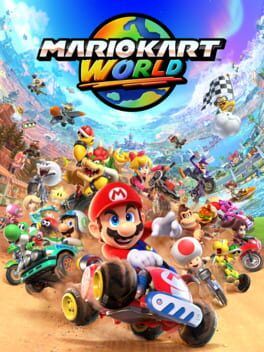
A deep look at Hori’s new Nintendo‑licensed Mario Kart World Racing Wheel Pro Mini and Pro Deluxe for Switch 2, how they work with original Switch games, their best use cases beyond Mario Kart World, and what this early push says about Nintendo’s next‑gen accessory strategy.
Nintendo is not waiting for Switch 2 owners to settle for standard Joy‑Con steering. Hori’s newly announced Mario Kart World racing wheels, officially licensed and tailored for Nintendo’s next‑gen hardware, arrive right as Mario Kart World becomes the system’s multiplayer showpiece. The pitch is simple: two tiers of wheels, one compact and kid‑friendly, one full‑size and feature rich, that work on both Switch 2 and the original Switch family.
Two flavors of Mario Kart World wheel
Hori is shipping two models under the Mario Kart World banner: the Mario Kart Racing Wheel Pro Mini and the Mario Kart Racing Wheel Pro Deluxe. Both carry Nintendo’s official seal and Mario Kart World branding, but they aim at different players.
The Mini is built as an approachable entry point. The wheel diameter is about 8.6 inches, which makes it easier for younger players or anyone playing at a smaller desk to manage. It still ships with a two‑pedal set for throttle and brake, along with racing paddles and a full spread of face buttons and shoulder inputs mapped to Switch controls. In the center sits the big Mario “M” logo that acts as a dedicated Item button, mirroring the on‑screen chaos of Mario Kart World with a single, easy reach.
The Deluxe model chases the sim‑adjacent crowd while staying in Mario’s toy‑box aesthetic. It scales up to a full 11‑inch wheel, uses textured rubber grips, and comes with a more serious pedal set. The rim feels closer to a traditional entry‑level sim wheel, and the housing looks more like a compact cockpit accessory than a toy. For families that already own the original Switch wheels, this is the Switch 2‑era refresh with a little more flex.
Feature set: where Mini and Deluxe really differ
Inside, the two wheels share a lot of DNA. Both are wired accessories that connect over USB‑A with a 9.8‑foot cable, both include suction cups for quick mounting, and both keep all the essential Switch buttons accessible on the wheel itself. They also support Hori’s usual programmable button functions, so you can remap inputs to suit different racing games.
Where the Deluxe starts to justify its higher price is in tuning options. It offers seven sensitivity levels, along with a choice between 270‑degree and 180‑degree steering. Players who like a snappier arcade feel can tighten things up, while those who want more nuanced control in long corners can let the wheel travel further. Dead zone adjustment gives you further control over how quickly steering begins to register, which matters a lot when you are threading through Mario Kart World’s narrower city streets or slipstreaming in Sonic Racing: CrossWorlds.
The Mini pares this back, leaning into simplicity. You still get configurable buttons, paddles, and pedals, but there is less emphasis on detailed tuning. Hori clearly expects the Mini to live under TVs in family rooms, where multiple players cycle through races without spending ten minutes calibrating steering curves. It is the kind of accessory you can hand to a younger sibling and know they will be racing comfortably in a few minutes.
Switch 2, original Switch, and beyond
Crucially, both the Mini and Deluxe wheels are fully compatible with the entire Switch family. They are sold as Switch 2 accessories first, but the USB wired design means they work on the original Switch and Switch OLED, plus any Switch 2 dock configuration.
From a software perspective, that means Mario Kart World on Switch 2 is only the start. The wheels support Mario Kart 8 Deluxe on the original system, and they slot into most of the platform’s other racers. Hori and retail listings call out support for titles like Sonic Racing: CrossWorlds, plus a broad list of smaller racing games and arcade‑style drivers across Switch and Switch 2. If a game accepts a standard controller and offers wheel presets or customizable inputs, these wheels plug right in.
The other quiet upgrade that matters for Switch 2 is the new C button for GameChat. Earlier Hori Mario Kart wheels already worked on Switch 2 at a basic input level, but they lacked dedicated controls for Nintendo’s updated voice and chat layer. This refresh aligns the physical hardware with Switch 2’s system‑level features, which will be important for competitive online play in Mario Kart World’s knockout tours and ranked cups.
Use cases beyond Mario Kart World
Mario Kart World is clearly the marketing hook, but the design of both wheels suggests Hori and Nintendo want them to live beside the console long after the initial launch window hype fades.
In Mario Kart World itself, the standout use case is Free Roam. The game’s interconnected environments and long stretches of open road make analogue steering feel much more natural than twitchy stick flicks or Joy‑Con tilt. With a wheel, cruising with friends, hunting for shortcuts, or lining up photo spots around scenic landmarks all feel closer to a relaxed driving game than a frantic party racer.
Move outside Mario Kart World and the Mini becomes a great fit for pick‑up‑and‑play arcade racers. Sonic Racing: CrossWorlds and similar titles benefit from the tactile gas and brake pedals without demanding serious tuning. Families can rotate through players in split‑screen, and younger drivers can focus on turning, drifting, and hitting boost pads without juggling thumbstick aim and button presses on a tiny Joy‑Con.
The Deluxe leans into longer, more focused sessions. In Switch 2’s library that will likely mean semi‑sim arcade hybrids and licensed racers where finer steering input actually matters. The adjustable steering angle and sensitivity are especially useful on tighter, more technical circuits, or in games that model weight transfer and braking more seriously than Mario Kart World. On PC, where XInput support is common for Hori wheels, this Deluxe model effectively doubles as an entry‑level racing wheel for budget‑minded players who want one device for both Switch 2 and Windows.
Pricing, dates and pre‑order landscape
Hori and multiple retailers list the Mario Kart World Racing Wheel Pro Mini at around $80 USD and the Pro Deluxe at around $130 USD or regional equivalents. That positions the Mini as a premium toy‑grade wheel and the Deluxe as an affordable step into “real” racing hardware while still anchored in Nintendo’s character branding.
Both models are slated to launch on March 23, 2026, with pre‑orders already open through major online retailers and Hori’s own storefront. The timing is intentional. Landing a high‑profile, Nintendo‑licensed accessory in the same window as Mario Kart World and early Switch 2 hardware puts the wheels in front of launch‑window buyers when enthusiasm and attachment rates are highest.
For existing Switch owners, the cross‑generation compatibility softens the blow of investing in new hardware at the tail end of one system’s life and the beginning of another. If you are still grinding cups in Mario Kart 8 Deluxe while saving for a Switch 2, a Pro Mini or Pro Deluxe bought today will carry forward when you eventually upgrade to Mario Kart World.
What this says about Nintendo’s Switch 2 accessory strategy
These wheels are not experimental one‑offs. They are iterative follow‑ups to Hori’s successful Switch Mario Kart Racing Wheels, now explicitly tuned for Switch 2’s feature set and launch ecosystem. That tells us several things about how Nintendo and its partners are thinking about accessories in the next generation.
First, Nintendo is willing to let third‑party specialists handle niche enthusiast gear as long as it carries the official license and fits the brand. Instead of building its own first‑party wheel, Nintendo is leaning on Hori’s experience while still wrapping the products in Mario Kart World art and Switch 2 marketing. The result looks like a “Nintendo product” even though it is not manufactured in‑house.
Second, the early presence of a full accessory tier for a single flagship game suggests a broader launch‑window push. If Mario Kart World can support two separate SKUs of licensed wheels on day one, it is easy to picture similar early accessories for other tentpole Switch 2 games, from fighting game controllers to expanded storage solutions and themed docks. A more robust accessory ecosystem has historically driven higher attach rates, and Switch 2 looks set to follow that playbook from the outset.
Finally, the inclusion of modern system‑level controls like the GameChat C button hints at better alignment between hardware and Nintendo’s online ambitions. It is a subtle change, but it means Hori is no longer just emulating a basic controller layout. Instead, the company is building devices that assume players will be talking, streaming, and coordinating in real time during Mario Kart World’s most competitive modes.
Viewed together, the Mario Kart World Racing Wheel Pro Mini and Pro Deluxe are more than just fun peripherals for a single racer. They are early proof that Switch 2’s accessory story will be both familiar and sharper, with Nintendo and Hori working in lockstep to make sure that if you want a more immersive way to drive through Mario Kart World on day one, the hardware will be waiting on the shelf right beside the console.