
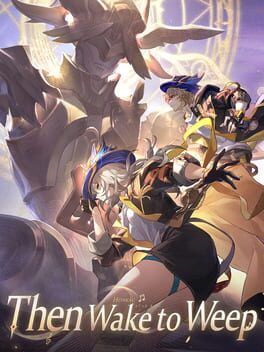
Breaking down Honkai: Star Rail Version 4.3’s new Planarcadia chapter, Mortenax Blade’s debut, banner lineup, and the Fate/Stay Night crossover, with a look at how HoYoverse is pacing its live‑service roadmap.
The Lethe Below the Living: Planarcadia Hits Its First Climax
Version 4.3, The Lethe Below the Living, lands on June 1 and is framed very clearly as a pivot point for Honkai: Star Rail’s current arc. Rather than hopping to a new planet or side story, HoYoverse is drilling deeper into Planarcadia’s “World in Canvas,” digging into both Blade’s curse and the Trailblazer’s tie to the husk of an Aeon.
The core of the update is Mortenax Blade’s descent into the World in Canvas. He is trying to finally carve Shuhu out of his body by leaning into the power of Voracity, and that premise gives the story a tighter, character‑driven focus than some of the broader Penacony chapters. The World in Canvas is used as more than just a stylish backdrop. It becomes a kind of psychic operating theater where Blade’s history, his bond with Shuhu, and his self‑destructive obsession can be staged in surreal but readable ways.
Parallel to that, the Trailblazer is sent to Inkford Hermitage, a liminal space that sits between reality and the World in Canvas. This is where the Asat Pramad threat comes into sharper relief and where Graphia’s role in the arc becomes more important. Rather than springing a brand‑new crisis out of nowhere, 4.3 threads existing mysteries together: the Trailblazer’s growing connection to the husk of an Aeon, Blade’s curse, and Planarcadia’s rules of reality.
From a live‑service perspective, this is HoYoverse closing a loop before it opens the next one. Players who have invested in Blade’s story since the early versions get payoff, while the broader Aeon lore keeps inching forward instead of stalling between big milestones. It is the sort of mid‑arc chapter that rewards long‑term play without feeling like a filler patch.
Mortenax Blade: A Signature Character Designed Around New Systems
Mortenax Blade is the headliner and a prime example of how HoYoverse uses new units to introduce or refresh mechanics. He is a 5‑star Fire character on the Path of Nihility, which already signals that he is less about raw carry damage and more about degenerative pressure on enemies.
His central gimmick is the Bounded Field, created by his Ultimate. Inside this special state, enemies take increased damage and Blade unlocks enhanced skills along with a more powerful follow‑up Ultimate once he has built enough Charge. The kit encourages continuous aggression, where both Blade and his allies keep attacking marked enemies to stack debuffs and fuel his meter.
This design does two key things for the live‑service meta. First, it nudges players to revisit Nihility‑focused ensemble teams. Rather than just slotting one debuffer next to a hypercarry, Mortenax Blade thrives in lineups that keep enemies permanently vulnerable inside his field, turning ongoing debuffs into the core damage engine. Second, the dual‑stage Ultimate and Charge loop give Star Rail’s turn‑based combat a sense of tempo normally seen in action games, which helps keep older endgame content feeling fresh when revisited with new characters.
HoYoverse has followed this pattern since launch: major story patches rarely arrive without a character whose gameplay fantasy meshes tightly with the narrative focus. Blade’s internal struggle becomes a battlefield mechanic, and that kind of thematic alignment is exactly what keeps long‑term players engaged even if they are already sitting on a deep roster.
Banners In 4.3: Familiar Cadence, Smart Reruns
On the banner side, Version 4.3 sticks to a structure that live‑service veterans will recognize, but with enough variation to stay interesting.
The first phase revolves around Mortenax Blade’s debut banner. As usual, he anchors the marketing cycle, but there is also the Gift of Tempered Blade event wrapped around him. Once players obtain Mortenax Blade through Warping, they can clear event objectives to unlock a new Trailblazer outfit piece. It is a small but effective incentive that ties fashion rewards to pulling on the latest limited character without locking actual gameplay power behind the banner.
Alongside Blade, 4.3 runs a Yao Guang rerun in the first half and Cyrene plus Phainon reruns in the second half. Instead of flooding the schedule with multiple completely new units, HoYoverse is leaning into reruns that patch holes for returning or late‑adopting players. Yao Guang, Cyrene, and Phainon all feed into existing meta archetypes, which gives players clearer priorities for passes, Stellar Jades, and Tears of Dreams. The rerun cadence also signals that the game is comfortable cycling its roster rather than forcing power creep every patch.
From a roadmap angle, 4.3 is basically the “stabilize the meta, highlight one new flagship” patch. It lets those who skipped earlier banners catch up while putting nearly all the spotlight on a single, thematically crucial release.
Wispae Amusement Park And Starward Mode: Long‑Tail Engagement
Beyond story and banners, 4.3 brings two systems that directly serve long‑term engagement: Wispae Amusement Park and Starward Mode.
Wispae Amusement Park sits inside the World in Canvas and lets players build and customize their own amusement park. You place attractions, set up themes, route visitors, and essentially treat it as a creative sandbox grafted onto the RPG skeleton. This kind of builder‑style side mode matters for a live‑service because it offers non‑combat goals that can be picked at casually between heavy content drops. Players can pop in to tweak layouts, chase optimization challenges, or just treat it as a cosmetic passion project.
Starward Mode, by contrast, targets high‑end players. It is a new challenge layer added to Memory of Chaos, Pure Fiction, and Apocalyptic Shadow, requiring three separate teams completing three stages. Clearing all stages in Starward Mode yields extra Stellar Jades each cycle. HoYoverse is essentially doubling down on roster depth: if you want those regular premium currency injections, you cannot coast on one or two hyper‑tuned teams anymore.
This is an important step in the game’s lifecycle. Early on, it is healthy to let players lean on their favorite few characters and slowly ramp difficulty. Years in, a mode like Starward is a gentle but firm push toward fleshing out six, nine, or even twelve well‑built units. It keeps old characters relevant, incentivizes experimenting with new ones like Mortenax Blade, and gives dedicated players something to optimize beyond just clearing new story chapters.
Fate/Stay Night: Unlimited Blade Works Returns, With A Bigger Hook
The Fate/Stay Night: Unlimited Blade Works crossover has quietly become one of HoYoverse’s strongest live‑service levers, and Version 4.3 is timed specifically to set up its next wave. While the main event lands later in the summer rather than inside 4.3 itself, the patch’s marketing cycle is built around teasing it.
The crossover returns with Rin Tohsaka and Gilgamesh joining the game’s roster, following on from the earlier Saber and Archer collaboration. In the current round of details, HoYoverse has confirmed that players will be able to obtain one of the collaboration characters for free simply by logging in during the event period. That structure matters much more than it first appears.
Offering a high‑profile collab unit for free login rewards is a retention and reactivation machine. Lapsed players get a clean reason to reinstall without feeling forced into gacha spending just to enjoy the crossover fantasy. Active players get a “guaranteed win” on top of whatever they chase on banners. For HoYoverse, it acts as a funnel: you come for the free Fate character, then realize your teams could use a Mortenax Blade or other reruns and start budgeting Stellar Jades again.
Crossover design also lines up with the patch’s broader Planarcadia themes. Fate’s obsession with ideals, legacy, and different versions of the same hero mirrors Honkai: Star Rail’s focus on Aeons, alternate worlds, and fractured identities. Gilgamesh’s kingly arrogance and Rin’s sharp pragmatism fit naturally into a cast already populated with planar travelers and reality‑bending artists. It is fanservice, but it is fanservice that does not feel out of place.
How 4.3 Signals The Next Phase Of The Roadmap
Taken together, Version 4.3 looks less like a flashy detour and more like a consolidation patch. The Planarcadia story thread approaches a payoff point, Mortenax Blade anchors both the narrative and combat meta, reruns shore up banner gaps, and new modes give veterans something harder to chew on.
Most importantly, HoYoverse is using 4.3 as a bridge into future versions. The patch surfaces the Fate/Stay Night crossover without burning all of its content at once, keeps players talking about collab possibilities, and ensures that when the event actually lands in a later update, there is a sizable, engaged audience ready to log in daily.
For a mature live‑service like Honkai: Star Rail, that is exactly the balance it needs to keep striking. 4.3 moves the story forward, experiments with systems like Starward Mode and the amusement park builder, and plays the long game on a prestige crossover. It is a reminder that Star Rail is not just surviving its multi‑year run, but still building momentum for whatever world, Aeon, or collaboration waits on the horizon.