
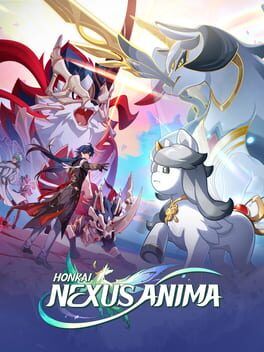
Early Honkai Nexus Anima hands-on impressions point to a stranger new HoYoverse RPG built around Anima placement, Aspects, stats, catching rules, and exploration tools rather than familiar Genshin or Star Rail combat rhythms.
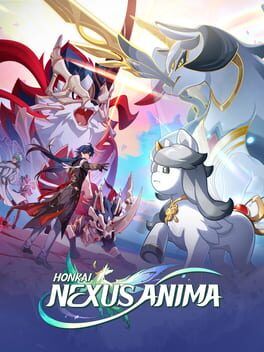
Image: IGDB
A HoYoverse creature collector, but the beta points somewhere stranger
The clearest takeaway from the latest Honkai Nexus Anima hands-on wave is that HoYoverse is not simply applying its usual RPG presentation to a familiar monster-catching loop. Multiple outlets that played the closed Evolution Test describe a game built around creature collection, automated tactical battles, and unusual character-choice systems, with the important caveat that this is still beta material and subject to change.
That tension is the story. Honkai Nexus Anima carries the Honkai name, reportedly includes connective tissue to other HoYoverse games, and uses the studio’s polished character-driven framing. Yet the early Honkai Nexus Anima preview consensus suggests the actual game asks players to think less like a Genshin Impact action player or a Honkai Star Rail turn-based party planner and more like a collector, formation builder, and systems tinkerer.
The public listing summarized on Wikipedia describes Honkai: Nexus Anima as an upcoming creature-collector adventure strategy game developed and published by miHoYo, with Android, iOS, and PC listed as planned platforms and release timing still TBA. That same listing notes the second closed beta, the Evolution Test, began on July 9, 2026. HoYoverse has not provided, in the supplied material, a final release date, launch price, monetization structure, or finalized platform feature set, so the practical read for players is straightforward: this is a promising test, not a locked buyer’s guide.
Combat is about preparation before control
The biggest mechanical split from HoYoverse’s best-known RPGs is combat control. GamersHeroes reports that players set up an Anima team before each bout by choosing squad makeup, formation, and positions, but once the match starts, the Anima act on their own. Siliconera similarly describes Honkai Nexus Anima gameplay as a real-time strategy-style setup where creatures are placed into one of three field lines based on traits and roles, then automatically fight and use battle skills when able.
That makes the game’s first strategic question less about executing combos and more about building a board. Siliconera’s example of Umpurrella identifies it as a ranged Backline Anima tied to the Beauty attribute and a Mastermind role, while noting that Strength or Courage Aspect creatures are better suited for the front. Game8 frames the beta as autochess-style strategy, comparing the placement-and-automation layer to titles such as Teamfight Tactics.
The player is not idle, according to GamersHeroes. During combat, players can choose among three operator powers that provide direct damage, buffs or debuffs, or healing, but those powers have significant cooldowns. That detail matters because it keeps the player’s role tactical rather than purely observational. A poor formation can put a fragile unit in danger before a cooldown is ready; a strong formation can turn those limited interventions into swing moments.
For RPG players, that makes Nexus Anima’s buildcraft sit in an unusual middle space. It is less animation-cancel and reflex-driven than Genshin Impact, less direct-command turn sequencing than Honkai Star Rail, and less one-creature-at-a-time command selection than traditional Pokémon-style battles. The early reports point to a new HoYoverse RPG where the player’s intelligence is tested at the planning table first.
The Anima systems sound playful, but also progression-heavy
Hands-on reactions are especially positive about the creatures themselves. Beebom says Anima are found throughout the world, can be battled and captured, and stand out because of their personalities and behaviors. The outlet cites examples including a depressed-looking koala Anima that needs coffee, a ninja-like Anima that can be controlled to stealth kill enemies, and traversal creatures used as trampolines, gliders, mounts, or wall-breakers.
That is a meaningful distinction for a HoYoverse monster battler. A creature’s value is not limited to its combat slot if it also changes how players move through the world, solve obstacles, or access spaces. Beebom’s trampoline example sounds intentionally goofy, but it also signals a progression model where expanding the roster can widen exploration options. For completion-focused RPG players, that raises the right kind of long-term question: which captures are power upgrades, which are mobility keys, and which are collection goals?
GamersHeroes reports there were 83 Anima to catch during the Evolution Test. It also says wild Anima can sometimes be captured after a fight, with catch odds varying enough that one creature offered only a 12 percent chance and led to four missed attempts. That suggests the beta had room for friction, though we do not yet know how final catch rates, consumable availability, or grind tuning will look at launch.
One of the more interesting reported constraints is that players cannot catch repeats, according to GamersHeroes. The outlet says new skins and upgrade points are tied to catching new Anima, while duplicates do not stack into a party. If that rule survives into release, Nexus Anima may avoid some of the box-management clutter that can weigh down creature collectors, but it also shifts progression pressure onto breadth. The optimal player may be pushed to hunt the whole ecosystem rather than farm a single favorite.
Character creation is doing more RPG work than expected
The strangest systems are not all attached to the monsters. Siliconera reports that the Evolution Test begins with a choice between two avatars, then adds attributes through preset builds. In the beta build described, an Evil Genius preset had 8 Intelligence and 2 points each in Charisma and Strength, while Muscle Master had 7 Strength, 3 Charisma, and 2 Intelligence. Siliconera specifically notes that it has not seen this kind of character development in a HoYoverse title before.
That is potentially a sharper departure from studio habit than the monster collecting itself. HoYoverse protagonists often function as vessels for story progression, party framing, or account-wide identity. Here, the beta appears to use avatar stats to shade choices. Siliconera describes an early sequence with Darsea where the player can pick a food challenge, trivia contest, or portrait drawing, with the initial stat selection influencing how well those options may turn out.
The same preview notes a quality-of-life Peeker system that shows current stat points and possible success requirements during decisions. That kind of transparency is crucial if Nexus Anima wants choice to feel like RPG authorship rather than a hidden pass-fail trap. A stat check is only satisfying when the player understands the tradeoff and can connect a prior build decision to a later result.
MMORPG.com’s hands-on summary also points to the beta having more personality than expected, citing Aspect synergies and even open insults during character creation. The supplied excerpt does not explain those insults in detail, so the safe read is simply that the test’s tone seems more abrasive and playful than the genre template might imply. Between that and Siliconera’s stat presets, Nexus Anima may be using the avatar layer to create friction, comedy, and role-play hooks before the player ever starts optimizing a battle lineup.
Aspects give the creature roster a lore spine
The Aspects system is where the combat and setting appear to meet. Siliconera lists Anima-linked Aspects such as Beauty, Courage, Hate, Joy, Love, Memory, and Strength. But Why Tho describes the world as divided into planes, or dimensions, each centered on an aspect such as Reality, Love, or Change, with a Novarch holding influence over that realm’s aspect. Its preview says the portion played took place on the plane of Reality, governed by Bai Mei.
Game8’s beta writeup gives a broader lore version: the world was once connected through a Nexus, the Sundering severed that bond, the Aspects fractured, and 81 separate universes called Planes emerged. Wikipedia’s summary is similar at a higher level, describing a balance of Nexus built from paired concepts such as love and hate, with severed bonds scattering power into creatures called Anima.
For a lore-aware RPG player, this is more than background flavor because it appears to justify the class system. If Beauty, Courage, Strength, and other Aspects govern roles, placement, and synergies, then creature collecting becomes a form of cosmology management. You are not only catching designs you like; you are assembling fragments of a broken metaphysical order into a usable squad.
There are still open questions. The supplied material does not confirm how deep Aspect synergies go, whether they resemble set bonuses, whether certain Aspects counter others, or how much late-game progression depends on specific combinations. But the early Honkai Nexus Anima hands-on reaction is consistent on one point: the game’s weirdness comes from tying personality, lore, and tactical function to the same creature framework.
The story may be the most familiar part, for better and worse
If the systems are distancing Nexus Anima from Genshin and Star Rail, the story setup may pull it back toward recognizable HoYoverse habits. GamersHeroes says the beta opens with the player losing their memory, discovering hidden powers, being chased through a portal, and arriving in another world where Anima coexist. The outlet also reports that Blade from Honkai Star Rail was one of the characters chasing the player, which makes the cross-series connection unusually direct in the test material.
But Why Tho describes the protagonist as a Planestrider who can move between planes, with a mysterious past connected to the Sundering and hostile forces searching for them for reasons that remain unclear. Game8 identifies Animasters as people who command Anima in Nexus Battles and lists named figures such as Nanafey, Maple Manybell, and Kiana, with Kiana described by Game8 as a Planestrider and returning character from Honkai Impact 3rd.
Not every preview was sold on the framing. Beebom’s hands-on piece praises the Anima personalities and exploration abilities, but criticizes the story as another HoYoverse-style interdimensional setup involving entities and dimensions. That criticism is useful because it separates two different kinds of fatigue. Players may be excited by the creature systems while still wondering whether the narrative will lean too heavily on cosmic proper nouns, memory loss, and multiverse escalation.
For now, the sources support both reactions. The setting has enough structure to explain the mechanics, and the returning-character references will give Honkai fans something to parse. At the same time, anyone hoping Nexus Anima would tell a small, grounded creature-training story should expect a broader plane-hopping premise based on these beta impressions.
Who should watch this beta closely
The practical guidance is to treat Honkai Nexus Anima as a systems preview, not a launch verdict. The Evolution Test material shows a game with a defined identity: automated Anima battles, pre-fight formation decisions, operator cooldowns, stat-influenced dialogue choices, exploration creatures, and a lore framework built around Aspects and planes. Those are concrete enough to make the game worth watching for RPG players who enjoy roster planning and collection completion.
It is less clear whether the final game will satisfy players who come primarily for direct action or traditional turn-based command control. The reported combat model gives agency through preparation and timed powers, but the creatures execute most of the fight themselves. If you enjoy the feeling of piloting every strike, Honkai Nexus Anima gameplay may require an adjustment. If you enjoy building a team that wins because the board state was solved correctly, the beta reactions are encouraging.
Availability details remain limited in the supplied source set. The public listing cited above says Android, iOS, and PC are planned, with release TBA. The Evolution Test was closed, so most players cannot currently treat these previews as a demo replacement. HoYoverse has also not confirmed in the provided materials how monetization, gacha systems, account progression, beta carryover, or endgame content will work.
The best reason to keep this new HoYoverse RPG on your radar is that its strongest ideas are not merely cosmetic genre borrowing. The early reporting points to a monster battler where creatures are combat units, traversal tools, personality sketches, and Aspect-bearing build pieces. Whether that remains elegant after live-service progression and final tuning are added is the central unanswered question.