
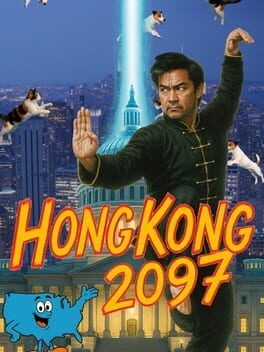

How the sequel to infamous bootleg Hong Kong ’97 ran headfirst into Steam’s IP rules, and what that says about fan-made revivals on PC storefronts.
Hong Kong 2097 was supposed to be the impossible follow up. A modern, commercial sequel to Hong Kong ’97, the 1995 unlicensed Super Famicom bootleg that became a cult legend for being aggressively terrible, politically charged, and flagrantly illegal with its assets. Instead, the sequel disappeared from Steam before it ever launched, pulled after repeated review failures for using third party content.
This is not a story about a surprise cancelation so much as a collision between a nostalgic bootleg spirit and the much stricter realities of contemporary PC storefronts.
From underground cartridge to cult phenomenon
The original Hong Kong ’97 circulated on homemade cartridges and gray market discs in the mid 90s. It was infamous for its grainy image of Jackie Chan on the title screen, a still of a dead body used as a game over screen, and a soundtrack that looped a snippet of a song without permission. Virtually everything about it was unlicensed, from celebrity likenesses to music.
For years it was more urban legend than game, something whispered about on forums and passed around via ROM sites and low quality videos. Its appeal came from that transgressive, anything goes energy, where the copyright infringement was part of the punchline and the shoddy design seemed almost intentional.
That legend eventually turned Hong Kong ’97 into a curiosity for retro enthusiasts and YouTube historians. It became an example of how bootlegs could acquire mythic status precisely because they were operating outside any official channels.
What Hong Kong 2097 was trying to be
Hong Kong 2097 set out to channel that same outlaw energy, but as a commercial PC release. Co developed by HappySoft and Kanipro Games, it was pitched as an over the top twin stick shooter drenched in chaotic imagery, garish UI, and a nonstop barrage of cultural references.
According to the developer’s own account, the sequel used a stew of material, including unlicensed footage and images tied to wrestling, pop stars, drag performers, political figures, and a heavy dose of generative AI meant to simulate the lawless collage aesthetic of 90s bootlegs. The idea was to create something that felt as wild and unauthorized as the original, while being packaged and sold through modern storefronts.
That tension sat at the heart of the project. Hong Kong 2097 was trying to offer an authentic sequel to a notorious pirate game without really abandoning the methods that made the original possible.
Why Steam pulled the plug before launch
Valve reviewed Hong Kong 2097 multiple times. Each pass reportedly went deeper into the game’s content, aided by a debug mode the developer provided so Steam staff could quickly jump through levels and cutscenes.
Ultimately, the game failed review with a clear reason cited by Valve: third party content. In practical terms, that means Hong Kong 2097 included assets that the developer did not have the rights to use. On Steam, that is a hard stop.
Steam’s policies have grown more explicit over the last decade as the store ballooned from a curated catalog to a massive open platform. Developers are responsible for ensuring they own or have licensed all the content in their games. If a title contains recognizable, unlicensed imagery or footage, it is extremely likely to be rejected or delisted once discovered.
In other words, this was less about taste and more about ownership. Where some recent Steam removals have involved arguments over offensive themes or sexual content, the Hong Kong 2097 case is straightforward: the game relied on material that was not cleared. For a platform that runs a global storefront and regularly fields DMCA notices, that is risk it will not take.
Steam has since removed the store page and declined to ship the game. Hong Kong 2097 still exists, but it will not be distributed on Valve’s platform in its current form.
What the delisting says about IP enforcement on PC storefronts
The fate of Hong Kong 2097 underlines how different today’s environment is from the one that birthed Hong Kong ’97. In the 90s, a bootleg could slip around the margins because there was no centralized gatekeeper. Distribution happened through swap meets, import shops, and eventually fan sites that often existed in a legal gray zone.
Modern PC storefronts, on the other hand, are highly visible commercial hubs. Valve, GOG, and other major stores are expected to respond quickly to infringement claims and demonstrate that they do not knowingly host unlicensed content. As discovery tools and social media make new releases far more visible, the chance of rights holders noticing unauthorized use skyrockets.
That reality has shaped how platform holders approach fan made revivals and spiritual successors. Games that nod to old bootlegs, share their design sensibilities, or pay homage through parody can often exist comfortably on stores if they use original assets and avoid recognizable unlicensed material. The moment a project leans on actual footage, logos, or likenesses without clearance, it becomes less a tribute and more a liability.
Hong Kong 2097 is a particularly stark example because its entire concept was built around recreating the collage of ripped media that defined its predecessor. That bootleg DNA is exactly what resonates with fans of the original, but it is also what makes it difficult to host on mainstream platforms in 2024.
Fan projects in the age of platforms
Fan driven revivals have become an important part of the PC ecosystem. From unofficial remasters to spiritual sequels, many modern indie projects are rooted in a community’s affection for obscure or mishandled games. The line that storefronts draw is less about inspiration and more about direct reuse.
Projects that reinterpret mechanics, structure, or tone usually clear review without issue. Problems start when a game incorporates ripped sprites, movie clips, licensed music, or contemporary celebrity likenesses. The further a game drifts into that territory, the more likely it is to stay confined to smaller platforms, private Discords, or anonymous file sharing rather than prominent stores.
Hong Kong 2097 sits at that boundary. It tries to bring a famously illicit artifact into a space defined by visibility, automated content scanning, and corporate risk management. The decision to block it highlights how little room there is on big storefronts for works that depend on unlicensed collage, even when the audience understands the intent as satire or homage.
The takeaway for developers is not that fan culture or bootleg aesthetics are unwelcome on PC, but that they have to be built with different assumptions. To survive on Steam or GOG, a modern game that channels the spirit of something like Hong Kong ’97 has to replace the stolen material with original or properly licensed work.
Where Hong Kong 2097 might go next
Kanipro has said it plans to release Hong Kong 2097 somewhere, whether that means another store like GOG, a niche platform, or a direct download. Any storefront operating at a comparable scale to Steam, however, is likely to confront the same IP red flags.
That tension captures the strange place Hong Kong 2097 occupies. It is an artifact designed to feel like it never should have existed on a legitimate shelf, now colliding with platforms that depend on strict content rules to function. The game’s removal from Steam is not the end of underground style revivals, but it is a reminder that the platforms where most PC players discover games today are not built to host the kind of bootleg that made Hong Kong ’97 famous in the first place.