
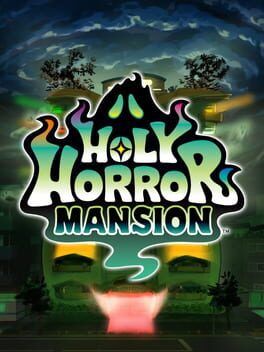
Level-5’s “Concept Next Yo-Kai Watch” finally has a name and a haunted address. Here’s everything shown so far about Holy Horror Mansion, its Ten Lordland-led cast of ghosts, and how its cross-media ambitions and possession-focused systems could shape the eventual JRPG.
Holy Horror Mansion is the kind of pitch only Level-5 would dare to call “heartwarming horror.” Announced at Level-5 Vision 2024 as a “Ghost Craft RPG” and the “Concept Next Yo-Kai Watch,” it is positioned less as a simple successor and more as a full reset of the studio’s monster-collecting formula.
With its big cross‑media showcase now pushed to 2026, we are in a long pre-launch limbo where trailers, key art and a drip feed of website updates are all we have to go on. That is just enough to sketch a surprisingly clear idea of what Holy Horror Mansion is trying to be.
Ten Lordland and the haunted landlord life
The new hero is Ten Lordland, a boy whose entire identity is wrapped around property. His grandmother owns an old apartment building, and perched directly on its roof is a slightly crooked Western-style mansion. Ten lives there, in a liminal space between normal tenants below and spooky happenings above.
Level-5 describes the story as a “mysterious family” drama wrapped in a horror-comedy. Ten finds a dusty camera in a locked room of the mansion, snaps a photo, and triggers his first ghost encounter. As with the original Yo-Kai Watch’s wrist gadget, the camera looks like the franchise-defining tool that will let Ten see, befriend and maybe even reshape ghosts.
So far, footage and official blurbs suggest a tone closer to Goosebumps than outright terror. Rooms are lit with warm orange lamps and teal moonlight, and ghosts lean toward the round, mascot-like silhouettes that made Yo-kai Watch toys fly off shelves. The difference is that here, those spirits are less pranksters and more co‑habitants in a single, strange building Ten has to maintain.
A mansion stacked on an apartment block
Holy Horror Mansion’s setting is one of its most striking hooks. Instead of wandering a whole town like Springdale, you have a single vertical micro-world: the apartment tower and the mansion grafted on top.
On the lower floors, regular families rent units from Ten’s grandmother. They cook, argue, go to school and complain about the landlord like any other tenants. Above, the mansion is a creaking labyrinth of secret rooms, forgotten heirlooms and unsettled spirits.
Framing the game this way gives Level-5 a walkable, explorable “dollhouse city” contained in one complex. Each apartment can work like a self-contained story chapter, with new characters, domestic troubles and hauntings. Run enough errands for a family or fix their spectral problem and their apartment could visually change, new areas might open in the mansion, or a new ghost might move in.
In gameplay terms, this kind of setting practically begs for a daily-life loop. You wake up in the mansion, check requests from tenants, dive into ghost-related incidents, then return upstairs to tinker with your spirit companions. It preserves the routine appeal of Yo-kai Watch while condensing the action into a single, tightly curated hub.
The three ghosts and how they might play
Level-5 has been especially vocal about Holy Horror Mansion’s trio of main ghosts. Rather than a single mascot, Ten seems to partner with three distinct spirits that embody different ways of interacting with the world:
Possession-focused ghosts, combination-focused ghosts and more systemic world‑building ghosts.
The possession angle shows up clearly in the marketing. Ghosts are said to possess ordinary objects, people and even Ten himself. In battle or exploration, that could mean equipping spirits like interchangeable skill sets. Possessing a broom might let Ten ride it to sweep across gaps, while possessing a tenant could temporarily grant their abilities or access to locked areas.
Combination ghosts invite comparisons to crafting systems. Level-5 calls the game a “Ghost Craft RPG,” which hints at a loop where you merge or tune spirits rather than simply capturing them. Fuse a shy closet ghost with a fiery kitchen spirit and you might get a new variant whose powers change both combat and how you manipulate rooms of the mansion.
The world‑building ghosts are where the project’s family theme comes into play. Instead of being passive stat sticks, some spirits may alter the very structure of the building. A ghost tied to plumbing could swell a bathroom with supernatural water, changing routes through the complex. One linked to electricity might short out lights, shifting enemy behavior and hiding new pathways. Over time, the mansion becomes less a static dungeon and more a living blueprint that Ten and his ghost partners continually renovate.
Put together, these three roles suggest parties of ghosts that are less about type matchups and more about how you want the apartment ecosystem to behave. Do you prioritize possession ghosts to solve tenant problems directly, or lean on world‑building spirits to quietly nudge the building into new shapes?
From “Next Yo-Kai Watch” to cross-media giant
Level-5 is not shy about its ambitions. Company president Akihiro Hino has framed Holy Horror Mansion as the studio’s biggest cross-media push yet, explicitly calling it the “next concept” for Yo-Kai Watch.
That language matters. It implies Holy Horror Mansion is not just a new IP but a template for how Level-5 wants to handle brand ecosystems going forward. Expect the usual suspects: anime adaptation, manga runs in kids’ magazines, tie-in novels, toys, trading cards and maybe even AR-driven mobile spin-offs centered on snapping ghost photos with your phone.
The official website already positions the project as a “largest ever cross-media project,” and a dedicated event was supposed to outline merchandise and media plans in 2025. That showcase has since slipped all the way to 2026, which suggests either coordination challenges with partner companies or a desire to align the media rollout closer to the game’s launch.
In practice, a delayed cross-media event probably means a bigger reveal when it finally hits. Level-5 historically likes to line up game systems with toy features, such as medals or watches that physically mimic in-game items. Here, the obvious anchor is the camera itself. A toy camera that scans toy ghosts, QR codes on physical items that unlock new spirit combinations, or even a kid-friendly AR camera app feel almost inevitable.
If Level-5 nails that alignment, Holy Horror Mansion could replicate the Yo-Kai Watch arc of kids discovering the world through a signature gadget and then begging for the real version for birthdays.
How “Ghost Craft” systems could work
With no platforms and no HUD footage yet, any talk of Holy Horror Mansion’s mechanics has to stay speculative. That said, Level-5’s own wording and the shots it has shown are enough to sketch some believable directions.
The first pillar is the camera. In a JRPG context, it is easy to imagine encounters being triggered by photographing anomalies in the mansion and apartments. Catch a glimpse of a warped shadow or floating utensil, frame it in the viewfinder, and pulling the shutter might drag the ghost into a visible state and start an encounter.
From there, ghost possession can become a wrinkle on classic skill trees. Instead of learning spells, Ten “slots” ghosts into his body, each one altering his stats and granting a small set of moves. Swapping ghosts mid‑battle would mirror changing Yo-kai on a wheel, but here the twist is that those same spirits also affect exploration. A ghost attuned to locks could let Ten pass through doors or hack electronic keypads. One infused with cold might freeze pipes, creating walkable platforms.
Combination mechanics would deepen that loop. Rather than simply evolving ghosts at fixed levels, Level-5 might let players merge them based on shared traits, creating custom spirits tuned to specific tenants and rooms. Solve a child’s fear of the dark by crafting a gentle lamp ghost that now resides in their bedroom, both resolving their quest and adding a new ghost to your arsenal.
World‑building ghosts would likely sit at the top of this system. Befriending or crafting them could change the structure or rules of entire floors. A ventilation ghost could open hidden shortcuts between apartments, turning backtracking into puzzle-solving. A finance‑obsessed spirit could alter rent prices, shifting which tenants can afford to stay and subtly changing the stories that play out in the building.
Layered over a day-night cycle and light social sim elements, this mix could turn Holy Horror Mansion into a JRPG where your party management is inseparable from level design. You would not just grind for stats; you would reconfigure the very environment your family of tenants and ghosts call home.
Why the delay might help
The cross-media event sliding to 2026 reads worrying at first glance, especially after multiple postponements. But for a system-heavy concept like “Ghost Craft,” extra breathing room might be good news.
Level-5 has a reputation for charming ideas that sometimes overshoot their initial design. Giving the team more time to tune how possession, combination and world‑building ghosts interact could be the difference between a gimmicky successor and a genuinely new pillar for the studio.
By 2026, the market for cozy horror and life-sim hybrids will also be better established, with more players looking for games that sit between cute and unsettling. If Holy Horror Mansion can arrive with a polished loop that lets families laugh at ghosts together instead of just collecting them, its fashionably late timing may work in its favor.
For now, all we can do is rewatch the teaser, pick apart every shot of the mansion’s shadowy hallways and wonder what kind of ghost-craft we will be doing behind those crooked windows when Level-5 finally opens the doors.