
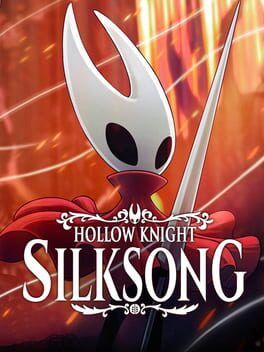
Patch 1.0.29926 is more than a bug sweep. Team Cherry’s focus on localization, narrative polish, and stability strongly hints that Silksong is entering a clean runway toward its first major expansion, Sea of Sorrow.
Patch 1.0.29926 for Hollow Knight: Silksong is being billed by Team Cherry as the “last significant patch” before the free Sea of Sorrow expansion. On paper it looks modest: a chunk of localization work, a raft of bug fixes, and a handful of balance tweaks. In practice, it reads more like a pre-expansion checkpoint, the kind of housecleaning you do when the next big thing is already well into the pipeline.
Why call this the last “significant” patch?
Team Cherry is very specific about its wording here. This is not the last patch, just the last significant one before Sea of Sorrow. That suggests two things about the studio’s internal roadmap.
First, the current Silksong build is functionally where they want it for a base-game foundation. Most of the fixes in 1.0.29926 are the sort of subtle edge-case bugs that accumulate after launch: Hornet and enemies getting pulled out of bounds, boss behaviors that break under odd conditions, abilities not interacting cleanly with scene transitions. When your patch notes are mostly about collision quirks, travel nodes, and rare combat exploits, you have already cleared the loud, structural problems.
Second, Team Cherry wants to stabilize the live game’s feature set before it folds Sea of Sorrow into the codebase. If they kept introducing new systems or widespread combat overhauls this close to a major expansion, every new change would multiply the QA surface area for Sea of Sorrow’s content. Calling this the last significant patch is essentially drawing a line in the sand: this is the baseline Silksong that Sea of Sorrow will be built on.
That framing lines up with their decision to keep future updates focused on minor hotfixes. Once testing for the expansion ramps up, micro-patches are all about shoring up crashes and regressions, not experimenting with mechanics.
What the translation work says about expansion readiness
The most visible headline in this patch is localization. Traditional Chinese has been added to Silksong, and the existing German translation has been combed through and refined for clarity and closer adherence to the English script. This kind of work is rarely glamorous, but it is a critical marker of how close a game is to a new phase of content.
Adding a full Traditional Chinese localization is not a trivial lift. It means the in-game text pipeline is stable enough that translators can work against a relatively final script. Rock Paper Shotgun’s reporting highlights that Team Cherry coordinated Traditional and Simplified Chinese efforts so terminology, lore names, and stylistic choices line up between both versions. That level of coordination only makes sense if you are trying to lock in a canon lexicon before more story and item names arrive with Sea of Sorrow.
The same logic applies to the German pass. Eurogamer notes that this patch is about bringing German phrasing in line with the nuance and tone of the original English. That kind of refinement typically happens once developers are confident they are not constantly rewriting quests, boss dialogue, or item descriptions. You do not ask translators to fine tune flavor text if you plan to rewrite those lines in two months.
The quiet implication is that Silksong’s narrative spine, terminology, and itemization are now stable enough to support expansion hooks. Sea of Sorrow will presumably lean on existing lore threads and naming conventions, so Team Cherry is securing a solid linguistic bedrock before adding a new coastal region, bosses, and tools on top.
Balance tweaks as pre-expansion tuning
While 1.0.29926 does not overhaul combat, its balance changes speak to Team Cherry’s mindset about Silksong’s difficulty curve heading into Sea of Sorrow.
The standout tweak is the reduction of the Last Judge’s death explosion damage from 3 to 2. Boss death explosions sit in that hazy space between spectacle and punishment. Toning down the damage suggests the studio is smoothing out the nastier spikes that might feel unfair, particularly for players returning after a break who want to be ready for new content without slamming into a brick wall.
Elsewhere, tweaks like Magma Bell now protecting against all fire-type explosions suggest a broader effort to make tools more legible and reliable. When a charm or equivalent promises a thematic protection, players expect that promise to hold in corner cases. Tightening that behavior reduces confusion and feeds into a more predictable foundation for whatever tool and enemy designs Sea of Sorrow introduces.
There are also a host of ability and traversal adjustments. Silk Soar now correctly interacts with top scene exits, and various enemies or boss phases that could slip out of bounds have been reined back in. These are alignment changes more than power shifts. They close exploits, remove frustration, and make sure movement tech behaves the way players expect. That is vital before you place that same movement toolkit into new, likely more elaborate, Sea of Sorrow arenas.
Bug fixes that speak to long term stability
The volume of bug fixes in this patch reads like the tail end of a post launch cleanup cycle. Many of the notes called out by Eurogamer and The Escapist are about specific, one in a hundred edge cases: particular boss attacks that can miss flags, enemies that do not die when their parent encounter ends, fast travel nodes acting up under unusual conditions, or interactables that did not quite respond as intended.
On their own, each of these changes is small, but together they signal that Silksong is moving out of a reactive period and into a more stable maintenance phase. The big crashers and progression blockers were addressed in earlier patches. What is left are the subtleties that only emerge after thousands of hours of combined player experimentation.
That is the best place to be when you are about to introduce a major expansion. Sea of Sorrow will inevitably bring its own suite of strange bugs and surprise interactions. Having a cleaner, more predictable core game reduces the risk that some obscure launch day combo of old and new content will break a playthrough.
Does this patch signal a smooth runway into Sea of Sorrow?
Taken together, the messaging and content of 1.0.29926 strongly suggest that Team Cherry is closing the book on Silksong’s launch era. Localization is being aligned across major languages, balance is being nudged more than rewritten, and systemic bugs are being scrubbed out rather than replaced with new experimental systems.
Calling this the last significant patch is not a guarantee that Sea of Sorrow will arrive without delays or last minute adjustments. It does, however, mark a shift in priorities from fixing what shipped to preparing to ship something new. The current build is effectively the “base edition” of Silksong, and Sea of Sorrow is poised to be the first real test of how expandable that foundation truly is.
The translation and polish work in this update hints at a studio that is locking in its canon, not rethinking it. That usually means narrative outlines for new content are firm, item and boss concepts are at least partially integrated into the codebase, and what remains is focused iteration, tuning, and QA rather than broad rework.
If Team Cherry can keep future patches to that smaller hotfix scope they hint at, Silksong should enjoy a relatively smooth runway into Sea of Sorrow’s nautical depths. The expansion will likely define how players remember the game’s post launch life, but this final significant patch quietly does the unglamorous work that makes that leap possible.