
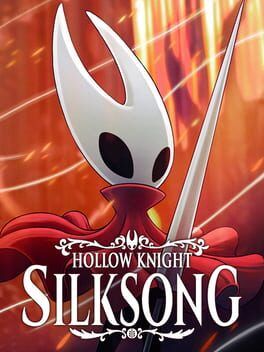
Team Cherry details a 2026 roadmap that future‑proofs the original Hollow Knight with a free Switch 2 upgrade and a modernized tech refresh, while Silksong’s nautical Sea of Sorrow expansion and 7M+ sales set up a long life for Hornet’s adventure.
Team Cherry has finally sketched out what 2026 looks like for both Hollow Knight and Hollow Knight: Silksong, and the picture is bigger than a simple DLC drop. Between a full tech refresh for the original game and Silksong’s first expansion, the studio is quietly doing the work to future proof Hallownest and Pharloom for the next hardware cycle.
A free Switch 2 upgrade that actually modernizes Hollow Knight
The headline for long time fans is simple: if you own Hollow Knight on Nintendo Switch, you get the dedicated Switch 2 Edition at no extra cost in 2026. That new version is not a bare minimum port. Team Cherry describes it as bringing the original up to the level of Silksong’s technical profile on Nintendo’s next hybrid system.
Across reports from Team Cherry’s own blog and outlets like Siliconera, IGN and Nintendo Life, the Switch 2 Edition is targeting higher resolutions, high frame rate modes and a suite of additional graphical effects that were never possible on the base Switch. Think sharper hand drawn art that holds up on 4K TVs, cleaner animation with less blur, and more of Silksong’s lighting flourishes rather than a simple resolution bump.
At the same time, current platforms are being brought along. A new public beta branch on Steam and GOG for Hollow Knight, currently labeled around v1.5.12301, lays the groundwork for the Switch 2 Edition and the broader console patches that will follow.
What the tech refresh is changing right now
For PC players, the in beta tech refresh is already live and it telegraphs exactly how Team Cherry wants Hollow Knight to feel on modern setups.
The most obvious change is aspect ratio support. Hollow Knight was originally built around 16:9, which meant black bars or hacks for anyone on ultrawide or on 16:10 handhelds. The beta adds native 16:10 and 21:9 options in the menu, so Steam Deck owners and ultrawide monitor users can finally see Hallownest spread properly across the screen without stretching or cropping. It sounds small, but for a game that leans heavily on atmosphere and off screen sound cues, regaining that peripheral space changes the feel of exploration and boss fights.
Input handling is getting a quiet but important overhaul too. The beta introduces support for the modern Unity Input System, which dramatically improves how the game recognizes different controllers and their layouts. It should mean better plug and play support across Xbox, PlayStation and third party pads, as well as cleaner rebinding. Crucially, the legacy input system is still available as an option, so speedrunners or long time players who are used to specific timing quirks are not forced into a new feel overnight.
Team Cherry is also tweaking how the game behaves in menus. The new build pauses gameplay when you open the inventory to swap charms or check your map. That lines Hollow Knight up with Silksong’s more readable pacing and cuts out edge case situations where enemies could close the distance while you were buried in UI. Combined with smoother map panning, it gives the game a more modern, controller friendly flow without touching core difficulty.
Visually, new dithering options target one of 2017 Hollow Knight’s few rough spots on high end displays. The refresh adds a configurable dithering effect to smooth out color banding in gradients, especially in areas with heavy fog or subtle lighting. Players on OLED screens and big TVs should see a cleaner image that preserves the painterly look without harsh bands in the background.
Beneath those headline changes sit a host of quiet bug fixes and balance tweaks that have been called out across patch notes and coverage. A long standing softlock in the City of Tears grub room is addressed. Grey Prince Zote’s stagger bounce height is reduced to keep his fight readable. Sly’s Great Slash collider is adjusted for more consistent hit detection. Salubra’s Blessing no longer triggers at full Soul, which tidies up some awkward edge behavior around resource generation. None of these rewrite the meta, but taken together they show that the team is willing to apply sandpaper to an eight year old classic rather than let it sit untouched.
All of this will roll out beyond PC as the Switch 2 Edition nears launch, with current consoles receiving many of the same quality of life changes. The goal is clear. Whether you boot Hollow Knight on a PS4, a current Switch, a high refresh PC monitor or Nintendo’s next system, it should feel like the same tuned, modern platformer.
How the Switch 2 Edition matches Silksong’s profile
Team Cherry has said that the Switch 2 Edition of Hollow Knight is designed to “match the technical profile” of Silksong on the same hardware. That means several concrete things for the original game.
High frame rate modes will finally be standard on a Nintendo platform for Hollow Knight, bringing it closer to the 120 Hz and beyond experiences players already see on PC. Even if Switch 2 caps at 60 frames per second for many users, getting there consistently with headroom for heavier visual effects should make boss patterns feel more precise and inputs more responsive.
Higher resolutions ensure that the fine line work around characters and backgrounds is not lost. Silksong’s HUD and environmental art were built with sharper output in mind, and applying those expectations backward to Hollow Knight should make backtracking across familiar zones feel newly crisp, particularly in handheld mode where sub native resolutions were more noticeable on Switch.
Finally, “many additional graphical effects” is a catchall that likely covers the more advanced lighting, particle work and subtle camera touches already present in Silksong’s builds. If Team Cherry follows through, players returning to Greenpath and the City of Tears on Switch 2 may find them closer, visually, to Silksong’s lush new biomes than to the 2017 original.
Sea of Sorrow brings Silksong out to sea
The other half of the 2026 roadmap is Silksong’s first expansion, Sea of Sorrow. It will arrive as a free update for all platforms where Silksong is available, including Nintendo’s Switch 2, PC, Xbox and PlayStation.
Details are still intentionally sparse. The reveal trailer and Team Cherry’s holiday blog describe it as a nautical themed expansion, with new oceanic locations, enemies and tools. Given how tightly Hollow Knight and Silksong tie mechanics to geography, that nautical framing is significant. Water and seafaring motifs are almost entirely absent from Hallownest, so building an arc of Pharloom’s world around coasts, shipwrecks or submerged ruins is a chance to carve out an identity for Silksong’s post launch content rather than just adding one more underground region.
Expect traversal to be the clue. Silksong’s base game already leans into verticality and momentum far more than Hollow Knight did, with Hornet’s faster movement, aerial tools and acrobatic boss design. Dropping her into storm swept piers, flooded caverns or the innards of some impossible sea beast invites new spins on grappling, wall running and needle throwing. Nautical settings also give Team Cherry license to play with sound in a fresh way, layering creaking hulls, distant waves and muffled echoes over Christopher Larkin’s score.
Just as important is where Sea of Sorrow lands in Silksong’s lifecycle. Rather than a small pre order bonus or a launch window add on, this is the first proper expansion, announced after the game has already settled in and found its audience.
Seven million sales and a long tail for Silksong
Alongside the DLC announcement, Team Cherry confirmed that Hollow Knight: Silksong has already sold more than 7 million copies. For a hand drawn Metroidvania, that is a striking milestone. The original Hollow Knight slowly climbed into the multi million tier over years of ports and word of mouth. Silksong hit that scale almost immediately.
That number reframes Sea of Sorrow. It is not a last gasp effort to reignite interest, but a response to a player base large enough to support a genuine long tail. Free expansions like this act as a retention tool more than a one time revenue event. Returning players reinstall to see what is new, new players pick up the base game knowing that the package is growing, and platform holders give the game another round of promotion.
It also hints that Sea of Sorrow probably will not be the final word on Silksong support. In their holiday roadmap post, Team Cherry framed the 2026 plans as one part of ongoing development rather than an endpoint. When a studio of this size is working with 7 million plus players and a still hungry audience, it makes sense to invest in extra bosses, questlines and quality of life patches over the next few years, even if the team never commits to a full second expansion upfront.
The broader strategy mirrors what made the first Hollow Knight so enduring. Team Cherry is not moving on the moment the sequel ships. Instead, it is investing in keeping the original technically current through a free Switch 2 upgrade and across the board patches, while using Silksong’s momentum and scale to justify significant free content.
If Sea of Sorrow delivers a distinct, ocean soaked slice of Pharloom and the Switch 2 Edition of Hollow Knight truly feels like the definitive way to revisit Hallownest on consoles, 2026 could quietly be one of the most important years in this series’ history, not by launching something brand new, but by making sure the games players already love are ready for the next decade.