
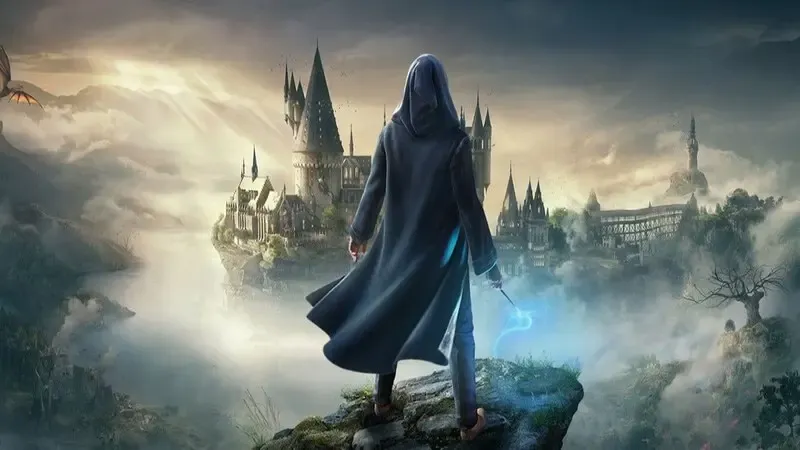
Warner Bros. Discovery has confirmed a second Hogwarts Legacy installment in its Q2 2026 shareholder letter. Here is what is known, what is still unannounced, and why the sequel carries major weight for WB Games.
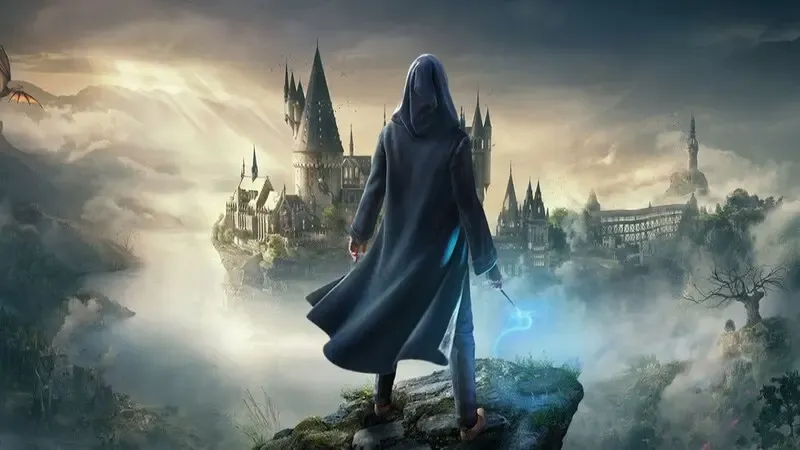
Image: dlcompare.com
Warner Bros finally puts the sequel on paper
Hogwarts Legacy 2 is officially in development, although Warner Bros. Discovery has not announced a release window, platforms, price, trailer, developer, or final title. The confirmation comes from Warner Bros. Discovery’s Q2 2026 shareholder letter, where the company told investors that its games pipeline includes “the second installment of Hogwarts Legacy.”
That phrasing is the firmest public confirmation yet. Until now, the Hogwarts Legacy sequel had been treated as an obvious business move rather than a formally acknowledged project. Outlets including IGN, Polygon, Wccftech, ScreenRant, My Nintendo News, and GameGPU all traced the news back to the same shareholder communication, which frames Games as an “important growth lever” for Warner Bros. Discovery’s Studios segment.
The tension is in how little Warner Bros. chose to say while still saying enough. A “second installment” confirms that the company is building on Hogwarts Legacy rather than merely keeping the Harry Potter game license warm, but it does not confirm whether the sequel will keep the same structure, protagonist framework, time period, map, combat systems, or platform slate. For now, Hogwarts Legacy 2 development is official. Almost everything players actually want to know remains under wraps.
A 40 million-copy hit changed the stakes
The sequel exists because the first game became one of the clearest commercial wins in Warner Bros. Games’ recent history. My Nintendo News, Polygon, and IGN all cite Hogwarts Legacy as having sold more than 40 million copies worldwide. IGN also notes that Hogwarts Legacy was 2023’s top-selling game in the U.S., making it the first title outside Call of Duty or Rockstar’s catalog to claim that annual spot since 2009.
That scale matters because Warner Bros. Games has not had a clean run across the rest of its slate. Polygon points to Suicide Squad: Kill the Justice League, MultiVersus, and the canceled Wonder Woman game as part of the difficult backdrop around the division. In that context, a Hogwarts Legacy sequel is less a surprise announcement than a strategic anchor: a proven single-player action-adventure RPG in a licensing ecosystem Warner Bros. already understands.
The first Hogwarts Legacy also gave Warner Bros. something many publishers chase for years: a blockbuster game that reached far beyond the most committed Harry Potter audience. It was a school fantasy, an open-world action game, a character progression loop, and a sightseeing tour through Hogwarts and the surrounding Highlands. That combination made it commercially powerful, even as parts of its open-world structure drew criticism for familiar checklist design.
What is confirmed and what is still missing
The confirmed facts are narrow. Warner Bros. Discovery has acknowledged a second Hogwarts Legacy installment in its investor materials. The company expects Games to contribute more meaningfully to segment profitability as the pipeline expands. The sequel is part of that pipeline.
Warner Bros. has not announced whether the game will be officially titled Hogwarts Legacy 2. IGN’s page labels the project with an unofficial title, and the shareholder letter itself uses “the second installment of Hogwarts Legacy” rather than a branded sequel name. That distinction is worth keeping. Search interest will naturally gather around Hogwarts Legacy 2, but the publisher has not yet revealed key branding.
Platforms are also unconfirmed. GameGPU notes that the original Hogwarts Legacy released across PC, PlayStation 4, PlayStation 5, Xbox One, Xbox Series X|S, and Nintendo Switch. No source material confirms whether the sequel will target current-generation consoles only, arrive on Nintendo hardware, include PC at launch, or stretch across multiple console cycles. No storefront listings, editions, upgrade paths, system requirements, or preorder details are included in the provided sources.
The developer has not been confirmed in the shareholder quote either. Wccftech identifies Avalanche as the developer of the original Hogwarts Legacy, but Warner Bros. Discovery’s shareholder language, as quoted by multiple outlets, does not name a studio for the sequel. Until Warner Bros. says otherwise, any assumption about the development lead should be treated as expectation rather than confirmation.
The sequel has a design problem as much as a business opportunity
The first Hogwarts Legacy already did the expensive world-building work of turning Hogwarts, Hogsmeade, and the surrounding landscape into a playable adventure space. IGN speculates that this existing foundation could allow the team to reuse assets and potentially move faster, while also noting that the success of the first game may give the sequel more time and resources to push further. That is speculation, but it points at the central creative question.
A sequel cannot rely on discovery alone. The first trip through the castle had the pacing of a grand reveal: staircases, classrooms, secret passages, the first broom flight, the first duel that made spell chaining feel like a rhythm game wearing an action RPG robe. The second game has to turn that familiarity into momentum. If Hogwarts returns as a central location, the challenge becomes making known corridors feel staged for new drama rather than preserved as a museum of the first game’s triumphs.
Combat is another pressure point. Hogwarts Legacy’s spell system had strong cadence when enemies were staggered, juggled, shield-broken, and finished with Ancient Magic. Its best encounters had a snappy dueling rhythm, especially when enemy shields forced players to read color, timing, and cooldowns under pressure. A sequel has room to make that rhythm sharper through enemy design, encounter layout, and consequences for spell choice.
Wccftech’s Francesco De Meo argues that the original leaned on a familiar Ubisoft-style open-world formula and specifically criticizes the lack of serious consequences for using Unforgivable Curses such as Avada Kedavra. That is an opinion from Wccftech rather than a confirmed direction for the sequel, but it highlights a real design fork. Hogwarts Legacy 2 can expand the map, or it can deepen the systems that make being a witch or wizard feel reactive, dangerous, and narratively legible.
Warner Bros is fitting the sequel into a tighter franchise strategy
Warner Bros. Discovery’s shareholder letter places the Hogwarts Legacy sequel inside a broader reset for Games. The company says its refocused strategy centers on four key franchises with “disciplined investment behind fewer, higher conviction titles.” Polygon reports that WB Games’ stated focus areas are Harry Potter/Hogwarts Legacy, Game of Thrones, Mortal Kombat, and DC, with DC emphasis primarily on Batman-led opportunities while the new DCU develops.
The same shareholder passage mentions recent releases Lego Batman: Legacy of the Dark Knight and Game of Thrones: Dragonfire, describing them as the first launches under that refocused strategy. Whether those titles become durable successes is separate from the Hogwarts question, but the sequencing is telling. Warner Bros. is telling investors that it wants fewer bets, larger brands, and clearer paths to profitability.
That makes Hogwarts Legacy 2 one of the most important Warner Bros Games projects currently acknowledged in public documents. The first game proved the Harry Potter game audience could support a massive premium release. The sequel now has to prove that the success was repeatable, not a one-time collision of nostalgia, novelty, and pent-up demand for a big-budget Hogwarts RPG.
There is also a transmedia layer. Polygon reports that former Warner Bros. Interactive Entertainment president David Haddad told Variety in 2024 that the games team was coordinating some big-picture storytelling elements in the Hogwarts Legacy sequel with storylines planned for the Harry Potter television series. IGN reports that HBO’s Harry Potter adaptation is set for this Christmas and is already moving forward on a second season. None of that confirms plot details for the game, but it does suggest Warner Bros. is treating the Wizarding World as a coordinated franchise slate rather than isolated releases.
Release timing is speculation, not an announcement
No official release date exists in the provided source material. That is the most important practical detail for players. Warner Bros. has confirmed Hogwarts Legacy 2 development, but has not attached the project to 2027, 2028, Gamescom, The Game Awards, PlayStation 6, Xbox’s next hardware, or any specific marketing beat.
ScreenRant argues that a formal reveal could fit events such as Gamescom Opening Night Live on August 25 or The Game Awards in December, and suggests that a 2027 release window no longer feels farfetched. IGN takes a more speculative angle, saying it would not be surprising to see the sequel by late 2028, if not sooner, and floats the possibility of a next-generation console connection. Those are outlet expectations, not Warner Bros. confirmations.
For players, the safest read is simple: do not plan purchases, hardware upgrades, or replay timing around an unannounced window. There is no confirmed platform list, no preorder campaign, and no official gameplay description. If someone is considering buying the first Hogwarts Legacy now, the sequel’s existence alone is not enough reason to wait, because there is no confirmed launch year for Hogwarts Legacy 2.
The next meaningful update should answer at least three questions: who is developing it, what platforms it targets, and whether Warner Bros. is building a direct continuation or a broader second entry under the Hogwarts Legacy banner. Until then, the shareholder letter gives the industry the headline, but not the shape of the adventure.
The real test is whether the sequel can move with purpose
Hogwarts Legacy earned its scale by letting players inhabit a fantasy space that games had circled for years without fully capturing at blockbuster scope. The sequel enters under different conditions. Players have already walked the halls. They have already flown over the Highlands. They have already learned the combat language of Protego timing, spell combos, enemy shields, and finishers.
That raises the bar. A stronger Hogwarts Legacy sequel would need better pacing between school life, exploration, and combat; set pieces that feel authored rather than merely large; and choices that carry clearer narrative or systemic weight. Those are expectations based on the first game’s structure and the criticisms cited in coverage, not confirmed features.
What is confirmed is that Warner Bros. Discovery has now made the sequel part of its official games pipeline. After more than 40 million copies sold for the original, the business case is obvious. The creative case is harder, and far more interesting. Hogwarts Legacy 2 has to become the next major Harry Potter game without simply retracing the spell circle that made the first one a phenomenon.