
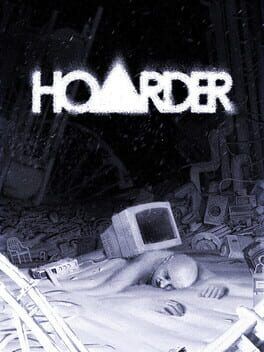

What starts as a cozy, meticulous cleaning sim slowly peels back into an Inscryption-like horror game about cleaning the abyss, from a co-creator of Darkwood.
At first glance, Hoarder looks like the latest entry in PC gaming’s strangely satisfying cleaning boom. You arrive at a cluttered Polish home owned by a hoarder couple, methodically pick through piles of junk, sort valuables from trash and turn grime into gleaming surfaces. From the opening minutes, it appears to belong on the same shelf as PowerWash Simulator or Viscera Cleanup Detail, only with a more grounded, almost documentary eye for domestic chaos.
That first impression is deliberate misdirection. Hoarder is built by Byzel, a studio led by Gustaw Stachaszewski, co creator of Darkwood, and you can feel that horror pedigree quietly pressing against every dust mote. The house is richly observed: faded vinyl sleeves, yellowed newspapers, chipped mugs, boxes that look like they sat untouched for decades. It is convincing in the way a place is when someone has seen this kind of mess up close. Yet the longer you work, the more this mundane space stops feeling like a level and starts feeling like a lure.
The hook is not simply that Hoarder has horror elements, but that it weaponizes the rhythms of cleanup sims themselves. The early loop is gentle and almost cozy. You clear a room, haul bags of rubbish, list forgotten valuables for sale and watch your account tick upward. That money can eventually buy you a ticket out, a literal vacation that functions as a perfectly valid, surface level ending. If you want Hoarder to be a chill, slightly melancholic cleaning game and nothing more, the game will let you keep it that way.
Everything changes if you choose not to clock out. Buried in the house is a staircase that should not be there, a quiet architectural glitch that signals Hoarder’s tonal bait and switch. Cross that threshold and the tidy genre lines begin to fray. Objective markers stop behaving. Interface text and quest descriptions start to corrupt. The reassuring clarity of “clean this, sell that” is gradually replaced by something stranger, where the game’s rules feel as unreliable as the space you are walking through.
It is here that Hoarder starts to evoke Inscryption, not in specific mechanics, but in the broader sense of genre as misdirection. Inscryption presented itself as a quirky card battler before revealing whole other games nested beneath. Hoarder attempts a similar trick with the aesthetics of SimTok friendly cleanup. It uses a believable, therapeutic fantasy as its mask, then steadily undermines that fantasy by pulling the floor out from under it, both literally and figuratively. The hoarder’s home becomes a decoy shell for another game about diving into an abyss that does not want to be cleaned.
The scope of that hidden layer reaches well beyond the walls of the house. Hoarder’s synopsis hints at piloting a submarine and recovering what should have stayed sunken, recasting the idea of “hoarding” as something cosmic and predatory rather than just domestic clutter. Cleaning shifts from a satisfying end in itself to a fragile line between containment and exposure. In Darkwood, fear was built from not being able to see what surrounded you. In Hoarder, dread comes from realizing you are being asked to bring submerged horrors back into view, one scrubbed surface at a time.
What makes this reveal so compelling is how cleanly it plays off the expectations players now bring to indie sims. We have been trained to see games about mopping floors or power washing patios as wholesome, low pressure spaces. They are the games you boot up to decompress after a long day, where progress is measurable and the world is easily improved with a little elbow grease. Hoarder leans into that comfort long enough for you to settle in, then asks what happens when the job you are doing no longer feels like an uncomplicated good.
That tension is amplified by the game’s distinctly Polish sense of place. These are not stylized, IKEA showrooms waiting to be neutralized, but rooms that reek of specific lives: communist era furniture, old packaging, family photos, shelves weighed down with obsolete electronics and religious kitsch. There is a sadness to clearing these spaces out, and a prickling sense that by tidying you are erasing people who are no longer there to object. When the horror starts to bleed through, it feels like a natural extension of that unease rather than an abrupt genre pivot.
Hoarder’s team draws from more than Darkwood’s lineage. Byzel sits under the Awaken Realms umbrella, known for elaborate, often unsettling board games, and the project counts contributors from Superhot and the surreal horror series Smile Guide. That mix of sensibilities helps explain why Hoarder’s trailer hits with such a specific tone. It is playful enough to sell the fantasy of being a professional cleaner, but framed just off center, like a commercial shot by someone who keeps noticing something moving at the edge of the set.
As an announcement, Hoarder stands out in a crowded indie calendar precisely because it feels so tuned to the moment. The idea of a game with layers that peel back into something darker has become an unofficial subgenre in itself, from Inscryption to Doki Doki Literature Club and beyond. But few have tried to smuggle their horror inside a genre as aggressively soothing as the cleaning sim. Hoarder does not just add monsters to the mess. It asks why we find such comfort in tidying digital spaces and what it would mean if the dirt fought back.
For now, the Steam page is light on specifics and there is no release date, but Hoarder already reads like one of the more intriguingly slippery indie projects on the horizon. It promises a game that can be exactly as shallow or as deep as you are willing to dig, where ignoring the staircase is as much a statement as descending it. Whether you treat it as a beautifully rendered house cleanup job or a slow fall into the abyss beneath, Hoarder looks set to make you think twice before you take on another relaxing virtual gig with a mop.