
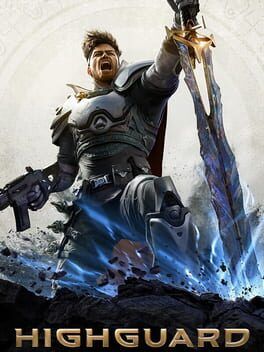
Wildlight’s debut blends mounted arcane gunfights with raid-style objectives, all wrapped in a free-to-play package that has Titanfall fans intrigued, wary, and still begging for Titanfall 3.
Highguard was supposed to be The Game Awards showstopper, a surprise capstone from the minds behind Titanfall and Apex Legends. Instead, the reveal landed in a strange middle ground: a promising new PvP raid shooter that immediately had half the internet asking the same question.
Where is Titanfall 3?
Wildlight Entertainment, a studio formed by former Respawn leads, is betting that players are ready for something different. Highguard is that bet, and it’s a confident one: a free-to-play first person shooter built around mounted combat, raid-style base assaults, and short, objective-focused matches.
The Highguard premise: Wardens, a mythical continent, and the Shieldbreaker
Highguard drops you into a science fantasy war for control of a mythical continent. You play as a Warden, described as an arcane gunslinger, equal parts spell-slinging knight and high-tech outlaw. The setting leans hard into that hybrid vibe. Shotguns and rifles fire beside glowing sigils and crackling energy, while the world is framed less like a battlefield and more like a contested frontier dotted with fortresses and relics.
At the center of each match is a powerful artifact called the Shieldbreaker. Rival Warden crews fight over it, trying to secure, escort, and deploy it at key points on the map. Whoever manages to wield the Shieldbreaker effectively can collapse the enemy’s defenses, punch through their outer walls, and open the way to a base-destroying finale.
It’s pitched as a PvP raid shooter: not a traditional arena shooter, and not a pure extraction game, but something in between. Teams push through a multi-stage encounter that feels closer to a raid boss run than a standard deathmatch rotation, only the opposing raid group is made of other players.
Mounted Warden combat: guns, spells, and spectral rides
What immediately separates Highguard from its Respawn lineage is how much of the action happens from the saddle. Wardens ride into battle on spectral beasts that function like weaponized mounts. The reveal trailer shows glowing horses and hulking spirit-bears tearing across the landscape while players fire rifles and cast abilities at full speed.
This mounted focus changes several fundamentals that Titanfall and Apex fans are used to:
Instead of wall-running and slide-hopping through tight corridors, you’re weaving your mount between cover, using momentum and elevation to create odd firing angles. Your mount is not just a sprint button but a core part of your kit. Wildlight is positioning these rides as extensions of your class identity, with movement, survivability, and even some offensive options tied to what you’re riding.
Duality also defines the combat rhythm. There are moments where you’re thundering across open ground, taking potshots at other mounted Wardens, and others where you dismount to push through chokepoints, plant objectives, or brawl in close quarters. That constant decision of when to be mobile and when to dig in is likely to be a big part of the learning curve.
Some players watching the reveal called the mix of horseback-style riding and sci fi gunplay visually jarring, but it is at least distinct. In a market full of tactical operators and near-future mercs, Highguard’s ghost cavalry silhouette stands out immediately.
Raid-style objectives instead of simple team deathmatch
Rather than revolve around static zones or a shrinking circle, Highguard builds its matches as contained raids with clearly defined phases.
Early play-by-play descriptions and the official Steam text line it up like this. First, crews clash over the Shieldbreaker, the match’s central macguffin. This phase looks closer to a classic control or payload fight, with both teams converging on contested ground. Second, whoever secures and successfully uses the Shieldbreaker can punch open the enemy’s bastion. Defenses fall, new routes unlock, and the frontline shifts from midfield skirmishes to a full-on siege. Finally, the endgame is about pushing through those breached defenses to destroy the enemy base.
Wildlight frames this as raid-like because the flow is meant to feel like progressing through a multi-step encounter. Each phase asks for different pacing and different compositions. Mobility and scouting are critical when contesting the Shieldbreaker in open terrain. Breach phases favor coordinated pushes, ultimate timing, and utility abilities that can crack entrenched bunkers. Base destruction is a last stand where the losing side has to stall and counter-push under pressure.
If it works, this structure could give Highguard the same highlight reel potential Titanfall had, just in a different flavour. Instead of titan drops and perfect wall runs, the thrilling moments will be shield-breaking cavalry charges, desperate last-second defenses, and synchronized multi-lane assaults.
Free-to-play from day one: an economy under the microscope
Highguard will launch as a free-to-play title on PC, PlayStation 5, and Xbox Series X|S, with a release currently set for January 26. That model makes sense for a team that helped turn Apex Legends into a long tail success, but it also puts the game’s economy under immediate scrutiny.
Wildlight is positioning Highguard as a live service shooter built for long term play. That almost certainly means seasonal content, battle passes, and a heavy cosmetic layer. The Wardens themselves, plus their spectral mounts, are tailor-made for skins and visual customisation. Expect elaborate armor sets, glowing saddles, and color shifting spell effects to headline the store.
The studio has not laid out every monetisation detail yet, but Titanfall and Apex players have seen both ends of that spectrum. Titanfall 2’s DLC maps and modes were free, while Apex leaned hard on limited time cosmetics and collection events. Highguard will need to convince skeptical shooter fans that it can fund itself without burying its most interesting looks or conveniences behind aggressive paywalls.
The free entry does give the game a crucial advantage though. With so many online shooters launching to thin populations, anything that lowers the barrier to trying a match or two on day one helps. If the core mounted raid loop is strong, a low friction install could give Highguard the critical mass it needs.
Titanfall fans: hopeful, frustrated, and not shy about saying so
The other half of the Highguard story is not about what Wildlight showed, but what a lot of players feel is still missing. For years, Titanfall fans have been vocal about wanting a true Titanfall 3. When the trailer for a new shooter from that exact creative lineage finished rolling and there were no wall runs, no titans dropping from orbit, and no “3” in the logo, disappointment was inevitable.
Reactions across social media and community hubs paint a consistent picture. Some Titanfall players are open but cautious, saying they are willing to give anything from those devs a try, yet can’t help wishing it was set on the Frontier. Others are harsher, arguing that another free-to-play live service shooter is the last thing they wanted after years of cancelled Titanfall projects and Apex’s long shadow.
There’s also a more nuanced sentiment from long time Respawn followers. For developers who spent a decade inside a major publisher, Highguard represents creative escape. Wildlight is not Respawn, and the team is using that independence to chase something stranger and more niche. For some fans, that break from expectations is interesting on its own terms.
What almost everyone seems to agree on is that Wildlight now carries a double burden. Highguard has to stand up as a fresh, mechanically sharp shooter in a saturated genre, while also living in the shadow of one of the most beloved movement shooters ever made. Any clumsy monetisation beats or underwhelming launch content will be compared directly to Titanfall’s high points.
Where Highguard fits in a crowded shooter landscape
Highguard enters a space where almost every big shooter is either a hero battler, a tac shooter, or an extraction-lite hybrid. Wildlight is slicing out a corner that borrows pieces of each without sitting comfortably in any one category. Hero-style Wardens, a raid-like objective chain, and hard mounted mobility make it look and play different from its closest ancestors.
The question is not whether Titanfall fans will set aside their longing for a third mainline entry. Many simply will not, and that’s understandable. The more interesting question is whether Highguard’s own identity can become strong enough that it no longer feels like the game you got instead of something else, but the one you log in to for mounted chaos and tactical raids.
If Wildlight can deliver tight gunplay worthy of its Respawn roots, layered Warden kits that reward coordination, and maps that make riding into a base breach feel as joyful as chaining a Titanfall wall run, Highguard could carve out a loyal audience on its own terms. Until then, it exists in that tense space between legacy and experiment, with a launch date just around the corner and a community watching very closely.