
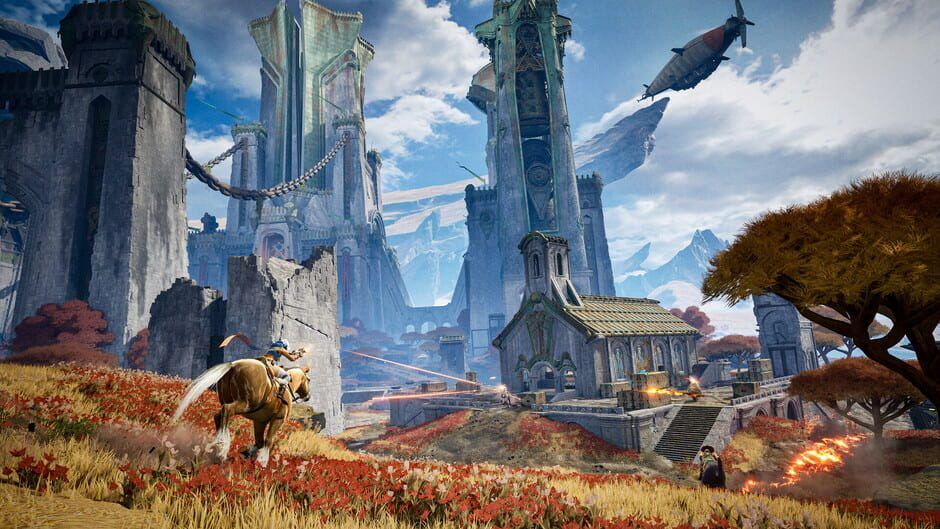

Wildlight Entertainment’s Highguard turns raids into competitive PvP, blending mounted combat, hero shooter abilities, and siege-style objectives ahead of its free-to-play launch on January 26, 2026.
Highguard did not arrive quietly. Wildlight Entertainment’s debut project closed out The Game Awards 2025 with a trailer that felt like a mission statement from the ex‑Respawn talent behind Apex Legends and Titanfall. Instead of another battle royale or extraction grinder, Highguard pitches itself as a “PvP raid shooter,” a competitive FPS where the objective is not just kills, but cracking a fortified base in a multi‑stage assault.
Set to launch as a free‑to‑play title on January 26, 2026 for PS5, Xbox Series X|S and PC, Highguard is positioning itself in a very specific lane. It borrows the coordination and multi‑phase structure of Destiny‑style raids, then injects Apex‑like hero abilities and high‑mobility gunplay, all while asking you to fight from horseback as often as you do on foot.
Wardens, Shieldbreakers, and a continent at war
Highguard casts players as Wardens, arcane gunslingers battling over control of a mythical continent. Every match revolves around a single, shared objective: the Shieldbreaker. This relic is not just a capture point, it is the key that turns skirmishes into a proper siege.
Two Warden crews face off over the Shieldbreaker in the field. Control it, and you unlock the chance to launch a raid on the enemy base. Lose it, and you are suddenly forced into a desperate defense as the opposing squad storms your stronghold. That simple loop aims to keep the stakes readable even in the chaos of ability spam and flying bullets, grounding the action in an easy to grasp win condition rather than a web of abstract points.
Structurally it is closer to a compact, competitive raid than a traditional multiplayer mode. Think of it as a raid encounter where the boss is the enemy team. You push through phases of map control, objective capture, and then base assault, with both sides constantly trading roles between attacker and defender depending on who is holding the Shieldbreaker.
Mounted combat at the heart of the fantasy
The visual hook that immediately separates Highguard from its peers is mounted combat. Instead of dropships and hover bikes, Wardens charge across ruined battlements and open fields on horseback, guns and magic flaring as they duel other riders or swing toward entrenched defenses.
Mounted gunplay is not treated as a throwaway traversal perk. Trailers show riders weaving between cover, firing sidearm shots from the saddle, and using abilities while in full gallop. Horses become mobile platforms that extend your effective range and speed, letting you reposition quickly when the Shieldbreaker spawns or when it is time to pivot from mid‑map fighting to a base push.
For a team made up of Titanfall veterans, the horse is clearly filling some of the same design space wall‑running mechs once did. It gives the game a distinct rhythm of approach and retreat. You can imagine teams sending a vanguard of mounted Wardens to harass opponents while more defensive heroes set up chokepoints near the Shieldbreaker. The inherent vulnerability of being a larger, moving target adds a natural risk‑reward tension to going all in on a cavalry‑heavy strategy.
Hero shooter DNA in a raid‑like frame
Wildlight is not hiding its lineage. This is a hero‑driven shooter at its core, with a roster of distinct Wardens defined by unique weapons, powers and silhouettes. The influence from Apex Legends appears in the way characters combine mobility, offense and team utility rather than just being walking ultimates.
In the reveal footage, some Wardens dart in with throwing knives and close‑range finishers, while others lean on heavy rifles, crowd control and area denial. One scene shows a Warden ripping out an opponent’s heart as a brutal execution, another teases wall‑busting abilities that punch new routes through crumbling architecture. There is the familiar triad of damage, disruption and support, but in a structure that is constantly pushing you toward or away from the Shieldbreaker.
This is where the “PvP raid shooter” label starts to make sense. Instead of heroes orbiting static control points or payloads, their kits interact with layered objectives and destructible spaces. A character who can breach walls might open new angles on the enemy base during the raid phase, while a defensive Warden could excel at locking down the relic itself, stalling long enough for the team to regroup.
Between Destiny raids and Apex arenas
Highguard’s pitch naturally invites comparison to the two poles it draws from most directly. On one side sit Destiny’s raids, elaborate PvE gauntlets that ask teams to execute choreographed mechanics in defined phases. On the other is the razor‑fast, improvisational firefight flow of something like Apex Legends.
Where Destiny focuses on cooperative problem solving against AI, Highguard takes the multi‑phase idea and hands the role of encounter designer to the opposing team. Capturing the Shieldbreaker is your raid’s first puzzle. Cracking the enemy base is the second. Every match is a tug of war between those steps, with your progress constantly rewritten by another squad of human players instead of bosses with scripted phases.
Mechanically, the gunplay and movement look closer to the Respawn school than to Bungie’s. There is a clear emphasis on snappy weapon handling, rapid repositioning and flanking, alongside verticality and environmental traversal that will feel familiar to fans of Titanfall. The difference is that the pacing is framed around objectives that have the weight and finality of raid checkpoints rather than the fleeting value of a single team wipe.
It is also important that Wildlight is explicitly not making an extraction shooter. There are no hints of inventory loot loss or escape choppers. The “raid” here refers to the act of storming and cracking an enemy fortress, not to session persistence or Tarkov‑style meta stakes. That could make Highguard more approachable for players who like structured objectives and high tension, but who do not want their whole evening riding on what was hiding in a loot bag.
Free‑to‑play, fast turnaround
Highguard launches on January 26, 2026 as a free‑to‑play title, barely more than a year after its reveal at The Game Awards. That short runway suggests Wildlight has been quietly building for some time and is now ready to pivot quickly into live support.
The free‑to‑play model will be a critical piece of the puzzle. Hero shooters live or die on a constant flow of new characters, cosmetics and meta shifts, and a raid‑style PvP framework only increases the need for regular map and objective tweaks to keep strategies from calcifying. Wildlight’s Respawn background means the team has experience in seasonal models, battle passes and live balance, although it will need to convince a modern audience that another service shooter is worth the time investment.
The cross‑platform launch on PS5, Xbox Series X|S and PC, along with cross‑play support referenced in early breakdowns of the reveal, indicates that the studio understands how important large, unified matchmaking pools will be for a competitive experiment like this.
The big questions before launch
As strong as the pitch sounds, Highguard still has plenty to prove once players get hands‑on. The first question is whether mounted combat can move beyond spectacle to become a genuinely deep layer of macro strategy. If horses end up feeling like temporary speed boosts rather than a foundational part of how you contest the Shieldbreaker, the game risks sliding back toward more familiar arena shooter territory.
The second is whether the raid framing can create enough variety across matches to keep players hooked. Destiny’s raids are beloved in part because each encounter feels bespoke. Highguard must pull off the trick of making every Shieldbreaker fight and subsequent base raid feel different even as the broad win condition stays the same. Rotating map layouts, destructible geometry and evolving Warden rosters will all factor heavily into that.
Finally, there is the balance problem any hero shooter faces. With abilities that can blow open walls, control space and turn mounted charges into devastating engagements, the margin for over‑tuned kits is thin. The competitive community Wildlight is courting will expect quick, transparent balance passes and clear communication if any Warden begins to dominate the meta.
A confident swing at a crowded genre
Even if the initial Game Awards trailer left some viewers underwhelmed, the concept under Highguard is ambitious. It reaches for a middle ground that currently does not have a clear owner, somewhere between the choreographed spectacle of Destiny raids and the sharp competitive focus of Apex‑style firefights.
If Wildlight can make mounted combat feel essential, if the Shieldbreaker loop really does capture that sense of mounting pressure you get in the final room of a raid, and if the hero shooter bones are as strong as the team’s track record suggests, Highguard could carve out a distinct niche in a crowded FPS landscape. With launch just around the corner on January 26, 2026, players will not have to wait long to see whether this particular raid is worth saddling up for.