
A post‑mortem look at Highguard’s brief life: a promising debut that hit 2 million players, then collapsed under balance issues, confusing progression, thin content, and a monetization model that asked too much, too early.
Highguard was never supposed to be a cautionary tale.
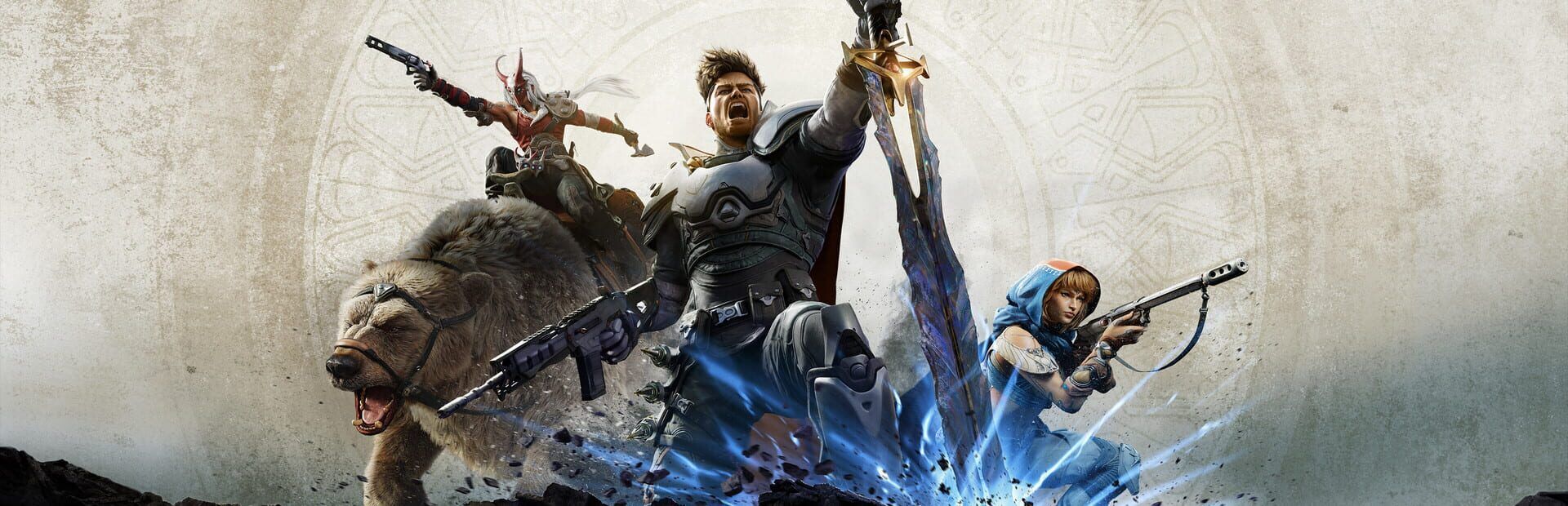
A debut from Wildlight Entertainment, built by veterans who helped shape Apex Legends and Titanfall, it arrived on January 26, 2026 pitching itself as a sharp, mobility‑driven PvP raid shooter. Revealed on the Game Awards stage and boasting stylish Wardens, slick traversal, and a fantasy‑meets‑gunplay hook, it looked like one of the surer bets in a crowded live‑service field.
Forty five days later, Wildlight announced the servers would be switched off on March 12 after “failing to build a sustainable player base.” Over 2 million players had tried Highguard. On Steam, that translated into a launch weekend peak reported around the high five figures to low six figures, then a nosedive toward sub‑1,000 concurrent players as February wore on. A final update will add a new Warden, new weapon, account levels, and skill trees shortly before the lights go out.
The speed of that collapse makes Highguard an unusually pure case study. Stripping away studio finances and layoffs, its short life tells a clear story about scope, retention, balance, and monetization for any live‑service PvP shooter trying to break through.
The pitch: A confident, pedigree‑driven launch
On paper, Highguard had the right ingredients.
It presented a distinct twist on the hero‑shooter template. Instead of lane‑based arena maps, its core 5v5 and 3‑squad modes blended traditional PvP with extraction‑shooter style raid objectives: drop into large maps, maneuver quickly between points of interest, grab loot, and skirmish over rotating objectives. Players chose Wardens with unique abilities, leaned on strong movement tools, and built loadouts that pulled from a shared arsenal.
Wildlight framed Highguard as a competitive, “sweaty” game for players who liked tight gunplay and tactical decision making. The reveal emphasized its polished animations, clear silhouettes, and a free‑to‑play model supported by cosmetics and progression.
For a first week, that pitch worked. Major outlets highlighted its strong fundamentals and clean console performance, and curiosity drove millions of downloads across PC, PlayStation 5, and Xbox Series X|S. On social media and Reddit, the early tone was hopeful: the gunfeel was solid, the abilities interesting, and the core idea of a tighter, shorter extraction‑style match structure had promise.
The problem was everything that came after the first few sessions.
The curve: From millions of downloads to empty lobbies
Most live‑service games expect a drop after launch. Highguard’s curve was different in both speed and severity.
Within the first 48 hours, PC tracking sites were already charting a steep falloff. Reports and community data points suggest that Highguard lost the majority of its launch‑week Steam population in its first weekend. By the second week, peak concurrency had already cratered into the low thousands, then hundreds.
The console picture was harder to see, but cross‑platform anecdotes were consistent. Long queue times appeared shockingly early in some regions. New players reported being dropped into lobbies with far more experienced opponents because the matchmaking pool was so small. Friends trying to squad up found themselves fighting the same usernames repeatedly over a single evening.
A month after launch, external trackers pegged Steam peaks under 500 concurrent players on some days. When Wildlight confirmed the shutdown date, the phrasing was blunt: despite 2 million players stepping into Highguard’s world, it had not managed to hold enough of them for long enough to justify continuing.
That kind of free‑to‑play funnel collapse does not happen from one factor. In Highguard’s case, several retention breakers stacked on top of each other.
The friction: A punishing first ten hours
If you map Highguard’s early experience against other successful live‑service PvP games, one thing stands out: how quickly it asked new players to “figure it out” on their own.
From launch, matchmaking placed brand new players into games with people who had already put 20, 30, or more hours into the beta or early access windows. Those veterans had unlocked stronger weapons, learned sightlines, internalized movement tech, and optimized ability combos. New users were often deleted in seconds without understanding how or why.
The onboarding work that did exist felt oddly thin for such a layered shooter. Highguard had tutorials, but they mostly covered controls and basic Warden abilities. They did less to explain how the macro loop worked: why specific objectives mattered, how to read the flow of a raid, when to disengage, what successful teams were actually doing.
Combine that with relatively time‑to‑kill values and aggressive flanking tools, and the result was a shooter that felt “sweaty” long before players were comfortable. Even developers later acknowledged the game was tuned for high‑end competitive play. That made it great for the tiny percentage of players who wanted a scrim‑like experience every match, and brutal for the broader audience that simply wanted to feel useful.
In the modern live‑service landscape, those first ten hours are everything. Fortnite, Valorant, and Apex Legends all work hard to give early wins and obvious short‑term goals. Highguard instead delivered a wall of skilled opponents, opaque objectives, and a sense that unless you were willing to go all‑in, the game did not particularly care if you left.
Balance troubles: Heroes, weapons, and the tyranny of “meta”
The second pillar of Highguard’s collapse was balance. Unlike a traditional military shooter, every choice in Highguard felt heavily constrained by a fast‑forming meta.
Early on, community chatter zeroed in on a handful of Wardens and weapon combinations that wildly outperformed the rest. Certain mobility skills let players zip between objectives and create impossible angles. Some utility abilities stacked into oppressive crowd control. A small pool of weapons out‑dueled everything else at most realistic ranges.
Wildlight moved quickly to deploy balance updates, but the cadence and depth of those patches struggled to match the pace at which a committed but shrinking playerbase was solving the game. Because Highguard’s population was small and heavily skewed toward hardcore early adopters, matches tilted even harder into homogenous team comps. That made experimenting with off‑meta characters or guns feel like griefing your teammates.
It created a deadly loop. New players were stomped by optimized meta squads. They either bounced off or copied the same narrow set of builds, which only reinforced how repetitive matches felt. Meanwhile, the players who were most invested grew frustrated that balance changes were not arriving fast enough to keep the game feeling fresh.
Some of this is inevitable in any hero shooter or PvP raid design. The lesson is less about avoiding meta entirely and more about tools and expectations. Without rock‑solid stat tracking, visible roadmaps for nerfs and buffs, and a regular balance schedule that players can rely on, even small issues feel existential. For Highguard, that perception turned into reality.
Content pacing: A raid shooter with not enough to raid
Live‑service shooters are not only about balance, they are about rhythm. Highguard’s rhythm was off from day one.
The launch package offered a respectable set of maps and modes, but it felt light for a game explicitly marketed as a long‑term platform. Players very quickly saw the same locations and objectives repeat. The loop of dropping in, looting, capturing, and extracting lacked the variety of a true extraction sandbox and the clarity of classic objective modes.
Wildlight’s post‑launch updates tried to address this with new 5v5 modes, including faster variations that stripped out the prep and looting phases to get players into combat faster. On paper, these were smart adjustments that targeted some of the pacing complaints.
The problem was timing and communication. By the time alternate modes and experiments started rolling out, most of the launch wave had already left. Those who remained split across playlists, further stressing matchmaking. Maps did not receive the kind of dramatic reworks or limited‑time event twists that might have generated a second wave of curiosity.
A live‑service shooter can survive an anemic launch if its first month is stuffed with experiments, events, and visible roadmap hits. Highguard worked from a more conservative playbook. Given the realities of its team size and the speed of its decline, it never had a real chance to find a second gear.
Progression and rewards: Asking for time before earning trust
If the core gameplay and content cadence give players reasons to log in, progression is what convinces them to log in tomorrow.
Highguard launched with a serviceable but uninspired progression layer. Account levels ticked upward at a slow pace. Unlocks were scattered across Warden‑specific tracks, weapon usage, and seasonal rewards. Cosmetic earn rates felt thin to players coming from games overloaded with free skins, battle pass currencies, and event giveaways.
Crucially, the game took its time before paying out anything that felt distinctive or generous. Early progression leaned heavily on incremental stat bumps and small bonuses rather than dramatic new toys. In a vacuum, that kind of tuning can be defensible, especially for a game targeting hardcore PvP fans who care more about mastery than cosmetics.
In a crowded free‑to‑play landscape, it read differently. Players that tried Highguard in its first week could bounce back to Apex, Fortnite, Valorant, Warzone, or Rainbow Six Siege, all of which have mature progression economies that shower them with stuff just for showing up. Highguard was asking for commitment before it had proven that commitment would be rewarded.
Looking at the post‑shutdown announcement, it is striking that one of the headline items in the final patch is the addition of proper account level progression and skill trees. Those are the sorts of long‑tail systems that experienced live‑service studios usually prioritize early. Highguard only got them as a swan song.
Monetization: Cosmetic‑driven in a world wary of stores
Wildlight positioned Highguard as fully free‑to‑play, with revenue coming from cosmetic microtransactions and a battle pass style structure. That design in itself was not unusual. The problem was how little space Highguard gave itself to prove value before opening the store doors.
From the start, players noticed an aggressive cosmetic offer density in contrast with how conservative the earnable rewards felt. Many of the coolest Warden skins, weapon wraps, and finishers lived in premium bundles or shop rotations at prices comparable to long‑established competitors.
That might have been fine if the population had stabilized in the tens or hundreds of thousands. A larger community would have normalized the store and allowed Wildlight to gradually dial in discounting, bundles, and giveaways to build goodwill.
Instead, Highguard found itself in a dangerous middle ground. With a small, shrinking playerbase and a monetization model almost entirely dependent on optional cosmetics, revenue relied on a thin cohort of whales and dedicated fans. Those were the same players most likely to feel burned by the early balance and content troubles.
Because Highguard did not charge an upfront box price, it had no cushion from launch sales to fund an extended runway of live support. That is a structural risk shared by many modern live‑service releases. For a new IP without a massive built‑in audience, it can be fatal if early retention targets are missed.
From a design perspective, the lesson is not that cosmetics are bad or that free‑to‑play cannot work. It is that when your entire business model hinges on long‑term engagement, the generosity of your early progression and the clarity of your value proposition have to be over‑engineered. Highguard could not afford even a slightly stingy first month, and that is what many players perceived.
Communication and expectations: Hype is not a roadmap
Highguard’s reveal at The Game Awards did what it was supposed to do: it generated hype. The problem was that the tone of that reveal set expectations that the live game was not ready to meet.
The show positioning implicitly bracketed Highguard with other marquee competitive shooters, suggesting a level of feature depth, system polish, and long‑term backing that would rival the biggest names in the genre. Once players got hands on, they found something more modest, and not in a way that had been clearly telegraphed.
In the weeks following launch, Wildlight did communicate: patch notes, balance changes, and modes were surfaced. But there was never a clear, public, month by month roadmap that said, “Here is what Highguard will look like in 30, 60, 90 days if you stick around.” Without that, every bad first impression was permanent, and every positive change failed to reach the players who had already uninstalled.
For other developers, Highguard’s communication arc highlights a tough truth. A flashy reveal is not a substitute for live‑ops transparency. In an era where players can bounce to other evergreen titles, the absence of a concrete, credible plan for the first year can be read as the absence of a plan at all.
Lessons for future live‑service PvP shooters
Highguard’s 45‑day life is extreme, but the forces that killed it are widely shared. Looking purely at design and live‑ops, several lessons stand out for studios plotting their own PvP shooters.
First, scope your launch around retention, not headlines. A smaller, more flexible initial mode set, paired with a brutal focus on onboarding and early progression, is worth more than a slick trailer. If Highguard had launched as a limited public beta with clear messaging about iteration, its steep early learning curve and meta churn might have been survivable.
Second, assume your first month is your only real shot at building habit. That means over‑investing in day‑one and week‑one reward cadence. Give players multiple overlapping tracks that pay out noticeable cosmetics, unlocks, and quality‑of‑life upgrades quickly, even if you tune them down later. It is easier to ease off generosity than to convince lapsed players you have become more generous over time.
Third, build your balance and mode experimentation pipelines before launch. Highguard did iterate on modes and stats, but it did so reactively, and from a position of dwindling players. A robust preplanned patch schedule that hits visible dates regardless of short‑term sentiment can reassure players that you are steering the ship confidently.
Fourth, calibrate difficulty and competitive intensity for the audience you actually have, not the one you want. If your game feels like a scrim environment from hour one, most players will leave long before the ecosystem stabilizes. Tools like softer MMR buckets, protected matchmaking for truly new accounts, and modes explicitly labeled as casual are not luxuries, they are table stakes.
Finally, be honest about how your monetization model interacts with your likely population curve. A free‑to‑play shooter with cosmetics as its sole revenue stream needs either massive scale or long retention, ideally both. If your projections suggest a more modest playerbase, consider hybrid models, smaller scopes, or slower content cadences that do not assume blockbuster numbers out of the gate.
Highguard did some things right. The core shooting felt good. The Wardens had style. The maps supported interesting flanks and vertical fights. In a different timeline, with a gentler onboarding curve, a more generous first month, and a slower, steadier approach to content and monetization, it might have carved out a durable niche.
Instead, it will be remembered as one of the shortest lived major shooters of its generation. For players, that is a frustration. For developers, it is an unusually clear, if painful, blueprint of how fragile a modern live‑service launch can be when even a few pieces of the puzzle are slightly out of place.