
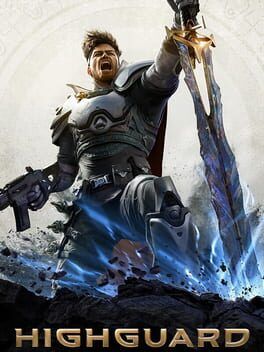

A data-driven look at Highguard’s launch spike, its steep 80% player-count drop, why Steam reviews turned “Mostly Negative,” and what Wildlight can still fix in the crowded extraction-shooter market.
Highguard has already lived through a full live‑service cycle in miniature. It spiked, it trended, it was review‑bombed, and within days its concurrent players fell off a cliff. For a PvP raid / extraction shooter that arrived with The Game Awards hype and Respawn pedigree, the post‑launch story is far messier than those trailers promised.
This follow‑up to our launch‑day review pulls together early player‑count data, the main themes in negative Steam reviews, and the most realistic design and communication moves Wildlight can make if it wants Highguard to stick around in a brutally crowded genre.
The launch spike: almost 100k CCU out of the gate
Highguard’s launch on January 26 delivered exactly the kind of headline number a new free‑to‑play shooter needs.
SteamDB and Steambase report an all‑time peak of roughly 97,249 concurrent players on day one. That puts Highguard in the same conversation as other recent, heavily marketed live‑service shooters that managed strong curiosity traffic at launch. Social feeds were full of clips, queue screenshots, and “is this the next big thing?” threads.
The Game Awards placement as the final reveal helped enormously. Wildlight used that stage to frame Highguard as a confident, fully formed new IP rather than a scrappy early‑access experiment. The Respawn and Call of Duty DNA baked into the studio’s roster did the rest. Players came in expecting a new Apex‑caliber competitive loop dressed in arcane gunslinger fantasy.
In pure reach, the launch worked. People showed up.
The crash: an 80%+ drop in a matter of days
The problem is what happened after that first session.
Steam tracking sites put Highguard’s current concurrency at roughly 19,000 players, which is down about 80 percent from its all‑time peak of 97k. That kind of curve is not unheard of for free‑to‑play launches, but combined with user sentiment it paints a picture of a game that is not just “trendy and settling,” but actively pushing players away.
It is important to contextualize that number. Around 20k CCU would be perfectly respectable for a niche PvP title with modest expectations. The issue is trajectory and framing. Highguard went from “this could be the next extraction mainstay” to “another cautionary tale” in under a week, and the Steam store page tells you why.
Steam reviews: “Mostly Negative” and overwhelmingly frustrated
Shortly after launch, Highguard’s Steam rating dropped to “Mostly Negative.” Based on reporting and storefront snapshots, only about 32 percent of reviews were positive in the first couple of days, with more than 13,000 negative reviews outweighing roughly 6,000 positives.
Digging through those negatives, several clear themes keep repeating. A fair chunk of reviews are classic day‑one review bombing and culture‑war sniping that every live‑service game now has to weather, but even if you strip that noise out, the core game design is catching serious heat.
Maps that feel hostile to 3v3
The single most common complaint is simple: the maps are too big for three‑player teams.
Highguard’s pitch is a two‑phase PvP raid where squads loot, complete objectives, then decide when and how to extract. In theory, large, layered maps should create tension, ambush potential, and room for outplays. In practice, players describe long stretches of nothing, confusing sightlines, and a travel‑time tax that drags the pacing down.
Multiple reviews describe entire early matches spent sprinting through empty corridors and side paths without seeing another team until the very end. The core fantasy of tense extraction runs never materializes when most of your time is spent simply trying to find the fight.
When a competitive shooter’s first impression is boredom rather than pressure, retention suffers immediately.
A confusing onboarding funnel
The second major theme in negative reviews is readability, or rather the lack of it.
Extraction shooters already sit at the more complex end of the PvP spectrum. Players expect loadout nuance, resource management, timers, extraction rules, and PvE hazards on top of enemy teams. Highguard layers that onto a new universe, new hero archetypes, and a two‑phase structure without doing a stellar job of explaining why anything matters.
Reviewers complain about tutorial messaging that glosses over key systems, UI that buries key information, and match flows that feel opaque. Players are dropped into complex raids without a strong sense of short‑term goals beyond “go somewhere, shoot something, maybe extract.”
Where titles like Hunt: Showdown or Escape from Tarkov communicate clear risk versus reward from the opening minutes, Highguard too often lets players wander until something kills them. That may be true to the genre’s unforgiving roots, but it is terrible for mainstream onboarding.
Progression that feels stingy and unrewarding
When players do stick around long enough to notice the progression, many come away unimpressed.
Frequent complaints focus on slow unlocks, underwhelming early rewards, and a sense that the game is tuned to push cosmetic or battle pass purchases before players have even decided whether they like the core loop. In a free‑to‑play space where titles like Deadlock or Apex shower you with just enough early dopamine to hook you, Highguard’s early economy comes across as stingy.
There are also reports of unclear upgrade paths and overlapping currencies. Combined with the onboarding issues, progression feels like an obstacle rather than a motivator.
Technical and matchmaking frustrations
Highguard’s launch was not catastrophic on a technical level, but it was not clean either.
User reviews cite stutters, desync, audio bugs, and occasional crashes, particularly when firefights get chaotic. Matchmaking complaints are also common, with some players reporting being thrown against sweaty squads or being separated from friends due to lobby bugs and unexpected disconnects.
None of this is unusual for a day‑one live‑service launch, yet in a market where players can bounce to half a dozen alternatives in a single evening, even minor technical friction amplifies every other problem.
Why Highguard’s problems cut deeper than normal launch woes
Every new extraction or raid shooter has to climb the same hill: convince players to accept early jank in exchange for a uniquely tense experience that other PvP titles cannot offer.
Highguard’s early data suggests it has not made that trade compelling. The critical issue is that many of the negatives are tied to foundational design decisions.
When your maps are widely perceived as too large for the team size, when your core match flow is confusing, and when the reward structures do not feel good, you are not just fighting bugs. You are asking players to push through systemic friction to reach the fun. If those same players can drop back into Tarkov, Hunt, or even more accessible “raid‑lite” shooters after a couple of bad matches, most will not give you a second chance.
Still, the situation is not beyond saving, and this is where Wildlight’s pedigree actually matters. Respawn veterans have already navigated a rocky live‑service launch once before and turned Apex from “Titanfall battle royale experiment” into an enduring pillar by reacting quickly and talking clearly.
What Wildlight can realistically change in the short term
Some of Highguard’s issues will require longer‑term reworks. But there are several realistic moves Wildlight could make in the next few weeks that would not only improve the experience but also send a strong signal that they are listening.
1. Immediate map and pacing triage
The single biggest perception shift Wildlight can trigger is around match pacing.
In the short term, that does not need a full slate of new maps. The studio could focus on:
Shrinking active play spaces via dynamic closures or blocked‑off side routes so that 3v3 fights happen more reliably in the first half of a match.
Adjusting objective and loot placement so squads are funneled toward conflict zones rather than equally viable corners of the map.
Experimenting with lower player counts or alternate modes on existing maps that compress the action while longer‑term redesigns are in progress.
Quickly shipping even one “tight” limited‑time mode with a smaller combat space would give lapsed players a reason to reinstall and would provide telemetry to inform deeper map reworks.
2. A clearer onboarding path to the tension
Highguard’s tutorial work needs to do more than explain button prompts. It needs to sell the fantasy and teach the stakes.
Early updates could:
Introduce a guided first raid that walks a trio from spawn to a scripted extraction with clear voiceover and UI callouts, then unwraps that scaffolding in subsequent matches.
Simplify early objectives and remove some modifier complexity from the first few player levels so that new players spend less time lost and more time in firefights.
Improve in‑match communication about where other squads might be, what makes noise, and which actions raise risk, echoing how Hunt uses sound and map cues to telegraph danger.
These are adjustments that do not require wholesale system rewrites, only sharper scripting and UI polish.
3. Front‑loaded rewards and a gentler early economy
Progression tuning is data driven by nature, which makes it a prime candidate for rapid iteration.
Wildlight can:
Speed up the first several unlock thresholds so that new players see meaningful gear or cosmetic milestones within their first evening.
Offer clear “starter paths” for each archetype, with recommended builds unlocked faster so players feel powerful and coherent instead of half‑baked.
Add generous login and “first extract” bonuses for the first two weeks of a re‑launch style update to pull former players back into the funnel.
Even modest tweaks here can dramatically soften negative sentiment about monetization without requiring a total store overhaul.
4. Targeted technical bandaids
Fixing netcode or engine‑deep issues is a long‑term effort, but many launch complaints are tied to specific crash triggers and performance spikes. Prioritizing those hotspots, especially in common combat scenarios, can make the game feel far more stable even before deeper optimizations land.
Wildlight should also address matchmaking perception directly: clearer pre‑match indicators of team skill bands and better feedback when lobbies fail can turn a “this game is broken” feeling into a “servers are struggling, they know it” understanding.
The other half of the battle: communication and expectations
Design changes alone will not rescue Highguard’s sentiment curve. The other half of the fix is narrative. Right now, the story around the game is simple: “huge launch, Mostly Negative reviews, players bailing.” Wildlight needs to replace that with a more hopeful arc.
In practice, that means:
Publishing a transparent post‑launch blog that acknowledges the poor Steam rating, highlights concrete areas of focus like map pacing and progression, and outlines a near‑term patch roadmap rather than vague promises.
Owning specific pain points quoted directly from Steam reviews and social clips to show that the team is not dismissing criticism as simple review bombing.
Setting realistic expectations for cadence. Committing to weekly communication updates, even if some of them are just progress check‑ins, reassures players that the game is not being left to quietly sink.
Live‑service history is full of redemption arcs. Rainbow Six Siege and No Man’s Sky are now familiar examples for a reason. Highguard does not have to hit those heights, but it does need to prove quickly that its developer is closer to Respawn’s responsive Apex era than to the countless abandoned F2P experiments that came and went without a word.
Can Highguard still carve out space in a crowded extraction field?
The extraction and raid‑shooter market is not just crowded, it is saturated with titles that already do one or two things extremely well. Tarkov owns hardcore tension, Hunt mixes horror and audio‑driven cat and mouse, and more approachable hybrids offer lighter stakes for casual squads.
Highguard’s selling points, on paper, are its hero‑shooter DNA, its arcane gunslinger vibe, and its two‑phase raid structure. None of those are inherently broken, but they are being buried under pacing misfires and early friction.
If Wildlight can quickly reframe the game around faster engagements, clearer objectives, and more generous early rewards, Highguard still has a shot at becoming a comfort pick for squads who want extraction style tension without Tarkov’s brutality. The fact that nearly 100k people showed up on day one means the top of the funnel is not the problem.
Right now, the numbers and reviews agree on one thing: Highguard is losing players faster than it is winning them over. The next few patches will decide whether this was a brief curiosity spike or the rough first chapter of a longer‑term comeback.