
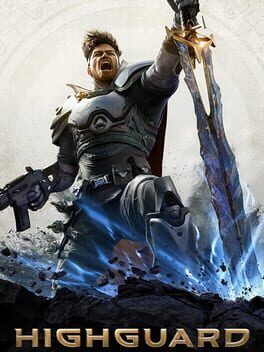

How Wildlight’s fantasy FPS blends Apex Legends’ hero DNA with Destiny-style raids, mounted combat, and a January 2026 launch window that might actually work.
Highguard arrives with a pitch that sounds almost focus‑tested for modern FPS fans: a free‑to‑play, team‑based PvP raid shooter from ex‑Respawn developers, combining Apex Legends style hero shooting with Destiny like objective flows, wrapped in a fantasy world of arcane gunslingers on horseback. On paper it reads like a mash‑up. In practice, based on the reveal and early details, it looks like one of the few upcoming shooters that actually understands both sides of its DNA.
Apex Legends and Destiny in one fantasy package
Wildlight Entertainment is stacked with talent that cut their teeth on Titanfall and Apex Legends, and that heritage shows in Highguard’s core design pillars. From Apex it borrows readable hero silhouettes, crisp weapon feel, and the idea that abilities are there to push team plays rather than replace gun skill. Every Warden is a distinct character, not just a class template, and the trailer is packed with familiar Respawn style beats like fast slides, aggressive flanks, and tight time‑to‑kill.
Where Highguard leans closer to Destiny is in how it treats PvP as a raid instead of a simple deathmatch. Matches are not just about frags and KD. They are multi‑stage assaults with a shared macro objective, and your hero kit is tuned as much for moving the objective as it is for winning duels. Think of Destiny’s Gambit or some of its larger objective modes, but stripped of PvE mobs and focused entirely on two crews of players trying to out‑execute each other.
Crucially, this is happening in a high fantasy world rather than the usual sci‑fi or near‑future setting. Wardens are described as “arcane gunslingers” and everything from the art direction to the ability effects leans into that mix of six‑shooter swagger and spellcasting. It lets Highguard justify outlandish mobility and support skills while still anchoring the moment to moment in clean, readable gunplay the Apex team is known for.
How Shieldbreaker turns a match into a raid
The clearest sign that Highguard might actually stick the “raid shooter” landing is its flagship mode: Shieldbreaker. Instead of standalone rounds or a single linear push, Shieldbreaker is structured like a miniature raid encounter mapped onto a PvP match.
Each session starts with both crews deployed across a sprawling battlefield. The first phase is all about contesting the Shieldbreaker, a massive mobile siege engine that effectively becomes the raid’s relic. Teams fight over control of this thing, using hero abilities, mounts, and map knowledge to win brawls around it. This phase is where Apex style skirmishing shines, with third parties, crossfires, and clutch ability usage deciding who walks away with the prize.
Once a team seizes the Shieldbreaker, the mode shifts gears. Control of the vehicle gives that crew a battering ram that can punch through the enemy’s fortified base. The defending team does not simply lose at this point; they pivot into a desperate holdout, using verticality, choke points, and ultimates to stall the siege long enough to flip momentum. The attacking team’s job is to escort the Shieldbreaker through layered defenses, pick winning fights, and time their big cooldowns for key doors or objectives inside the base.
Finally, if the attackers push the siege engine all the way in, the match reaches its raid finale. Core structures or objectives inside the base must be destroyed under time pressure while defenders spawn in waves and try to reset control of the Shieldbreaker or deny plant points. It is an attack‑and‑defend climax that feels much closer to a coordinated Destiny raid encounter than a traditional payload finish.
That three‑act arc gives every match a natural story: early scramble, midgame siege, late‑game breach. It also leaves room for Wildlight to lean on its encounter design chops from Titanfall’s set pieces and Apex’s late‑ring chaos. If the team nails tuning, players will be talking about specific Shieldbreaker matches the way they recount raid pulls or great battle royale endgames.
Hero abilities built for coordinated chaos
Highguard’s Wardens are not just gun plus passive archetypes. Each one carries a hero kit clearly built around the Shieldbreaker flow, and that is where the Apex DNA really shows.
Movement‑focused heroes can reposition around the Shieldbreaker fight, taking aggressive angles as the relic moves across the map. Think blink dashes, grapples, or leap abilities that let you instantly shift from the front of the siege engine to a rooftop overwatch or inside a defensive bastion. On defense, similar tools can be used to rapidly rotate between lanes as the attackers choose different approach vectors.
Support‑leaning Wardens bring shielding, healing zones, or defensive wards that matter most in the prolonged standoffs typical of a siege. In the opening phase they sustain your crew in drawn‑out trades around the objective. During the base breach they are the ones keeping your Shieldbreaker alive under crossfire or fortifying the last objective when everything is collapsing.
Then there are disruption and control specialists, perfect for the Destiny‑style encounter rhythm. Their abilities might lock down doors, jam enemy ultimates at key moments, or booby‑trap routes as the Shieldbreaker rolls in. For these Wardens, success is measured less in damage numbers and more in how they shape the battlefield over the course of the match.
What ties it together is an Apex‑like philosophy: abilities should create windows of advantage for your gunplay and your team rather than purely deleting opponents. The reveal leans heavily on coordinated pushes, combos between hero kits, and clutch team saves, hinting at a game whose ceiling will reward premade squads and voice comms while still leaving room for solo queue heroics.
Horses and mounted combat as a core mechanic
If Shieldbreaker gives Highguard its raid identity, horses are what make it visually and mechanically distinct in the live‑service crowd.
Mounted combat is baked into the fantasy of being a Warden. Maps are wide and layered, and the reveal footage emphasizes players riding between objectives, flanking enemy lines, and even firing while on horseback. This is more than a gimmick; mounts are how Wildlight bridges the gap between Apex style micro‑skirmishes and a battlefield that needs to support multi‑phase raids.
On the macro level, horses mean faster rotations. You are not trudging across a huge map or relying entirely on teleport pads or jump towers. Instead, every crew is constantly remapping their approach, deciding when to commit to a hard ride toward the Shieldbreaker or when to dismount early and take contested high ground.
On the micro level, mounted play introduces new risk and skill expression. Charging into a fight on horseback can catch defenders off guard, but it makes you a bigger target. Skilled players will learn when to dismount mid‑slide into cover, when to use a mount as mobile protection for a teammate, and how to abuse elevation changes on the map to create surprise angles. It is easy to imagine heroes whose kits specifically enhance mounted play, from lances and drive‑by shotguns to support buffs that radiate from your horse.
That focus on mounted traversal also differentiates Highguard from its peers visually. In a sea of neon sci‑fi armor and modern operators, squads of cloaked gunslingers thundering across a mythic plain toward a hulking siege engine stand out instantly.
Why January 2026 might actually work in a crowded FPS market
Dropping a new free‑to‑play shooter in 2026 sounds suicidal given how crowded the live‑service space already is, but the timing and positioning of Highguard could be smarter than it looks.
First, the launch window. January 26 is traditionally a quieter slot compared to the fall shooter pile‑up. Apex Legends succeeded in part by launching when players were hungry for something new, not when they were already juggling Call of Duty, Destiny expansions, and holiday blockbusters. Highguard aims for a similar window, arriving just after the holiday rush but early enough in the year to become a regular fixture in players’ rotations.
Second, the subgenre. Plenty of games chase Apex or Overwatch directly, and many try to out‑Destiny Destiny in PvE. Highguard slices between them. It is a hero shooter, but it is not another team deathmatch or lone battle royale. It is objective driven PvP with a raid‑like structure and heavy fantasy theming. That makes it easier to market and easier for players to mentally file: when you want that long, dramatic match that feels like a mini raid without committing to a full PvE night, you queue for Shieldbreaker.
Third, the pedigree and platform reach. Wildlight’s ex‑Respawn crew understands both tight FPS mechanics and the realities of running a live free‑to‑play game on PC, PlayStation 5, and Xbox Series X and S. Cross‑platform, day‑one free entry lowers the friction enough that curiosity alone could generate a large influx of players around launch, especially with the momentum of The Game Awards reveal fresh in people’s minds.
The real test will be post‑launch support. A mode as structured as Shieldbreaker practically demands seasonal map additions, new Wardens tuned around specific phases of the raid flow, and balance patches that keep the meta from calcifying around a single optimal comp. If Wildlight can deliver that cadence without sacrificing the snappy feel that made Apex a standout, Highguard has a realistic shot at carving out its own lane rather than becoming another footnote in the hero shooter boom and bust.
For now, though, Highguard stands out as one of the rare upcoming shooters that feels like more than a pitch deck. Its mix of Apex‑sharp combat, Destiny‑like raid structure, and horses charging alongside a hulking magical siege engine is specific, memorable, and pointed directly at a gap that most big publishers have ignored. If you care about PvP shooters that revolve around more than just who tops the kill feed, it is one to keep a close eye on when January 2026 rolls around.