
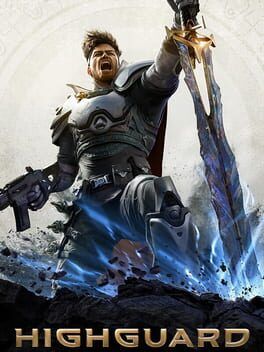
Highguard went from mysterious Game Awards closer to near‑total silence. With its launch showcase about to pull back the curtain, here’s what you need to know about its PvP raid structure, phantom horses, live‑service plans, and what to watch for on PC, PS5, and Xbox Series at release.
Highguard has had one of the strangest pre‑launch cycles of any big shooter this year. It closed The Game Awards with a flashy reveal full of arcane gunslingers and spectral mounts, then essentially vanished for more than a month. No follow‑up trailers, no dev blogs, no breakdown of what its “PvP raid shooter” pitch actually meant.
Now, days from launch, Wildlight Entertainment is finally breaking that silence with a full launch showcase that aims to answer every lingering question at once. If you’re trying to decide whether to clear space on your SSD for yet another live‑service shooter, this is the moment to pay attention.
From Game Awards closer to 43 days of silence
Highguard’s coming‑out party at The Game Awards was designed to make noise. Wildlight, a studio stacked with former Apex Legends and Titanfall leads, took the prime closer slot to debut a fantasy shooter about Wardens riding phantom horses across a mythic continent while assaulting enemy strongholds.
The trailer leaned hard into tone and spectacle. There were quick cuts of mounted charges, cinematic spellgun duels, and a glimpse of something called the Shieldbreaker, but almost no clarity on how a match actually plays. In an award show already packed with reveals, that ambiguity backfired.
Once the lights went down in Los Angeles, Highguard essentially disappeared. Wildlight went quiet across social channels. No mode breakdowns, no follow‑up previews, and no clear explanation of how its “PvP raid” loop differs from a hero shooter or extraction game. With Concord’s failure still fresh, a chunk of the audience quickly wrote Highguard off as another doomed live‑service bet that had burned too much goodwill before even launching.
What kept the game alive in conversation were small signs of life rather than official messaging. Trophies surfaced on PlayStation backends, storefront pages stayed live, and dataminers pulled enough info to suggest a more ambitious structure than the marketing had implied. But for 43 days, there was no real attempt to win back the narrative.
All of that changes with the launch showcase.
What the Highguard launch showcase is promising
Wildlight’s newly announced launch showcase is set for January 26 at 10 a.m. PT, lining up directly with the game’s release on PC, PS5, and Xbox Series X|S. Rather than a short hype reel, this is being positioned as a full breakdown of how Highguard actually works.
The stream is expected to deliver three key things: a proper gameplay deep dive, a clear outline of year‑one content plans, and an honest look at how the live‑service model will function.
The gameplay segment should finally slow down the high‑octane trailer cuts and walk through a full raid flow from spawn to base destruction. Expect to see how Wardens move from home territory into contested zones, how they contest the Shieldbreaker objective, and what it looks like when a defending team tries to repel a full‑scale breach of their stronghold.
The year‑one portion will matter just as much. Highguard is arriving into a market that has learned to be skeptical of “content roadmaps” that dry up after a season or two. Wildlight is promising to talk about new maps, new Warden archetypes, and additional raid variants that will populate the first twelve months. How specific they get here will tell you a lot about how far along that pipeline really is.
Finally, the showcase should clarify how the free‑to‑play live‑service model is built. With the failure of several recent shooters still in everyone’s rear view mirror, players will be listening carefully for details on monetization, cosmetic systems, and battle passes. If Wildlight can demonstrate a sustainable cadence of content without aggressive, intrusive spending hooks, it will go a long way toward rebuilding trust.
The PvP raid structure that sets Highguard apart
Underneath the marketing buzzwords, Highguard’s most interesting idea is its PvP raid structure. Instead of dropping into a battle royale circle or a standard objective playlist, two Warden crews are effectively staging mirrored raids on each other’s bases.
Matches begin with both teams controlling their own strongholds. From there, they push out into a shared no‑man’s‑land populated with objectives and power‑ups. This mid‑zone is where the Shieldbreaker comes into play, a match‑defining objective that acts as the key to cracking an enemy base. Securing it is not just about flipping a control point, it is about assembling enough momentum and resources to launch a coordinated breach.
Once a team claims the Shieldbreaker, the match shifts from open skirmishing to a focused assault phase. The attackers ride on their phantom horses, press forward as a convoy, and attempt to punch through outer defenses to reach the enemy core. Meanwhile, defenders scramble to reposition, set up ambushes, and leverage their own abilities to blunt the push before the Shieldbreaker can be brought to bear on critical structures.
It creates a two‑act rhythm. The opening is a contest for map control and long‑term advantage; the back half is a high‑stakes siege that can still be turned around with smart defensive play. The goal is to capture the tension of an MMO raid without relying on PvE bosses, translating that layered, multi‑stage structure to a pure PvP environment.
That is the pitch, at least. The showcase will have to prove that this structure is readable in the chaos of a real match, that defending is just as engaging as attacking, and that you are not doomed if you fall behind in the opening scramble.
Phantom horses and the Warden fantasy
For all the systems talk, Highguard’s most immediately striking hook is visual. Wardens do not sprint between cover or drive futuristic tanks; they ride ethereal, spectral warhorses that phase in and out of existence as you move across the battlefield.
These phantom horses are not just a cosmetic flourish. They are baked into how you navigate the map, rotate between lanes, and commit to engagements. Mounting up lets you reposition quickly across the sprawling raid spaces, but it also exposes you if you time a push badly or ride straight into an ambush. The fantasy is part arcane cavalry charge and part high‑speed flanking, and it fills a similar gameplay niche to wall‑running or sliding in Respawn’s shooters without simply copying those systems.
On top of that mobility gimmick, Wardens themselves function as distinct archetypes with unique abilities and loadouts. The mix of magic‑infused firearms, support skills, and movement tech is aiming to land somewhere between hero shooter readability and a more open‑ended class system. How those abilities synergize with mounted gameplay, and whether phantom horse combat stays readable instead of messy, are big questions that only extended footage can answer.
Live‑service structure and year‑one plans
Wildlight has called Highguard a free‑to‑play PvP raid shooter from the start, which puts it squarely in the live‑service category. The launch showcase’s year‑one portion is where we should see exactly how they plan to keep players engaged beyond the initial novelty of mounted sieges.
Expect the studio to talk about seasonal structure, likely centered on new territories for the ongoing war over the mythical continent. That could mean fresh raid maps that change how teams contest the Shieldbreaker, new Warden options that shake up comps, and limited‑time events that remix the base mode with variant rules.
There will almost certainly be a battle pass or similar progression track to unlock cosmetics, mounts, and visual customizations for both Wardens and their phantom horses. The crucial thing players will be looking for is whether any power is gated behind purchases or whether the team commits to a cosmetic‑only economy with earnable routes for free players.
Because Wildlight’s leadership helped shape Apex Legends, expectations are high for smart seasonal design. Apex proved that you can launch lean, find your footing, and then iterate into something substantial over several years. Highguard is trying to pull a similar trick, but under far harsher market conditions. The year‑one roadmap revealed on stream will be your best indicator of whether the studio is prepared for that reality.
What PC, PS5, and Xbox Series players should watch for at launch
With launch right around the corner, the showcase doubles as a buyer’s guide. Whether you plan to play on PC, PS5, or Xbox Series X|S, there are several practical things worth watching for during the stream and in the first days after release.
On the technical side, cross‑play and cross‑progression are key. Wildlight has already positioned Highguard as a modern multi‑platform shooter, so expect cross‑play across all three platforms and some level of account‑based progression. The stream should clarify how parties work between platforms, whether there are input‑based matchmaking pools, and how your unlocks carry over if you bounce between console and PC.
Performance expectations will differ by platform. PC players will want to see a full breakdown of graphics options, frame rate targets, and recommended specs for running large‑scale raid maps with dense effects. Console players should listen for whether PS5 and Xbox Series X|S offer performance and quality modes, how stable 60 fps is in the thick of mounted sieges, and whether there are any platform‑specific visual features.
Matchmaking and onboarding will matter just as much as raw FPS. A complex, two‑phase PvP raid structure can be overwhelming if you are dropped in with no explanation. The showcase is an opportunity for Wildlight to walk through tutorials, role recommendations, and any training modes that let you learn Warden kits and phantom horse handling without feeling like dead weight in live matches.
Finally, pay attention to how the studio talks about early balance and feedback. A game this dependent on coordinated team play needs rapid patches in the first months to tame dominant strategies, solve snowball problems with the Shieldbreaker, and refine map flows. If the developers commit to transparent patch notes and clear communication channels during the stream, it will be a strong sign that they understand what it takes to keep a PvP live‑service shooter healthy.
A risky bet with real potential
Highguard’s path to release has been unorthodox: a huge Game Awards closer, followed by weeks of silence that allowed skepticism to harden. The launch showcase is Wildlight’s last, best chance to flip that script and convince players that a PvP raid shooter about spectral cavalry and base sieges is worth investing in.
If the stream can clearly explain the raid flow, show off how phantom horses enhance rather than clutter combat, and lay out a credible year‑one plan and fair business model, Highguard could stand out in a crowded field of shooters. If it stumbles, the combination of live‑service fatigue and a rocky reveal could make climbing back an uphill ride.
Either way, for players on PC, PS5, and Xbox Series, this is the moment to tune in, scrutinize the details, and decide whether you are ready to saddle up as a Warden and ride into the raid.