
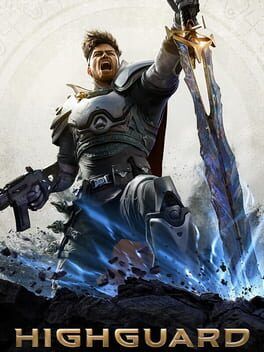
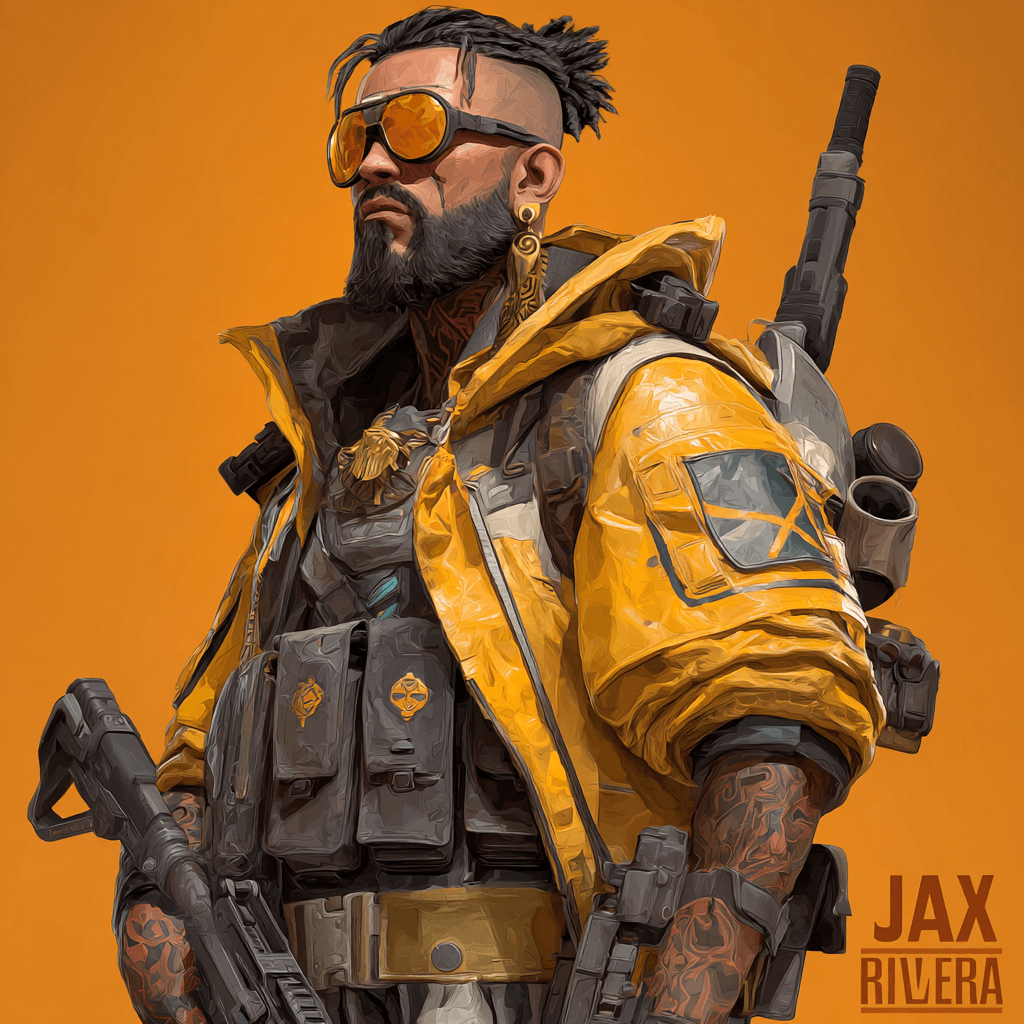
Episode 2 brings Ekon, Skydrift, ranked 3v3, and a wolf mount to Highguard. Two weeks after launch, is Wildlight’s rapid update cadence actually fixing the game’s biggest live-service problems?
Episode 2 as a Live-Service Statement
Highguard has not had a quiet launch window. Two weeks in, Wildlight is already on its second major episode, and Episode 2 is less a simple content drop than a statement about what this game is going to be long term. A new Warden in Ekon, the Skydrift map, a full 3v3 ranked mode, and a wolf mount are the marketing beats, but the real story is whether this cadence and the kind of changes being shipped are enough to stop players from bouncing off.
Instead of re-reviewing the core raid-shooter hybrid, this check-in looks at Episode 2 as live-service direction: what these additions say about Wildlight’s priorities, and how they might influence player retention over the next few months.
Warden Ekon: A Live-Service Hero Design Blueprint
Ekon is Highguard’s first post-launch Warden and he arrives very fast. That timing matters. A lot of early criticism targeted the launch roster as fun but relatively conservative, with a few standouts and not many truly weird designs. Ekon pushes against that with a kit that leans into spectacle and readability while plugging perceived gaps in role diversity.
On paper, Ekon is a monster-slayer Wildwalker who can transform into a dire wolf. In practice, he is a hybrid between information controller, finisher and macro-rotations specialist.
His Dread passive turns low-health enemies into audio-visual beacons, which does two retention-friendly things. First, it makes the end of fights more legible for casual players who often lose track of fleeing targets. Second, it creates highlight moments where Ekon can hard-punish poor disengages. That speaks to Wildlight’s willingness to add clarity-first mechanics that help newer players feel clever without drastically raising the skill floor.
Wolf Spirit and Fearsome Howl push that fantasy further. A tactical that literally hunts the nearest enemy through walls is extremely watchable and easy to parse in a stream thumbnail, and an ultimate that globally tags every opponent with Dread is the sort of "press Q, feel powerful" payoff that live-service games tend to build seasons around. The important detail is that these tools are about macro information more than twitch aim, which broadens who can comfortably one-trick Ekon.
The real design swing is Wolf Form. Highguard launched with a mount system that some players loved conceptually but criticized for feeling clumsy and inconsistent. Ekon does not ride a mount at all: he becomes one. He is faster than other mounts, shifts the camera to third-person, and gains a bite-dash that doubles as both execute and mobility tool. This addresses several launch complaints at once. Movement lovers get a high-skill rotation monster who can abuse flank routes and verticality, while players frustrated with the readability of mounted combat now have an anchor visual: if the big wolf is coming, assume it is lethal.
Crucially, he can still use his full kit in Wolf Form and track enemy "scent" trails. That makes him a roaming win-condition and gives teams a dedicated chaser who can collapse on over-extended enemies, which directly targets feedback that some matches devolved into awkward stalemates or low-kill standoffs.
As a live-service blueprint, Ekon signals that future Wardens will be less about small twists on existing archetypes and more about playful experiments that interact deeply with systemic pillars like mounts, visibility and macro rotation. That kind of bold kit design is exactly what keeps a roster-driven game feeling fresh over multiple seasons.
Skydrift: Designing for Verticality and Under-served Roles
The new Skydrift map is a floating, newly "awakened" city built across caverns, enormous chain bridges and a palace above the clouds. The fiction matters less than what it addresses: sniper players and long-range Wardens have been under-served.
Most launch maps favored mid-range brawling and hard objective pushes where aggressive frontliners and bruisers ran the show. Articles and community feedback alike pointed out that sightlines often collapsed into close-quarters chaos, leaving precision characters feeling situational at best. Skydrift is explicitly framed as an answer to that problem, with Wildlight calling out new high points and long angles for sharpshooters.
From a retention lens, that is smart. Whole archetypes feeling "off-meta" or pointless is a fast way to lose players who invested in those styles. Giving them a map that finally makes their pick feel justified is cheaper than reworking a half-dozen Wardens yet moves the meta in a healthier direction. Since Skydrift lands in both 3v3 and 5v5 rotations, it influences the game’s full spectrum of play instead of being quarantined to a side mode.
It also synergizes with Ekon. A hyper-mobile tracker who excels at hunting down wounded enemies pairs naturally with high-ground snipers softening targets. That duo lane creates new composition fantasies for ranked stack play and showcases that Wildlight is thinking about cross-feature design, not just shipping isolated content pieces.
Ranked 3v3: A Competitive Spine for a PvP-first Game
The standout structural piece of Episode 2 is the arrival of a full 3v3 ranked mode. The format choice is explicit: Wildlight says 3v3 is the more tactical version of Highguard and the best fit for a competitive ladder. That has two big implications.
First, it codifies what the studio wants the "serious" version of its game to look like. 5v5 may be the spectacle mode that got a lot of positive buzz once it became permanent, but locking ranked to 3v3 sends a clear message about pacing and clarity. Smaller teams mean fewer chaotic variables, cleaner reads on mistakes, and matches that are easier to watch and balance around. In a live-service context, that makes future tuning cycles more sustainable.
Second, the ranked system itself is designed almost obsessively around fairness perception. Highguard introduces seven distinct ranks from Bronze (Hare) up to Grandmaster (Leviathan), with three divisions each and a relatively generous de-ranking model. You can fall within a rank, but not drop entire tiers mid-split. Episodes are split into two ranked splits that rotate maps and bases and add fresh balance changes, while the start of a new Episode gently soft-resets everyone by six divisions.
That structure borrows heavily from games like Apex Legends and Valorant, with a clear goal: keep people chasing achievable medium-term goals instead of burning out on an endless climb. RP gains and losses scale with how convincingly you win or lose, and are further modified by win streaks, kill contribution, and whether you queued solo or with a stack. Crucially for solo players, there is a built-in solo bonus on both gains and losses, and a Loss Protection mechanic that cushions RP drops if you consistently finish matches.
The party rules are also tuned with retention in mind. Duos must stay within a tier of each other, but full three-stacks can mix any ranks and are simply matched at the highest rank in the party. That is a compromise between protecting match integrity and letting friends play together, and it suggests Wildlight understands that social bonds are as important to keeping a PvP game alive as raw balance.
Most importantly, ranked is not sitting behind a grind wall. You unlock it by winning ten 3v3 games, retroactively counted from Episode 1. That threshold is low enough to get motivated new players into the competitive loop quickly while still filtering out absolute tourists.
As a live-service move, ranked 3v3 gives Highguard a spine. It turns moment-to-moment firefights into part of a long-term ladder climb supported by cosmetic Banner Frames that pay off your end-of-episode rank, with Episode 2’s theme tied to Ekon and the wolf. For players on the fence about whether Highguard is "worth maining," the rapid arrival of a robust ranked ecosystem is a strong signal that the game is not treated as an experiment.
The Wolf Mount: Cosmetics with Utility and Identity
The new wolf mount is the smallest feature on paper but an important one for live-service identity. Every player gets access to a wolf mount for free, and playing ranked matches unlocks a Shadow Wolf skin.
Mounts were one of Highguard’s most distinctive but controversial launch systems. They created mid-fight pacing swings and stylish traversal, yet often left players feeling like they were losing gun time to horse time. Episode 2 leans into the fantasy rather than backing away from it. Between Ekon literally becoming a wolf and everyone else gaining a wolf mount of their own, Wildlight is essentially stating that mounts are core to Highguard’s identity, not a gimmick to be quietly minimized.
Tying the Shadow Wolf variant to a simple ranked milestone is also smart retention design. It gives even lower-rank players a short-term, concrete goal for trying the new mode without locking meaningful power behind ranked play. Cosmetics that signal participation instead of raw skill are a reliable way to nudge the wider player base into nascent modes and help with early matchmaking health.
Addressing Launch Criticism: Gear Up, Clarity, and QoL
Highguard’s launch discourse revolved around three themes: a confusing Gear Up phase, some clunky-feeling systems like ziplines and mounts, and a general sense that the game’s best moments were buried under friction. Episode 2 tackles those pain points head-on.
The Gear Up phase is the most obvious pivot. Red chests at points of interest now offer Masterwork weapons that are strictly better than their base counterparts at the same rarity, while white barrels containing Ultimate Chargers have a striking gold glow and clear waypoint markers. Automatic waypoints guide players from base to loot-rich POIs and can be pinged, with the map explicitly calling out that those locations house Masterworks and chargers.
This is classic retention-friendly design. Instead of re-teaching Gear Up through tutorials, Wildlight makes the rewards louder and the paths to them clearer. Newer players are more likely to stumble into fun loadouts and ultimate uptime, which directly increases how strong and engaged they feel when the attack and defense phases start. Even if a player never reads patch notes, they will notice that shiny chests and glowing barrels make their Warden feel better.
A raft of quality-of-life changes pushes in the same direction. The defensive setup window has been trimmed, Anchor Stone fuses are longer to reduce cheap-feeling wins, ziplines feel smoother and have placement limits to prevent clutter, and the HUD puts kills and assists in clear view. Movement exploits, weird collision on mounts and abilities, and frustrating bugs around Shieldbreakers and Mara’s kit have been systematically cleaned up.
Meanwhile, the addition of a Stats tab in the Headwall hub, full NVIDIA Reflex support, and a host of menu and social fixes signal that Wildlight is not treating console and PC parity or long-term stat tracking as post-year-one luxuries. Those are foundation systems for any game that wants to be watched on streams, scrimmed by amateur teams, and min-maxed by guide creators.
The cumulative effect is that Episode 2 looks less like a content season and more like a live-service correction pass layered with content. That is exactly where Highguard needed to land after a rocky first impression.
Rapid Cadence vs. Whiplash: Is It Working?
The other live-service question Episode 2 raises is whether Wildlight’s pace is sustainable and healthy. Two large updates in two weeks can feel like generosity or whiplash depending on your tolerance for change.
On the positive side, this cadence has allowed the studio to respond almost in real time to launch criticism. The Gear Up overhaul, movement and traversal fixes, and clear acknowledgment that ranked needs to arrive sooner rather than later all show a team treating early feedback as a live fire test, not something to be triaged for a distant season. For players who bounced off in the first few days, the Episode 2 patch notes read like a direct appeal to give the game another shot.
From a retention standpoint, fast iteration is especially valuable in the vulnerable launch month, when word of mouth and streamer sentiment can lock in a narrative. Being able to say "the stuff you disliked two weeks ago is already fixed or being reworked" is a competitive advantage over slower-moving peers.
The risk is fatigue and instability. When system-level elements like player count modes, map pools, and ranked availability shift quickly, committed players can feel like they are grinding on quicksand. Wildlight mitigates that by making 3v3 ranked a clearly defined competitive pillar with formal splits, while leaving 5v5 as a permanent option for those who prefer bigger brawls. Gear Up’s new ruleset enhances clarity without redefining the mode from scratch, and new heroes like Ekon arrive as additions rather than hard counters that invalidate existing mains.
The more subtle question is whether Wildlight can maintain this pace beyond the critical first months. If Episode 2’s depth sets expectations that every new episode will be this large, the studio may face pressure spikes that are hard to sustain without crunch or content droughts later. For now, though, the rapid cadence appears to be stabilizing Highguard’s player experience, not destabilizing it.
What This Means for Player Retention
Putting it all together, Episode 2 makes Highguard look much more like a long-term hobby game than a flashy experiment.
Ekon brings a high-fantasy, high-mobility playstyle that showcases how far the roster can stretch beyond launch archetypes and gives aggressive flankers a new main to invest in. Skydrift diversifies the map meta and gives under-served long-range and verticality-oriented players a reason to return. Ranked 3v3 introduces a clear progression backbone with thoughtful party rules and protection mechanics that make the grind feel fair rather than punishing.
Most importantly, the less glamorous changes show Wildlight listening. Gear Up’s improved incentives, the focus on clarity in loot and objectives, and the long list of traversal, UI and balance fixes do not make trailers, but they are the things that turn a curious download into a nightly ritual.
Highguard still has to prove that it can hold this line through multiple episodes and that its ranked ecosystem will be compelling enough to compete with entrenched PvP giants. With Episode 2, though, Wildlight has shifted the conversation from "can this game recover from a messy launch" to "what kind of game does Highguard want to be." Right now, the answer is a fast-moving, aggressively tuned live-service shooter that is willing to rethink its rough edges in public while giving players flashy new toys to learn.
For a game barely two weeks old, that is exactly where it needs to be.