

Highguard’s debut pulled almost 100,000 concurrent players on Steam, but an early tidal wave of negative reviews is already shaping its reputation. We break down the main complaints about balance, monetization, bugs and content, and compare its rocky start to other modern F2P PvP shooters.
Highguard’s Steam launch is the kind of debut most new shooters dream about and dread at the same time. Wildlight Entertainment’s free to play “PvP raid shooter” surged to roughly 97,000 concurrent players on day one according to SteamDB, putting it in the same ballpark as some of the biggest multiplayer launches of the last few years. Within hours, though, its page was painted in red.
By the end of launch day, Highguard had racked up well over 9,000 Steam user reviews, with around 80 percent negative. Several outlets now peg the negative tally north of 13,000. That pushed the game into the “Mostly Negative” range almost immediately, a brutal look for a brand new live service title trying to establish a long tail.
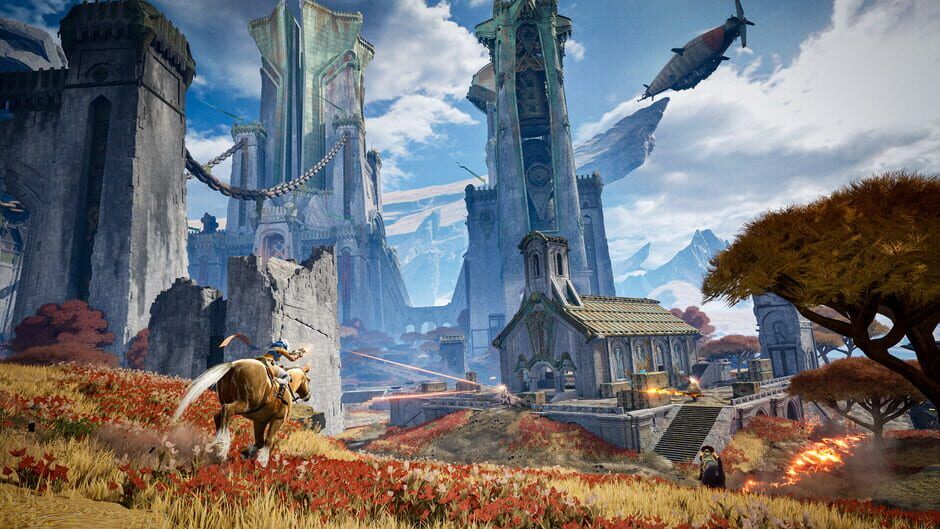
What makes Highguard’s early reception so stark is the contrast. Interest is clearly there, driven by a slick Game Awards reveal, the pedigree of ex Apex and Titanfall developers, and a clear pitch: three teams of three clash on a large map, looting, riding mounts and extracting objectives under pressure from rival squads. On paper it sits somewhere between Apex Legends, Hunt: Showdown and The Finals. In practice, many early players feel the pieces are not locking together yet.
Balance and core gameplay feel
The single most consistent complaint in Steam reviews is that Highguard’s 3v3 structure feels at odds with its sprawling maps and pacing. Players report long stretches of riding and looting without meaningful contact, followed by chaotic, sometimes unreadable firefights when teams finally collide.
A lot of reviews describe the maps as built for 5v5 or 6v6, not six players total. With so few combatants spread across such a large playspace, matches can feel oddly empty. The game wants to be a raid style PvP experience where teams contest high value objectives and extractions, but many players say it more often feels like running around huge arenas hoping to find someone to fight.
Balance concerns stack on top of that structural issue. Certain heroes and loadouts are already being called out as mandatory, particularly builds that exploit mobility and burst damage to punish the slow early game. Others feel underpowered or overly situational, leading to a perception that the meta is narrow right out of the gate. Combined with high time to kill spikes and visually noisy abilities, some players say fights feel less like tactical skirmishes and more like sudden, confusing brawls where positioning and game sense matter less than which team brought the right kit.
Because Highguard is a class based shooter, this kind of early imbalance cuts deep. When the hero you gravitated toward feels weak or easily countered, it is easy to bounce off the game before experimenting more. Several reviews mention refunding or uninstalling specifically after feeling locked into frustrating matchups.
Monetization and progression friction
Highguard launched as a fully free to play title, so players expected a monetization layer. The problem, at least according to a large slice of early reviews, is how omnipresent it feels in a game that is still struggling to win basic goodwill.
Criticisms cluster around a few pressure points. The first is the perceived grind tied to unlocking cosmetics and progression rewards. Players describe a battle pass and store setup that feels aggressive for a day one experience, with attractive outfits and weapon skins immediately siloed behind premium currency. When the underlying gameplay loop is already divisive, being surrounded by pop ups and storefront prompts only amplifies frustration.
The second pressure point is the sense that some unlockables are too slow or too sparse for dedicated play sessions. Even in games that are performing technically well and feeling satisfying in the moment to moment, stingy progression can sour early hours. In Highguard’s case, that criticism lands alongside performance and design worries, which makes the whole package feel exploitative to some users.
So far there are no widespread claims of literal pay to win mechanics. Instead the concern is that a game still trying to prove itself is already acting like a stable, long running service shooter with a hardened fanbase. The optics of that on day one are poor, and the Steam reviews reflect it.
Bugs, performance and server issues
Technically, Highguard’s launch has not been smooth. Reports across Steam and social media describe players struggling to log in at peak times during the first hours, followed by stuttering, frame drops and inconsistent performance even on strong hardware once they did get in.
Optimization complaints are specific and repeated. PC users with high end GPUs and CPUs mention struggling to maintain stable frame rates at reasonable settings, especially during busy fights or when multiple abilities trigger at once. Others call out hitching and input delay that make an already chaotic combat model feel even muddier.
Bugs range from the annoying to the match breaking. Players mention audio issues, UI elements failing to update, and strange interactions with mounts and movement abilities. None of these problems would be unusual for a large scale live service launch, but the key context is how they stack with Highguard’s other pain points. When pacing already feels off and balance is in question, every technical stumble feels magnified.
Content and variety concerns
For a game pitched as a PvP raid shooter, expectations were high that Highguard would deliver a robust set of maps, objectives and hero options on day one. Early impressions suggest that while the core systems are there, the variety is not landing with players yet.
Reviews frequently describe matches feeling repetitive, with similar flows of early looting, occasional isolated skirmishes and short, decisive final clashes around extraction or objectives. When those loops happen on a small set of maps with limited objective variety, the novelty wears off quickly. Some players say they saw “everything there is” in just a few sessions.
Hero design at least offers a strong aesthetic hook, and some players are praising the visual identity and animation work. But when the overlap between kits feels high and several characters are perceived as weaker options, the hero roster does not yet provide the sense of experimentation and discovery that carries many hero shooters through their first awkward months.
How bad is this launch in context?
Highguard’s early Steam reception looks brutal on paper, but it is not unique in the modern free to play PvP space. Over the last decade, several shooters have launched to ugly user scores and then clawed their way back. Others never recovered.
A useful comparison is Rainbow Six Siege, which stumbled out of the gate in 2015 with content gaps, server issues and harsh criticism of its progression model. Years of focused updates, reworks and operator additions eventually turned it into a long term success. More recently, Halo Infinite’s free to play multiplayer launched to strong critical praise but increasingly negative community sentiment around its battle pass, slow content cadence and monetization. While it has not reached the heights many hoped for, steady improvements and better rewards have at least stabilized its core audience.
On the other side are games like Crucible or Hyenas, which combined lukewarm mechanical reception with weak identity and did not survive long enough to meaningfully iterate. For them, the initial perception that “something fundamental feels off” never really shifted. Players left early and did not come back.
Highguard sits somewhere between these poles right now. The concurrent player spike shows there is curiosity and an appetite for a fresh PvP format. The wave of negative reviews, however, is not just a case of a few technical bugs or a minor balance gripe. Instead it points to more basic friction in pacing, match structure and how the game delivers on its raid shooter promise.
One additional wrinkle is that console sentiment appears more forgiving so far. PlayStation user scores land closer to the middle of the scale, which suggests that performance and optimization issues may be hitting PC hardest. That gives Wildlight a potential wedge to build on, fixing PC problems while continuing to court console players who are already a bit warmer on the core experience.
Lessons from other F2P PvP shooters
Looking across the field of modern free to play shooters, the teams that have successfully recovered from rough launches tended to do a few things quickly.
First, they acknowledged problems early and clearly. Games like The Finals and even early Apex Legends nailed regular communication about balance philosophy and upcoming changes, which helped convince players their feedback was being heard.
Second, they focused on core feel before everything else. No amount of new content or shiny cosmetics can offset a pacing problem or an unfun time to kill. Siege did not win back players on cosmetic drops. It did it by reworking operators, tightening netcode and improving map design.
Third, they respected player time in progression and monetization. After initial backlash, several high profile shooters adjusted their battle passes, increased currency earn rates or added more free track rewards. That sort of pivot goes a long way when your most engaged players are the ones feeling most squeezed.
Until Wildlight outlines its response, it is hard to say which path Highguard will follow. The good news is that it already has a visibility footprint many games never achieve, and its design is distinct enough that a meaningful rework could change the narrative. The risk is that the current negative Steam tag scares off would be players faster than fixes can arrive, shrinking the reachable audience for any comeback.
Early verdict
As an early post launch snapshot, Highguard looks like a shooter with serious potential and equally serious problems. It delivered a headline grabbing Steam peak close to 100,000 concurrents, but that surge has been matched by a flood of negative reviews that highlight consistent themes: mismatched map and team sizes, frustrating balance, aggressive feeling monetization, technical instability and thin feeling content.
Other free to play PvP shooters have proven that a rocky launch is not automatically a death sentence, but only when developers are willing to make rapid, sometimes sweeping changes to address the fundamentals. Highguard’s next few patches and the tone of Wildlight’s communication will determine whether this debut is remembered as a stumble on the way to a cult hit or the start and end of a fleeting Steam trend.