
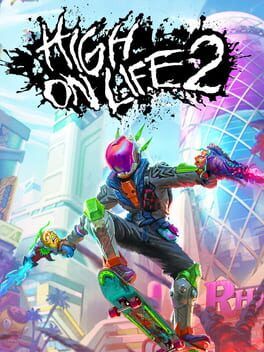

Squanch Games is bringing High on Life 2 to Nintendo Switch 2 on April 20 as a $59.99 Game-Key Card release, positioning Nintendo’s hybrid alongside PS5 and Xbox with a near–day-and-date launch and a fully featured port.
High on Life 2 is officially coming to Nintendo’s next‑gen hybrid, and Squanch Games is making sure the Switch 2 version is part of the conversation, not an afterthought. Following months of retailer leaks and Game-Key Card box art doing the rounds, the studio has confirmed that the comedic shooter sequel hits Switch 2 on April 20, 2026, both digitally and at retail.
That 4/20 date is exactly as deliberate as it sounds. Squanch is leaning into High on Life’s laid‑back, stoner‑sci‑fi branding, but this time it is doing so with Nintendo firmly in the frame. Rather than waiting months for a down‑port, Switch 2 owners are getting what is positioned as a near–day-and-date release alongside PS5 and Xbox Series X|S, with parity in content and a bespoke physical edition.
The April 20 release sets up a second launch cycle
Squanch has already dated High on Life 2 for February 13 on PS5, Xbox Series X|S, and PC. The Switch 2 version arrives a couple of months later, on April 20, but the messaging around it is noticeably different from the late, low‑profile ports that defined the first Switch era for a lot of third‑party shooters.
Instead of quietly appearing on the eShop long after the core audience has moved on, High on Life 2 on Switch 2 is being framed as a second launch beat. Retail listings, preorder guides, and Squanch’s own announcement all point to the Nintendo release as a specific event, one that gives the game a built‑in “round two” of marketing right as the spring calendar opens up.
It helps that 4/20 is impossible to forget. Squanch is more than happy to play up the date as a gag, but it also gives Nintendo’s version a clean hook for social media campaigns and platform‑specific trailers. In practical terms, the April window also gives the studio and its porting partner Turn Me Up Games time to tune performance for Switch 2’s new hardware while still landing the game in the early‑year launch window.
A $59.99 Game-Key Card tests Nintendo’s physical future
On Switch 2, High on Life 2 is a $59.99 release, matching the standard price on PS5 and Xbox. There is no power‑tax markup here, nor a budget label to suggest a cut‑down version. Instead, the main compromise lands squarely on the format of the physical edition.
Rather than shipping on a traditional game card with the full data on the cartridge, the retail copy is a Game-Key Card. You buy a box, you get a card, and that card is essentially a single‑use key that unlocks a full download from the Nintendo eShop. It is not a tiny partial install with a “download the rest” requirement. It is a straight, boxed code, closer to how PC physical releases quietly shifted to code‑in‑a‑case years ago.
For collectors and cartridge purists, that is going to sting. Part of the appeal of Nintendo hardware has always been that the cart in your hand contains the whole game, forever immune to delistings and storage purges. A Game-Key Card does the opposite. It preserves the shelf presence and retail discoverability that Squanch and its publishing partners want, but it abandons the long‑term preservation and plug‑and‑play benefits that defined the Switch library.
At the same time, this approach says a lot about where the Switch 2 ecosystem appears to be headed. A comedy shooter like High on Life 2 is not a micro indie, but it is also not a 150‑gigabyte blockbuster. If even this tier is trending toward Game-Key Cards, larger third‑party titles may follow, making permanent downloads and SSD management an expectation from day one of the platform.
Treating Switch 2 as a real platform, not a side quest
The shift in tone from the first High on Life is just as important as the release logistics. The sequel is set about five years after the original, with your player character now treated as a known quantity in the universe. You are not a nobody stumbling into an alien drug empire this time. You are a famous bounty hunter cashing endorsement checks and signing deals when the story blows up and your sister unexpectedly becomes your next target.
For Nintendo, that narrative setup matters because it reflects how Squanch is treating the Switch 2 audience. High on Life 2 is not a tentative experiment on underpowered hardware. The studio is talking about the Switch 2 version in the same breath as PS5 and Xbox, stressing that it is the full game, with the same story beats, the same talking guns, and the same traversal‑heavy combat arenas that define the sequel’s identity.
Turn Me Up Games, which has experience building competent Switch conversions of technically demanding titles, is handling the port. That partnership signals an intention to keep the kinetic, personality‑driven tone intact rather than cutting back features to make the game fit. Sliding around the environment on your hover boots, chaining melee slams into gunplay, and letting your weapons bicker while you clear a room are baked into the fantasy, and Squanch clearly wants that experience to survive intact on handheld hardware.
Tone and mechanics: louder, stranger, and more mobile
Squanch has described High on Life 2 as a more confident, stranger sequel. The talking weapons are back with expanded dialogue and a greater focus on character‑specific abilities that alter how you approach arenas. One gun might excel at juggling enemies into the air, another at locking down space with sticky projectiles, and another at up‑close burst damage. The joke is still that your arsenal will not shut up, but the design emphasis is on building encounters where their personalities and mechanics collide in more deliberate ways.
Traversal is also getting a bigger role. Early showings and feature breakdowns have highlighted more vertical level design, heavier use of hover skating and grapple points, and encounters that expect you to stay in motion rather than hunker down behind cover. For Switch 2, that could be a showcase of what Nintendo’s new hardware can do when a developer actually builds around fluid movement instead of aiming strictly for safe, static combat.
The tonal pitch is still aggressively irreverent, but Squanch has been clear that it wants to aim the satire at new targets instead of returning to the same arguments that consumed the first game. The sequel leans into fame, brand deals, and the hollow grind of being a marketable hero rather than retreading the old conversations about taste and shock humor. On Switch 2, that means you are getting a game that feels topical again rather than a late port of an already picked‑over meme.
What High on Life 2 means for Switch 2’s third‑party prospects
As a single release, High on Life 2 is not going to decide the fate of Nintendo’s next system. But taken in context, the way Squanch is handling this launch is instructive.
You have a prominent, online‑driven shooter adventure priced at full parity with other consoles, targeting a specific and slightly cheeky date, and arriving as part of a coordinated multi‑platform rollout. You have a physical edition optimized for retailer visibility rather than archival purity, which aligns with how publishers increasingly view boxed copies across the industry. And you have a porting partner with a track record of making Unreal‑based games behave on Nintendo hardware.
For players, the tradeoff is clear. If you want High on Life 2 on a handheld that can also live on your TV dock, you are getting the same loudly opinionated, traversal‑heavy sequel that PC and console players do, without the months‑long wait that so often undercut third‑party support on the original Switch. In return, you accept that your “physical” copy is functionally a fancy download voucher and that your internal storage will carry the real weight.
For Nintendo, having a game like this treated as a near‑peer to PS5 and Xbox launches sends the right signal. It suggests that the Switch 2 is not just a place for cleaned‑up last‑gen leftovers, but a genuine option for launch‑window versions of contemporary games, even ones with a distinctly non‑Nintendo tone.
And for Squanch, April 20 on Switch 2 is a chance to get High on Life 2 trending twice. First on February 13, when the game makes its debut across the traditional high‑end platforms, and then again two months later, when Nintendo’s handheld crowd gets its own excuse to, as the studio’s marketing happily reminds everyone, get high on life all over again.