
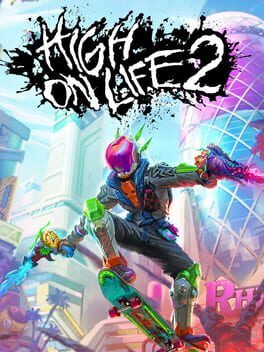

Retailer listings for High On Life 2 on Nintendo Switch 2 quietly sketch out the sequel’s release window, Game-Key Card physical plans, and Squanch’s evolving platform strategy for next‑gen handhelds.
High On Life never felt like a “Nintendo game” on paper. It is a foul‑mouthed, fourth‑wall‑shredding FPS that made its name on Xbox and PC before pulling off a surprisingly solid late‑generation Switch port. Now its sequel is apparently lining up for Nintendo’s next handheld/console hybrid too, with a string of European listings name‑dropping a Nintendo Switch 2 version of High On Life 2.
Squanch Games has not announced a Switch 2 port publicly, and Nintendo has kept quiet, but the details that keep surfacing across retailers are consistent enough to treat as a useful sketch of what is coming. Rather than dwell on who spotted what and when, it is more interesting to look at what those product pages imply about the sequel, how it might scale to Nintendo’s next hardware, and what this says about Squanch’s broader platform strategy.
What the retailer listings actually say
Listings across several European stores point to a dedicated Nintendo Switch 2 version of High On Life 2, sitting alongside the already confirmed PC, Xbox Series X|S and PlayStation 5 releases. The entries largely agree on three key points: platform, format and window.
First, they explicitly list the game for “Nintendo Switch 2,” rather than using vague cross‑gen language or a generic “Nintendo” tag. That suggests Squanch is targeting the newer hardware natively instead of relying on backward compatibility or cloud streaming.
Second, the physical version is described as a “Game‑Key Card” release. This is the same wording used for other download‑code‑in‑a‑box products on current Nintendo systems, and in this case it lines up with reports that Clear River Games is handling publishing duties in Europe. Players will get a branded box and card at retail, but the card unlocks a download rather than containing the full game data. For collectors that want something on the shelf and players with decent storage, it is an acceptable compromise. For anyone hoping for a full data cartridge, it is a reminder that High On Life 2 is built first as a sizeable digital title.
Finally, multiple databases have converged on a February 13, 2026 launch date for the main platforms. The Switch 2 version is listed in that same early‑year window, and nothing in the descriptions points to a delayed port. Combined with Xbox marketing that already pushes High On Life 2 as a day‑one Game Pass title on console and PC, the picture that emerges is of a near‑simultaneous multi‑platform rollout where Nintendo’s new machine is at the table from the start.
How the first game sets expectations on a new handheld
To understand what this sequel could look like on Switch 2, it is worth remembering how the original High On Life behaved on Nintendo hardware. The first game started life as a visually busy, mid‑budget Unreal‑powered shooter that leaned on dense alien cityscapes, garish color palettes and a constant layer of animated detail. Bringing that to the original Switch required obvious compromises in resolution, texture quality and effects, particularly in handheld mode, but the basic experience survived intact. Frame rate hitches and softer image quality were the price you paid in exchange for playing a talking‑gun comedy shooter on the go at all.
On Switch 2, the technical starting point is different. While Nintendo’s next system is still a hybrid, every credible report points to a far stronger SoC with modern upscaling techniques and storage pipelines that are closer to other current consoles than the seven‑year‑old Switch. High On Life 2 is built first for Xbox Series X|S, PS5 and PC, and Squanch will be expecting players on those platforms to get more ambitious alien vistas, fuller crowds, flashier particle work and more fluid traversal.
That design focus actually lines up neatly with what Switch 2 should be comfortable handling. The sequel is already pitched as a bigger scale follow‑up, with more varied alien hubs, expanded biomes and more reactive environments for its cast of chatty weapons to bounce off. On a last‑gen handheld, that kind of ambition turns every corridor into a trade‑off between resolution, frame rate and readability. On next‑gen portable hardware, it becomes realistic to aim for a reasonably sharp image, a steady frame rate and the kind of dense visual clutter that makes Squanch’s brand of sci‑fi grime work.
For the core shooting, that may be the most important change. High On Life’s gunplay is simple but snappy, designed around strafing, quick ability pops and constant chatter from your weapons and companions. When frame rate dips on a handheld, that rhythm frays and the jokes feel mistimed. A Switch 2 build that can sit closer to 60 frames per second with modern upscaling doing the heavy lifting on resolution would preserve that tempo and keep the comedy flowing instead of stuttering.
Scaling the humor to next‑gen handheld play
High On Life’s identity is tied as much to its barrage of jokes as to its shooting, and that is where a new handheld context gets interesting. The original game leaned hard on continuous VO, overlapping quips from enemies and guns and frequent fourth‑wall breaks. On a living room console that you play for long sessions, that kind of saturation works, but on a portable system that people dip into for 20‑minute bursts, pacing matters more.
Switch 2’s improved audio hardware and modern haptics open up a few angles for the sequel. Higher quality voice samples and more aggressive 3D audio can make each talking weapon feel more physically present in handheld mode, which is ideal for a cast built around distinct personalities. Imagine Gene grumbling out of one side of your headphones while an especially loud Gatlian pipes up from the other, or a panic‑yell that feels like it is physically nearer because of positional audio cues.
There is also scope for better environmental storytelling that reinforces the jokes without always relying on another line of dialogue. Higher detail textures, more legible signage and denser interior spaces all let Squanch layer in the blink‑and‑you‑miss‑it gags that fans of Rick and Morty‑style humor enjoy pausing to read. On Switch 2, those micro‑jokes should simply be easier to parse, especially in handheld mode where low resolution used to smear text and fine detail.
The Game‑Key Card approach quietly backs this up. By anchoring the Switch 2 version as a large digital download, there is less pressure to cut VO, cinematics or texture packs just to squeeze everything onto a cheaper, lower‑capacity cartridge. For a comedy‑heavy shooter that lives or dies on its wall‑to‑wall VO and weird little side bits, that makes the difference between a compromised port and a full‑fat release that just happens to live on a cartridge‑shaped download code.
Why a Game‑Key Card physical release matters
The choice to go with a Game‑Key Card rather than a full ROM cartridge may feel unexciting on the surface, but it says a lot about where Squanch and its partners expect High On Life 2 to sit in the Switch 2 library.
First, it acknowledges that the game is sized and structured like a modern console shooter, not a trimmed handheld‑only spin‑off. Big VO libraries, high resolution textures, streaming‑friendly assets and a chunkier campaign all balloon file sizes. Putting that on a maximum‑capacity cartridge would be expensive, and on a brand new platform even some major publishers are expected to lean heavily on code‑in‑box models for anything that is not a first‑party tentpole.
Second, it positions High On Life 2 as part of the digital‑first ecosystem Nintendo is quietly building for Switch 2, the same way the first High On Life has just become one of the earliest third‑party titles to receive a dedicated Switch 2 upgrade. Limited Run’s work on a physical release of the original, complete with the High on Knife DLC on cart, shows that there is still a collector‑focused lane for fully physical versions. For the sequel on Switch 2 though, publishers appear more comfortable using physical as a marketing touch point rather than the primary way players will own the game.
Finally, a Game‑Key Card helps Squanch keep parity across platforms when it comes to updates and post‑launch support. The studio has already flirted with DLC and mode additions for the first game. On Switch 2, delivering those as rolling downloads rather than patching a data‑cramped cartridge lets the team react more freely to feedback, tune weapon chatter, add accessibility options or expand challenge arenas without the constraints that have sometimes hurt late‑generation Switch ports.
What this suggests about Squanch’s platform strategy
Viewed alongside the first High On Life’s recent Switch 2 upgrade and Limited Run’s boxed release, the High On Life 2 listings fit into a clear trajectory. Squanch Games is treating Nintendo’s new hardware as a core platform instead of an afterthought, and it is doing so in a way that leans into the system’s strengths rather than fighting its weaknesses.
Launching near the February 13, 2026 date seen on other platform roadmaps keeps Switch 2 in the conversation with Game Pass and PS5. That multi‑platform parity is a strong signal for a studio that once felt aligned primarily with Xbox. Comedy shooters are a niche, and cross‑platform reach is one way to make sure that niche is sustainable.
Opting for a Game‑Key Card physical release in Europe, likely under Clear River Games, points to a pragmatic middle ground that should let Squanch keep scope and file size in line with its Xbox, PlayStation and PC builds instead of designing a cut‑down Nintendo version. In the medium term, that could mean a cleaner path for patches and potential DLC drops that hit every platform together rather than lagging on Nintendo hardware.
Most importantly, treating Switch 2 as a first‑class citizen for High On Life 2 shows a growing confidence that Nintendo’s next handheld can handle irreverent, voice‑heavy shooters without forcing them into low‑fi compromises. If the original High On Life on Switch was proof of concept, the sequel on Switch 2 looks set to be the real test of how far Squanch’s particular brand of loud, colorful sci‑fi can travel in portable form.
Until Squanch or Nintendo speaks up, there is still room for the usual caveats around leaks and retailer placeholders. Taken together with the already announced console and PC plans though, the Switch 2 listings read less like wishful thinking and more like a snapshot of a sequel that is lining up to shout in your ears wherever you choose to play.