
Squanch Games is evolving High on Life 2 beyond nonstop shooting with skateboarding traversal, murder mysteries, and wild new comedic setpieces, all launching day one on Game Pass and PS5.
High on Life 2 could have coasted on more of the same: louder guns, denser jokes, and an even slimier pile of alien guts. Instead, Squanch Games is using the sequel to push past simple corridor shooting and lean way harder into variety. After IGN’s final preview slice, it is clear this follow up is less about holding down the trigger and more about bouncing between comedy sketches, traversal toys, and strange side activities that just happen to involve guns.
Less nonstop shooting, more strange situations
The original High on Life lived and died on its shooting and nonstop chatter. The sequel still has talking guns and alien gore, but the structure around that combat has changed. Even in a focused one hour demo centered on a mission to take down billionaire Larry Pinkstock, firefights felt like punctuation rather than the whole sentence.
A big chunk of the mission plays out almost like an interactive comedy episode. You start around Pinkline Harbor, then work your way toward Pinkstock’s luxury cruise ship. Along the way you are not just mowing down enemies. You are infiltrating bars, committing deeply stupid crimes, and roleplaying your way through setpieces that feel closer to adventure games than arena shooters.
Squanch is clearly trying to keep the guns holstered more often, letting the writing and characters breathe between shootouts. That shift should help players who bounced off the first game’s barrage of jokes over repetitive fights, and it gives the sequel room to surprise more often.
Skateboarding, traversal toys, and layered combat
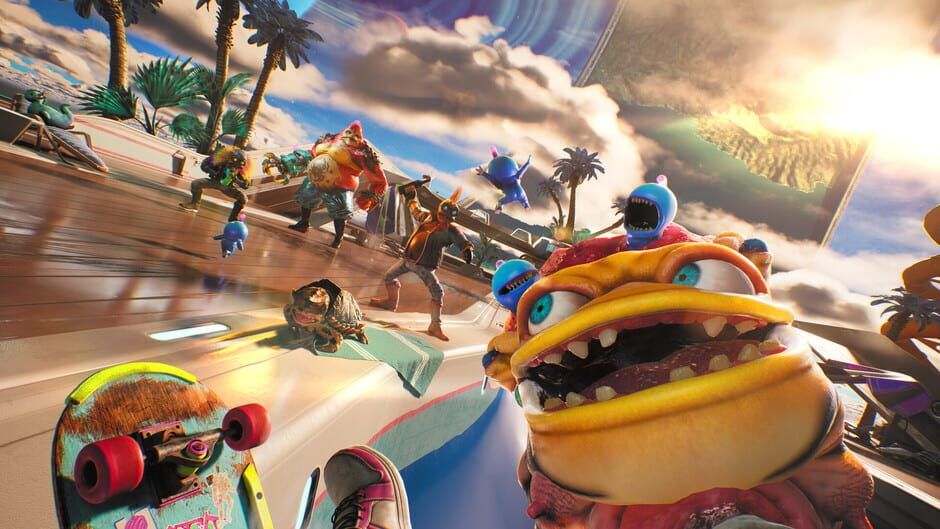
High on Life 2’s clearest mechanical upgrade is skateboarding. Instead of a traditional sprint, tapping the run button drops a board at your feet so you can zip around, grind rails, and fling yourself off ramps. It is less Doom and more janky Tony Hawk, and that is exactly the point.
Traversal now feeds directly into level design. Rails snake over alien harbors, ramps launch you between platforms, and secret routes hide collectibles. There is even a tongue in cheek letter collection challenge that has you skating around to grab floating characters mid air, turning downtime into a mini arcade run.
Combat benefits from this movement focus. Knifey doubles as a grappling hook so you can sling yourself across arenas, and enemy encounters are built around constant motion. Each sentient gun now leans harder into unique cooldown based abilities, giving you more reason to swap mid fight rather than leaning on one favorite. The result is still a straightforward shooter, but it feels more layered and kinetic than the first game’s stop and pop rhythm.
Talking guns, now with dialogue choices
The talking weapons return, but they are not just background noise this time. High on Life 2 introduces a dialogue system where each line is tied to a specific gun. Picking a response associated with another weapon will automatically swap you to that gun, changing both the conversation and your loadout.
This turns banter into a mechanical choice. Do you pick the line that sounds funniest, or the one that keeps your preferred gun equipped before the next fight breaks out? It also means repeat playthroughs should surface noticeably different exchanges, which could help the game stay fresh for players who want to see all the jokes without feeling railroaded into one canonical personality.
From bar brawls to cruise ship murder mysteries
Where High on Life 2 really steps away from its predecessor is in its larger setpieces. The Pinkline Harbor mission alone swings between bar antics, puzzle heavy exploration, and a surprisingly involved whodunit.
At one point you find yourself trying to cheer up a depressed talking gun named Travis in a bar. What might have been a quick cutscene instead becomes a full mini episode. You play a rhythm game on the dance floor, throw drunk darts, and sketch his portrait. These choices may not drastically alter the plot, but they create a feeling of personalized chaos. Your night out becomes your version of the story, not just another combat checkpoint.
Things get stranger once you board Pinkstock’s cruise ship. Security strips you of your weapons and throws you into a murder mystery party where you have to mingle with suspects, gather clues, and piece together both the killer and a plausible motive. It is not a throwaway gag. You are digging through the environment, revisiting conversations as new details pop up, and jotting down notes in an in game notebook before accusing anyone.
The previewer even failed the mystery by calling out the right suspect with the wrong motive, suggesting the game expects you to pay attention instead of blindly guessing. It is a strong signal that Squanch wants to make non combat moments feel substantial, not just comedy padding.
Puzzles, weird weapons, and spectacle fights
High on Life 2 keeps stacking variety on top of its core shooting. A museum sequence has you plotting to steal a fedora from a very familiar primate while distracting security with a giant alien statue and an extremely questionable laser. The details are best discovered firsthand, but it is the kind of elaborate, joke driven puzzle that benefits from the slower pacing the sequel is embracing.
Combat still gets its moments of spectacle. New temporary weapons like Flint Turtles turn into disposable flamethrowers that you can deploy in the thick of a brawl. Encounters lead into miniboss fights and finally into a showdown with Kreg, the bounty hunter commander who has been chasing you. That final boss leans into old school pattern recognition, forcing you to watch for tells, dodge through attack cycles, and strike in short windows rather than just unloading bullets.
These boss design choices might not reinvent first person combat, but they show a willingness to respect the player’s time. Fights are framed more like payoffs to the surrounding comedy adventure, not the only reason the game exists.
Day one on Game Pass and a PS5 launch
Beyond the design changes, High on Life 2’s release strategy could seriously expand its audience. The original was a surprise hit on Game Pass, quickly climbing the service’s charts and reaching players who might never have paid full price for a loud, divisive comedy shooter.
This time, Squanch is doubling down on that success while also breaking out of the Xbox and PC bubble. High on Life 2 launches February 13, 2026 on Xbox Series X|S with day one Game Pass access, PC, and for the first time, PlayStation 5.
Game Pass gives the sequel the same discovery engine that boosted the first game, letting subscribers sample it with almost no friction. That is perfect for a humor driven title that thrives on curiosity and word of mouth. If the new variety and setpieces land, social clips of skateboarding through alien harbors or bungling a murder mystery could travel fast.
The PS5 release, meanwhile, opens the door to a large audience that sat out the original. Squanch is essentially treating High on Life 2 as both a sequel and a soft relaunch of the brand. Players who heard about talking guns and weird jokes but never had an Xbox now get a clean entry point, and the broader console reach should give the game more traditional sales potential alongside its subscription play.
Put together, day one Game Pass plus a simultaneous PS5 launch positions High on Life 2 to be far more visible than the first game. It can chase big day one engagement on Xbox and PC through subscriptions while still converting eager fans into full price buyers on all platforms.
A sequel betting on variety
High on Life 2 looks less like a retread and more like a second draft of the whole idea: still loud, still crude, but framed by more confident game design. The guns talk, but they also tie into your choices. The combat is punchier, but it does not dominate every minute of play. Between skateboarding traversal, bar room disasters, museum heists, and cruise ship mysteries, the sequel feels determined to be more than just another ironic shooter.
If the rest of the campaign can maintain the variety and pacing of the Pinkline Harbor mission, Squanch might turn a cult hit into a broader breakout. High on Life 2 is not just aiming for more laughs than the original. It is aiming for more ways to play, and a much larger crowd to hear the punchlines.