
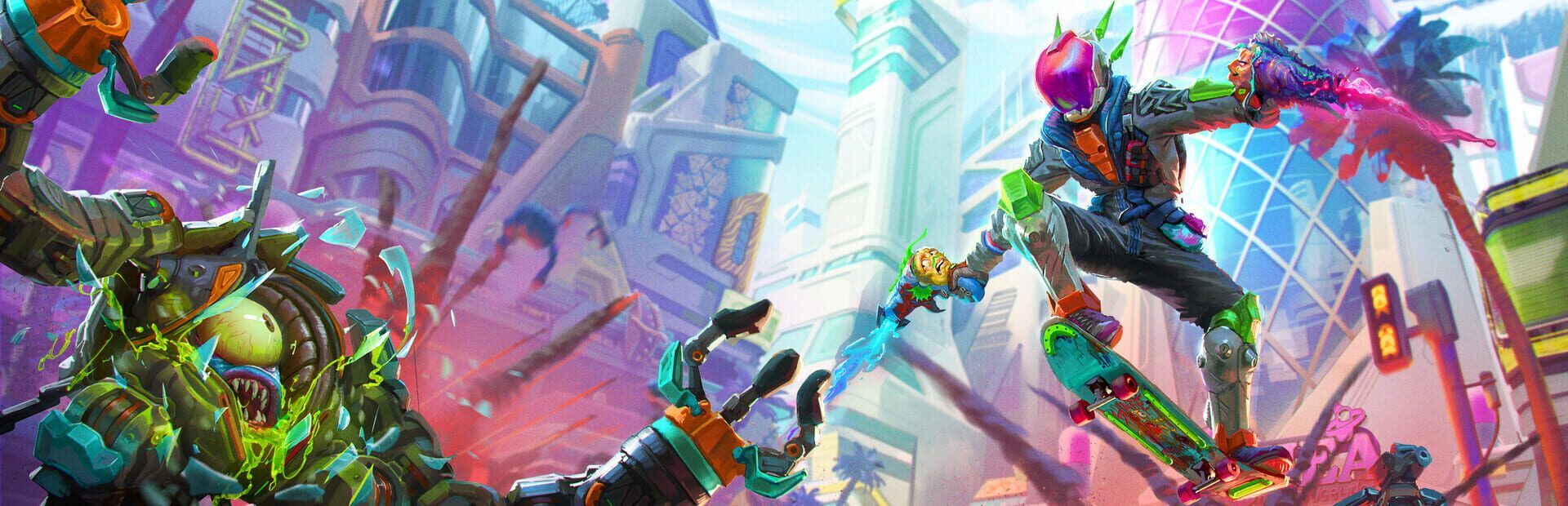
Everything you need to know before High on Life 2 launches: download sizes, pre‑load timing, platform parity, and how the sequel builds on (and fixes) the original High on Life.
High on Life 2 is almost here, and if you were there for the first game’s foul‑mouthed Gatlians and Adult Swim‑adjacent weirdness, you probably just want straight answers. How big is the download, when can you pre‑load, and what are you actually getting this time around?
This guide walks through pre‑launch details for every platform, then sets expectations by revisiting what the original did well, where it whiffed, and how the sequel looks to evolve the formula.
Platforms and release structure
High on Life 2 is a single‑player FPS from Squanch Games and a direct sequel to 2022’s High on Life.
It launches digitally on February 13, 2026 on:
PlayStation 5
Xbox Series X|S
PC (Steam, Epic Games Store, Microsoft Store)
Nintendo Switch 2 arrives day‑and‑date digitally in the same window, with physical releases landing later in April.
Crucially, this is a proper current‑gen title. There is no Xbox One or PS4 version, which should help with performance and visual consistency across platforms.
Download size and pre‑load details
Storage is a real concern with current‑gen shooters, and High on Life 2 is no exception. Across the board you should treat this as a "make room" release, not something you casually slip onto a nearly full SSD.
According to the Twisted Voxel report and current platform listings:
On Xbox Series X|S, the pre‑load clocks in at roughly 60 to 61 GB. The preload is live now through the Microsoft Store and Xbox Game Pass, so subscribers can have it ready on day one.
On PlayStation 5, the final download size is expected to land in a similar 55 to 65 GB window based on store metadata and the Xbox build. At the time of writing, Sony has not pushed a definitive pre‑load date, but publishers typically enable it 48 to 72 hours before launch for pre‑orders, and there is nothing unusual here that suggests otherwise.
On PC, the minimum disk requirement sits higher, at about 70 GB of free space according to current system‑requirements listings. The actual day‑one download through Steam or Epic can be slightly smaller due to compression, but you should plan for at least that much room if you want to avoid juggling installs.
On Nintendo Switch 2, exact figures are not yet confirmed, but based on the first game’s Switch 2 edition and the other platforms’ footprint, you should expect a trimmed but still hefty download, likely in the 40+ GB range. Physical buyers will still need additional storage for patches.
Given how unified the builds appear, it is safe to treat 60 GB as the baseline target on all high‑end consoles and 70 GB as the safe number for PC.
Platform parity: how similar are the versions?
Squanch is clearly aiming for tight platform parity this time.
All announced platforms share:
Single‑player only design with no co‑op or competitive multiplayer splits across versions.
The same story campaign, characters and main quest structure.
Talking weapons with branching dialogue options.
The new skateboard system that drives traversal and many encounters.
Metroidvania‑style progression built around three large hub regions rather than the original’s single main hub.
On the technical side, the current‑gen focus should mean fewer compromises compared to the first game’s launch. The original High on Life was Xbox Series focused but also had to scale to Xbox One and PC with very mixed performance. For High on Life 2, Squanch is not shipping on the old consoles, which should reduce CPU bottlenecks and allow more stable frame rates.
Expect Series X and PS5 to target 60 fps as the performance mode standard, with visual trade‑offs mainly in resolution and effects between Series S and the more powerful machines. PC players with mid‑range hardware should comfortably exceed that, provided they are above the minimum specs, while Switch 2 will almost certainly be the most compromised version in resolution and texture quality even if the core content is intact.
A refresher: what the first High on Life did well
If you are coming back after bouncing off the original or you just vaguely remember "the one with the talking gun," it is worth a quick refresher on where High on Life actually connected.
The most obvious hook was the tone. High on Life leaned hard into Justin Roiland style improv, scattershot gags, and relentless absurdity. For players who clicked with that style, just walking around the world listening to arguments, background TV, and weapon banter was the main attraction.
Mechanically, the first game was a fairly straightforward FPS with light platforming and Metroidvania flavor. You unlocked new Gatlians that doubled as traversal tools, opening new paths in the central hub world and the bounty stages. Jetpacks, slime shots, and grapples added momentum to what otherwise could have been a very basic shooter.
The level art and creature designs also stood out. Squanch leaned into saturated, slime‑coated environments and bizarre aliens, which made the world feel distinct even when enemy behaviors or objective design were simple.
For many players, the first game worked best as a breezy, 10 to 15 hour comedy shooter with a strong sense of personality rather than as a mechanically deep FPS.
Where the original missed the mark
That same personality was also the biggest sticking point. The humor was polarizing, with some players loving the nonstop chatter and others finding it grating, repetitive, or juvenile. The game included a slider to reduce how often the guns spoke, but it could not fix jokes that did not land in the first place.
Combat was another soft spot. Encounters were manageable and the variety of Gatlians helped, but gunplay never quite hit the responsiveness and punch of genre leaders. Enemy AI was serviceable rather than smart, and boss fights leaned more on bullet sponginess and pattern repetition than clever mechanics.
Progression through the hub world could feel linear in spite of its Metroidvania framing. There were side activities and secrets, but the structure mostly pushed you from bounty to bounty, with only limited reasons to revisit older areas compared to classic Metroid or immersive sim style hub worlds.
Finally, performance and polish were inconsistent at launch, especially on lower‑end systems and PC. Frame drops, bugs, and crashes contributed to a sense that the ambition of the writing and world design outpaced the technical execution.
How High on Life 2 expands the formula
The sequel is not tearing the house down so much as renovating it. Squanch is very clearly iterating on the familiar talking‑gun shooter, but several pillars of High on Life 2 hint at a more confident and cohesive experience.
First is structure. Instead of one main hub feeding out to bounties, High on Life 2 is built around three large, interconnected hubs that lean further into Metroidvania ideas. That should spread progression out horizontally, giving more incentive to backtrack with new tools and open optional paths rather than simply moving forward on a linear bounty checklist.
Second is traversal. The team has doubled down on mobility, keeping the grappling hook, dashes, and movement tricks from the original while adding a fully featured skateboard. This is not just a novelty. In interviews and descriptions, Squanch says early tests made the skateboard so fun that they started building levels, combat arenas, and puzzles around it. Expect sequences where chaining slides, grinds, and grapples is as important as aim, something closer to a cartoonish mix of Doom Eternal and a sci‑fi skate game.
Third is conversation with the Gatlians. High on Life 2 introduces actual dialogue options when you talk to your weapons, which should make them feel less like joke delivery machines and more like characters you interact with. Depending on how far Squanch pushes it, this can address one of the first game’s biggest weaknesses by giving players a bit more control over tone and by tying jokes to character beats and player choice rather than pure improvisational riffing.
Finally, there is the new narrative hook. Rather than simply reacting to an alien drug cartel attacking Earth, you are now a renowned bounty hunter dealing with a personal crisis when an alien pharmaceutical megacorp kidnaps your sister. That more focused, personal stake could give the story stronger pacing and a clearer emotional throughline than the original’s often scattershot plotting.
Expectations for returning players
So what does all this mean if you played and mostly liked High on Life, but want to know where to properly set your expectations?
You should expect the tone and core identity to be intact. The guns still talk, the aliens still scream, and the world is still designed around surreal, gross‑out sci‑fi comedy. If you absolutely bounced off the humor the first time, the sequel is unlikely to convert you, though the added structure to conversations and more deliberate character writing might smooth out the roughest edges.
You should expect more ambitious traversal and level design. The skateboard, expanded hubs, and Metroidvania approach suggest that simply walking into arenas and circle strafing will not cut it. The best‑looking sequences in early footage are the ones where you are using every mobility option in concert to chase, escape, or fight while constantly moving.
You should not expect a hyper‑hardcore shooter suddenly competing with the top of the genre on pure gunfeel. High on Life 2 is still built as a goofy single‑player adventure first and a technical aim‑training showcase second. The hope is that combat feels sharper and higher energy than in the original, but the appeal remains the blend of movement, exploration, and comedy.
You should, however, expect a smoother launch. Dropping old‑gen support, shipping on a more mature engine pipeline, and building with Game Pass in mind all reduce some of the technical risk. There will almost certainly be patches, but the baseline should be more stable than High on Life’s day‑one state.
How to prep your system before launch
Given what we know now, here is how to get ready regardless of platform.
On Xbox Series X|S, pre‑load as soon as possible, especially if you are using the internal drive. The roughly 60 GB footprint, plus space for a large day‑one patch, can easily push a crowded drive over the edge. Game Pass subscribers can queue it up directly from the app.
On PC, treat the 70 GB requirement as a floor. Remember that Windows, shader caches, and other PC games all compete for SSD bandwidth and space. If you want consistent streaming during fast skateboard sections and large hubs, install it on an SSD rather than a mechanical hard drive.
On PlayStation 5, clear 100 GB if you can before pre‑load. That leaves overhead not only for the base install, but also for post‑launch patches and save data. Keep an eye on your download queue when pre‑load unlocks so you can prioritize High on Life 2 the night before launch.
On Switch 2, an SD card is almost mandatory. Even if the final Switch 2 build lands below the 50 GB mark, the system’s internal storage will vanish quickly when you factor in system software and other games. Remember that any physical copy will still need free space for updates.
The bottom line
High on Life 2 looks like a confident sequel that understands what players liked in the first game and has a clear list of things to fix. It is bigger, more mobile, and more structurally ambitious, without abandoning the loud, weird, talking‑gun identity that made the original stand out.
Go in expecting a sharper, better‑paced comedy shooter with an emphasis on traversal and exploration rather than a total reinvention of the formula. Make room on your SSD now, queue up the pre‑load as soon as your platform allows, and prepare for another very strange trip across the galaxy when February 13 rolls around.