
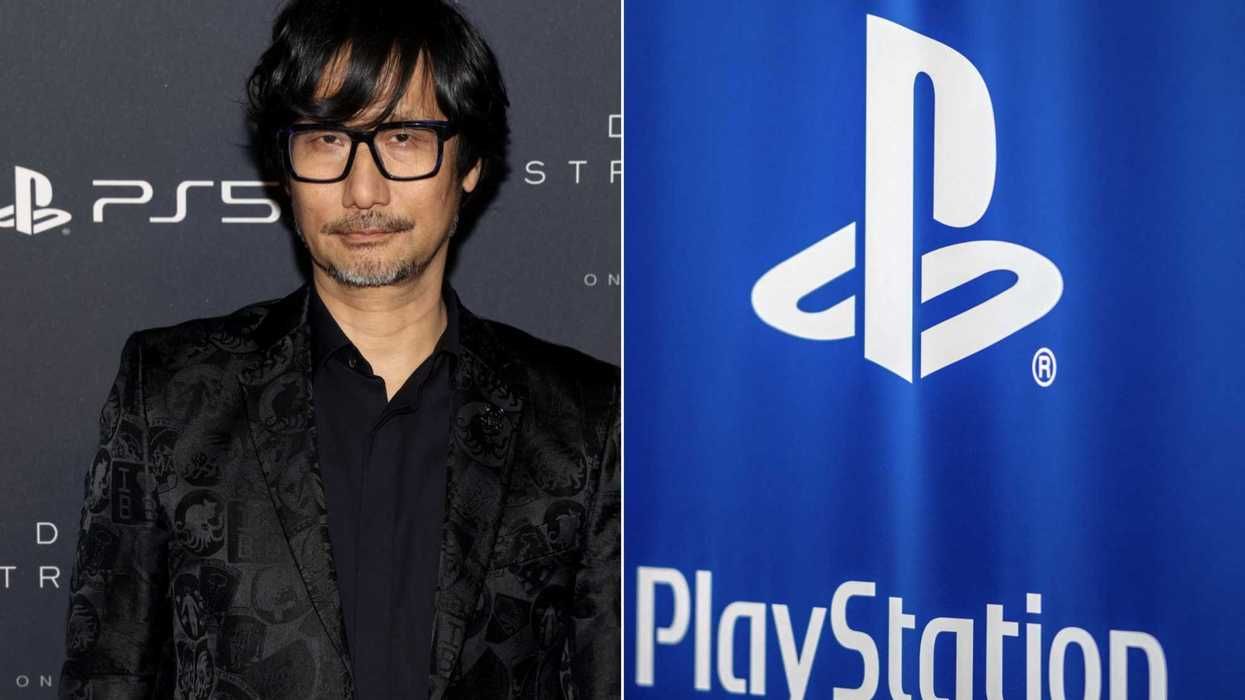

Hideo Kojima says he is sad about PlayStation ending new physical game discs, but his larger fear is a cloud-driven future where players no longer possess game data.
Image: indy100.com
Kojima turns Sony’s disc deadline into an ownership argument
Hideo Kojima has pushed the PlayStation disc debate beyond packaging and retail shelves. Speaking at the Il Cinema in Piazza Film Festival in Italy, in comments translated by Genki and reported by VGC, the Death Stranding and Metal Gear creator said he was “really sad” about Sony’s plan to end production of physical PlayStation game discs in 2028. His larger concern, though, was not the disc itself. It was the possibility that games could move from files players store locally to streams controlled entirely by remote servers.
That distinction is the pressure point in the current PlayStation game ownership argument. Sony’s confirmed move, as reported by VGC and Eurogamer, is that newly released PlayStation games will be sold in digital format only from January 2028. Eurogamer also reported that PlayStation games will continue to be sold at retail, but without physical discs. A PlayStation Store notice quoted by Eurogamer says, “From Jan. 2028, newly released games on PlayStation will be available for purchase on PlayStation Store and at retailers in digital format only. Discs for games released before Jan. 2028 can continue to be played on this console.”
Kojima’s comments landed because they came from a creator whose career has been built around the physical texture of games: boxes, discs, demos, secrets, installations, and vanishing projects. For players, the fear is direct. If Sony physical games stop arriving on discs, what exactly are they buying, how long will they be able to access it, and who decides when access ends?
What Sony has confirmed, and what remains interpretation
The confirmed part of this story is narrow but significant. Sony Interactive Entertainment has announced that it will stop manufacturing physical game discs from January 2028, according to VGC. Eurogamer reports the change applies to newly released PlayStation games, which will be available digitally through PlayStation Store and at retailers in digital format only. The PlayStation Store notice quoted by Eurogamer also states that discs for games released before January 2028 can continue to be played on the console.
There is also an important preservation carveout in the reporting. VGC says it has since emerged that Sony has told partners they will be able to reprint discs for games released before the January 2028 cutoff. That suggests the end of new disc production does not necessarily mean every existing physical PlayStation title becomes permanently scarce on the same day. It does, however, draw a line between pre-2028 disc releases and new PlayStation games after that point.
Some conclusions circulating around the announcement go further than Sony has publicly confirmed. Eurogamer wrote that the move “all but confirms” the PS6 will not have a disc drive, but that is an interpretation, not a quoted Sony hardware announcement in the provided reporting. Likewise, player worries about servers shutting down, licenses being revoked, or future games becoming unavailable are concerns drawn from how digital ecosystems can work. They are not the same thing as Sony saying PlayStation owners will lose access to their purchased games in 2028.
That separation matters. The concrete development is Sony ending new physical disc production. The anxiety surrounding it is broader: once a platform moves its new releases away from discs, players have fewer fallback options if storefront policies, licensing deals, accounts, regional rules, or online infrastructure change.
Kojima’s fear is about the tap, not only the disc
Kojima’s festival remarks, as reported by VGC, make a careful distinction between downloaded digital games and streamed media. He said that, for games, the situation differs from movies because downloaded titles place data on a user’s hard drive, meaning “the game data remains on your own hardware.” His fear begins when the model shifts further toward streaming.
“With streaming subscription services, like Netflix or Amazon, there is a server somewhere, and you essentially just have the right to turn the tap, and when you do, the data flows out,” Kojima said, according to VGC’s translation source. He added that because users do not possess the data themselves, political changes, national differences, corporate decisions, or wider shifts could stop distribution. If that happens, he warned, people may no longer be able to watch or play the works they like.
That is the creator-side escalation of the PlayStation digital future debate. Many players are arguing over discs versus downloads. Kojima is pointing one step beyond that fight, toward a possible all-streaming future where even the downloaded-file compromise disappears. In action game terms, the current moment is the arena door closing. The next phase is the boss pattern players are trying to read before it starts.
This is also why his comments resonate differently from a standard collector complaint. Kojima is not arguing that optical discs are technically perfect. He is arguing that possession of data changes the relationship between audience and platform holder. A disc may be scratched, noisy, incomplete, or dependent on patches, but it still represents a form of control that a server-side stream does not provide.
The old tweet is back because the industry caught up to it
Kojima’s comments also revived a 2021 post in which he warned that “even digital data will no longer be owned by individuals on their own initiative.” VGC quotes the tweet, in which Kojima wrote that a major change or accident in a country, government, idea, or trend could suddenly cut off access to loved movies, books, and music. “I would be a have-not,” he wrote. “That’s what I’m afraid of. This is not greed.”
Indy100 reported that Kojima reposted that 2021 message on the day Sony confirmed its plan to stop making physical PlayStation discs for games released from January 2028 onward. GamesRadar and other outlets also noted the old post circulating again in response to the PlayStation announcement. The renewed attention is not evidence that Kojima had inside knowledge of Sony’s plan in 2021. It shows that his general warning about digital access now matches a concrete platform shift.
There is one particularly sharp Kojima-adjacent example in the provided source material. Games.gg points to P.T., the playable teaser for the cancelled Silent Hills, as a real case of digital impermanence. According to Games.gg, P.T. was pulled from the PlayStation Store after Kojima’s split with Konami, and users who had downloaded it were blocked from redownloading it. That example is not the same as Sony’s 2028 disc policy, but it explains why players treat access as a practical concern rather than a theoretical one.
For a creator like Kojima, whose games often rely on timing, atmosphere, and discovery, preservation is not a side issue. A work that disappears from official channels loses context, audience, and future interpretability. Players can still talk about the corridor in P.T.; new players cannot simply go to the store and buy it.
Disc drives are still in demand while discs are being phased out
The hardware picture complicates Sony’s digital direction. Eurogamer reports that Sony is still limiting sales of its attachable PS5 disc drive to “one per order” on the PlayStation Store because of “high demand.” The same report notes that this is not a brand-new notice, with ResetEra users pointing out that the wording has been present since at least November 2023. Even so, Eurogamer’s reading is that demand for the PS5 disc drive has remained strong enough for Sony to ration supply for years.
That creates a visible tension. Sony is preparing a future where new PlayStation games are sold without discs, while PS5 owners still want the option to use physical media. Some of that demand may come from players with existing PS4 and PS5 disc libraries. Some may come from collectors, bargain hunters, used-game buyers, or families who share physical copies. The source material does not break down the reasons, so those motivations should remain framed as likely audience segments rather than confirmed data.
The practical answer for current players is clearer. According to the PlayStation Store notice quoted by Eurogamer, discs for games released before January 2028 can continue to be played on the console. For anyone using the PS5 Digital Edition with the attachable drive, the current PS5 disc drive limit of one per order signals availability pressure, not a change to compatibility. The longer-term hardware question, especially around a future PlayStation console, remains unannounced by Sony in the provided sources.
For players deciding whether to buy a disc drive now, the calculation depends on existing libraries. If you already own PS4 or PS5 discs, the drive still has value under the confirmed policy. If you mostly buy new releases after 2028, Sony’s plan means those new games will not arrive on PlayStation discs.
The counterargument: discs were already fading as game technology changed
The strongest counterpoint in the source material comes from Polygon, which argues that optical discs were never an ideal format for games. Polygon’s Patch Notes essay supports physical media as a preservation and ownership concept, but criticizes discs as slow, noisy, scratch-prone, and increasingly awkward for games that need constant data access. It points to the PS2 and PS3 eras, where access times were a real issue, and to later console generations where disc installs made the disc feel less central because game data often had to be copied to the hard drive anyway.
That argument should not be dismissed. Modern blockbuster games are built around large installs, updates, online features, and post-launch patches. A disc can function as a license key or installer rather than a complete, final version of the game. For action and adventure games especially, where pacing depends on fast loading, seamless traversal, and combat encounters that never pause for the machinery underneath, local solid-state storage has changed the rhythm of play. The PS5’s best set-pieces depend on fast streaming from storage, not a Blu-ray drive grinding through data.
Still, the technical weakness of discs does not erase the ownership concern. Players are not only mourning a plastic format. They are reacting to the removal of a market structure: resale, lending, second-hand buying, collecting, gifting, and preserving a copy outside the platform holder’s storefront. Polygon’s point helps explain why discs were vulnerable. Kojima’s point explains why their disappearance still feels dangerous to many players.
The ownership debate is therefore split across two layers. On the engineering layer, discs were already losing the fight. On the access layer, players are asking whether the replacement gives them enough control.
The unanswered questions Sony still has to face
Sony has given players a date and a direction, but the ownership debate will not settle until the company explains the surrounding systems. The sources confirm the January 2028 cutoff for new physical game discs, continued digital sales at retail, and ongoing playability for discs released before that date on the referenced console. They do not answer every practical question about refunds, account bans, regional delistings, inheritance, long-term redownload rights, offline access, or what future PlayStation hardware will support.
That gap is where Hideo Kojima PlayStation discs coverage has become larger than a single creator reaction. Kojima’s concern gives artistic weight to questions players were already asking in plain consumer terms. If the next era is digital purchases first, and eventually perhaps streaming for some experiences, the industry will need to earn trust with policies that are as durable as the boxes it is replacing.
For now, the best reading is measured. Sony has confirmed the end of new PlayStation physical game disc production from January 2028. It has not confirmed that existing PlayStation discs will stop working. VGC reports that pre-2028 games may still be reprinted by partners. Eurogamer reports that Sony’s attachable disc drives remain limited to one per order amid high demand. Kojima has said he is sad about the end of production, but more frightened by a future where media exists only through a server-controlled tap.
The disc era may be entering its final act on PlayStation, but the larger conflict is access. Players can live with faster installs, digital storefronts, and cleaner hardware design. What they are less ready to accept is a future where the game they bought becomes a memory because the tap stops running.