
HeroQuest Digital Edition is coming to PC via Steam in 2027, with a closed beta planned soon. Here is what is confirmed, what remains unannounced, and why the digital dungeon crawl may fit tabletop groups that want less setup friction.
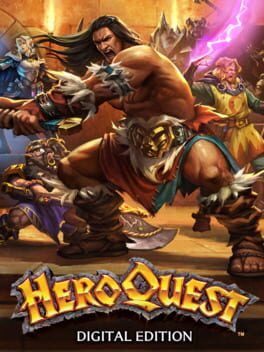
Image: IGDB
Store links: HeroQuest: Digital Edition on Steam
HeroQuest’s PC return has a window, but not a date
HeroQuest: Digital Edition has been revealed for PC via Steam with a 2027 launch window, and Nomad Games and Balor Games say a closed beta playtest is coming soon. That is the firm news from the announcement distributed through Games Press and reported by multiple outlets after The MIX Fall Showcase. The tension is in the timing: players can wishlist HeroQuest Digital Edition on Steam now, but the publisher has not announced an exact release date, closed beta start date, price, PC requirements, or console plans.
For tabletop players, that leaves the most practical question unanswered. Is this a faithful digital dungeon crawl that can take over weekly campaign night, or an adjacent adaptation best treated as a separate PC version? The confirmed feature list gives us a useful outline. The game is officially licensed, developed by Nomad Games, published by Balor Games, and built around tactical turn-based combat, digital dice, solo play, online co-op, an optional Zargon player, a Quest Editor, and mod.io integration for community quests.
The reveal also lands at a moment when HeroQuest has two different identities to satisfy. It is a nostalgic dungeon board game with a physical table presence, but it is also a rules-light gateway into fantasy adventuring. A HeroQuest PC version has to preserve the ritual of the original while cutting down the practical friction that often keeps a campaign from happening: gathering players, setting the board, managing hidden information, and keeping custom adventures organized.
The closed beta is real, but its schedule is still opaque
The closed beta is confirmed, but only in broad terms. Games Press says HeroQuest: Digital Edition will come to PC via Steam in 2027 “with a Closed Beta playtest coming soon,” and the same language appears in coverage from GamersHeroes, COGconnected, Explosion Network, and HappyGamer. None of the provided source material includes a sign-up date, eligibility requirements, beta duration, region list, NDA status, or whether progress will carry over into the full game.
That matters because HeroQuest closed beta access could be especially important for a game with asymmetric multiplayer. A conventional dungeon crawler beta can test bugs and balance, but HeroQuest: Digital Edition also needs to prove that the table role of Zargon works online. In the physical game, that player manages the opposition, knows what waits in the dungeon, and controls much of the session’s pace. The digital version is promising that a fifth player can take on that role, plotting against the heroes while the party moves through the dungeon.
For now, the safest reader guidance is simple: wishlist on Steam if you want release notifications, and follow the official website or community channels for beta news. Games Press points players to the official site and Balor Games social channels for future closed beta information. Until Balor or Nomad publishes the actual beta process, any claim about start timing beyond “coming soon” is speculation.
What is confirmed for HeroQuest PC play
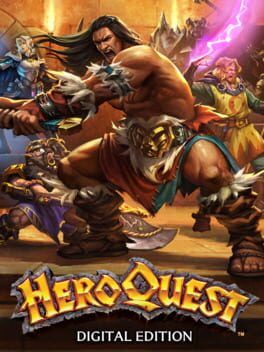
The core setup follows the tabletop premise. According to the official announcement, Zargon, the Dread sorcerer, seeks to conquer the Realm, and four heroes stand against him: the Barbarian, Dwarf, Elf, and Wizard. Players lead those heroes into dungeons to fight the forces of Dread and protect the Realm. TechRaptor describes the heroes in class terms familiar to tabletop players, with the Barbarian as the powerful front-liner, the Dwarf associated with traps, the Elf as a precise adventurer, and the Wizard as the spellcaster.
HeroQuest: Digital Edition supports flexible party control. Games Press says players can command the whole party solo, play online co-op with up to four players controlling the heroes, or add a fifth player as Zargon. COGconnected and Explosion Network also report five-player support, with four hero players and one Zargon player. That structure is the adaptation’s most important design promise because it keeps the social shape of HeroQuest intact rather than reducing it to a purely solo tactics game.
Combat is confirmed as tactical and turn-based, with dice rolls determining the path forward. The announcement also emphasizes teamwork, each hero’s unique strengths, and party positioning against Zargon’s challenges. Those details suggest a digital version built around readable tactical decisions rather than real-time action. For RPG players who care about roles and progression flow, the key question will be how much the game exposes information: whether the digital interface clearly communicates threat ranges, turn order, traps, monster behavior, and the tradeoffs between splitting up for speed or staying grouped for survival.
Why a digital dungeon crawl could solve HeroQuest’s setup problem
The strongest appeal of HeroQuest Digital Edition for tabletop fans may be convenience, though that should be understood as a likely consequence of the format rather than a confirmed performance claim. The official materials confirm online co-op, solo party control, digital dice, a playable Zargon role, and tools for creating and sharing quests. If the PC client handles those systems cleanly, a group could spend less time arranging the board, sorting pieces, managing hidden information, and coordinating where everyone physically needs to be.
That is especially relevant for HeroQuest because its charm comes from an approachable loop: open a dungeon, move room by room, fight monsters, search, survive, and push the party toward the objective. The physical version is tactile, but it also asks one person to run the dungeon and maintain the hidden state of the map. A digital implementation can make that burden lighter if it automates setup and keeps Zargon’s information separate from the heroes without relying on table discipline.
Solo control also changes the availability of the campaign. Games Press confirms that one player can command the entire party. That does not replace the banter of a full table, but it gives completion-minded players a way to work through quests without waiting for four other schedules to align. For groups that meet irregularly, online co-op and a digital board may turn HeroQuest from an occasional event into something closer to a repeatable campaign night.
Zargon is the design test, not a side feature
The Zargon seat is the feature that will likely define whether this adaptation feels like HeroQuest rather than a themed tactics game. HappyGamer frames the villain role as the twist of the digital version: a fifth player can side with evil, scheme behind the scenes, and try to bring down the fellowship. The official Games Press release uses similar language, saying players can take on Zargon and plot against the opposing fellowship.
That role creates a technical and social challenge. In tabletop HeroQuest, Zargon is part referee, part adversary, and part pacing device. The digital game has to decide how much freedom that player gets. Can Zargon choose when to reveal monsters? How are traps presented? How much of the original tabletop structure is automated? The provided sources confirm the role, but they do not explain its exact rules implementation.
For hero players, the Zargon option could make online sessions feel closer to a true table. For Zargon players, it could provide the rare pleasure of building tension without needing to host a physical game night. The risk is that the role must be satisfying without becoming tedious. If the client automates too much, Zargon may feel like a spectator with occasional inputs. If it automates too little, the role may inherit the bookkeeping burden the digital edition is otherwise positioned to reduce. That balance is still unproven until beta players or the publisher show more.
Quest Editor and mod.io point toward a long campaign life
The announcement confirms a Quest Editor and built-in mod.io integration. Games Press says players can craft their own quests and explore community-made adventures through mod.io, while GamersHeroes and COGconnected also report those creation and sharing tools. For a dungeon crawler with a fixed set of core heroes, that may be the feature that keeps the game alive after players clear the included scenarios.
HeroQuest has always been well suited to custom adventure design because its structure is legible: rooms, corridors, monsters, treasure, traps, and objectives. Digital tools could make that process easier to iterate, especially if players can test encounters quickly and distribute them through a shared library. The sources do not specify how powerful the editor will be, what assets it includes, whether creators can script events, or how moderation will work on mod.io. Those unknowns will decide whether the tool becomes a novelty or a serious quest-building ecosystem.
For RPG players, the appeal is progression through authored challenges rather than character build complexity. The confirmed hero roster is the classic four, and the materials focus on unique strengths, positioning, and teamwork instead of deep customization systems. That positions HeroQuest: Digital Edition closer to a campaign board game adaptation than a loot-driven CRPG. Players looking for dense skill trees should wait for more detail before assuming they will find them here.
Platform, pricing, and the questions to wait on
The confirmed launch target is PC via Steam in 2027. HappyGamer reports that Steam’s store page lists Balor Games as publisher, Nomad Games as developer, the genres as Adventure, Indie, and RPG, and Windows as the only platform currently shown. TechRaptor notes that no pricing or console port information has been released. The official announcement likewise points players to Steam wishlisting rather than pre-orders.
There is useful business context, but it should not be mistaken for pricing news. TechRaptor observes that Nomad Games has a history with digital tabletop adaptations, including Catan, Smash Up, Fury of Dracula, and Talisman: Fifth Edition, and notes that the developer’s past work has ranged between $12 and $29 MSRP while recent board game copies can be north of $100. That comparison suggests a possible lower entry point than buying a physical box, but Balor Games and Nomad Games have not announced HeroQuest: Digital Edition’s price.
The best reason to keep HeroQuest Steam wishlisted now is information access, not certainty. The game has a 2027 PC window, a closed beta planned soon, and a feature set that directly targets the hard parts of organizing a tabletop dungeon crawl. The unknowns remain significant: exact beta timing, launch date, price, system requirements, content scope, editor depth, Zargon rules, and any non-PC plans. For tabletop fans, the pitch is clear enough to watch closely. Whether it becomes the fastest way to keep a HeroQuest campaign moving depends on execution that the closed beta should finally begin to reveal.