
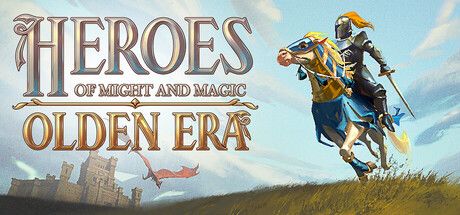

A deep dive into Heroes of Might and Magic: Olden Era’s early access roadmap, its teased roguelike mode, the return of the Thieves Guild and sprawling underworld, how the community is reacting, and whether the game is keeping its huge launch momentum.
A prequel with a runaway start
Heroes of Might and Magic: Olden Era has done something few PC strategy games manage in 2026. Within roughly a month of entering early access, it smashed through 1 million copies sold, after already recouping development costs on day one with 250,000 sales. For a meticulous, turn based throwback heavily inspired by Heroes 3, that is a serious statement about how hungry people are for classic fantasy strategy.
The early access build is already broad, with skirmish, online multiplayer and an opening campaign act, but Unfrozen and publisher Hooded Horse are framing this first release as the foundation. The newly revealed roadmap outlines how Olden Era will evolve over the next year or so, with a focus on multiplayer infrastructure, fan favorite systems like the Thieves Guild and underground layer, and a mysterious new roguelike mode that could reshape how people play the game.
Breaking down the early access roadmap
The roadmap shown on Steam and in publisher press materials is split into several stages that run through the early access period into 1.0. Rather than promising an endless feature list, it clearly prioritizes a few pillars. First is competitive and cooperative play, then deep systems that bring Olden Era fully in line with the “classic Heroes” fantasy, and finally a slate of late game modes to keep veterans engaged.
In the near term, the team is doubling down on multiplayer structure and balance. Team play is on the way, giving players proper cooperative modes for 2v2 style games or shared control scenarios, something the community has loudly asked for since launch. Observer mode and a replay system are also slated, both of which are key for tournaments, streamers, and anyone who wants to study high level matches. Alongside that, Unfrozen is planning matchmaking improvements and expanded random map generator options, which should make it easier to find fair, interesting matches without relying entirely on custom lobbies.
The other early access milestones are about polish and systemic rework. Classes and elite subclasses are due for overhauls, hero skills and specializations are being rebalanced, and alternative creature upgrades are set to get another pass. Spell progression is being extended, with a spell level cap increase that pushes the power ceiling higher while hopefully making late game magic feel more distinct. All of this is framed as iteration on the existing foundation rather than a reinvention, which makes sense given how closely Olden Era already hews to Heroes 3’s structure.
Beyond those systemic changes, the roadmap promises quality of life updates on a regular cadence. That includes UI passes, AI tweaks, additional neutral creatures and artifacts, map editor improvements and better match statistics. The key point is that Olden Era’s basic loop is set, and early access will primarily be used to refine and deepen it instead of bolting on unrelated mechanics.
The roguelike PvE mode
The most tantalising item reserved for the 1.0 release is a dedicated roguelike PvE mode. Officially, details are thin. The roadmap and press coverage describe it simply as a major single player mode that should meaningfully change how people approach Olden Era, rather than just another set of scenarios.
For a Heroes style game, “roguelike” could mean several things. The safest assumption is a run based structure with partial persistence, where each attempt generates a fresh map with its own constraints and rewards, and where defeat returns you to a meta layer with long term progression. Given Olden Era already features a random map generator, the infrastructure for procedural battlefields is in place. The roguelike mode could lean on that tech but layer in bespoke modifiers, escalating difficulty and between run unlocks.
What makes this interesting is how it intersects with Heroes style army building. Traditional campaigns hinge on carefully curating a few overpowered heroes over dozens of missions. A roguelike mode is likely to force harder choices and embrace risk, with runs that might last only a few hours instead of spanning a week of play. That could finally give Olden Era a mode that suits shorter sessions without sacrificing the strategic crunch that attracted veterans in the first place.
There is also the potential for unusual constraints that shake players out of the classic “rush for the best town and stack a single mega army” pattern. Limiting access to certain units or spell schools, attaching powerful perks to optional challenges, or even introducing permadeath like rules for heroes would all fit under the roguelike umbrella. For now, it is speculative, but the very fact Unfrozen is saving this mode for 1.0 suggests they want it to be a marquee reason to return when the game fully launches.
Thieves Guild and intel wars
For long time Heroes fans, the return of the Thieves Guild is one of the most exciting traditional features on the roadmap. In the classic games, the Thieves Guild was not just a cool building. It was the unofficial scoreboard, quietly tracking stats like army strength, resources gathered, number of towns, heroes recruited and more, then surfacing those stats as vague hints or precise numbers based on how many guilds you controlled.
Olden Era’s version is billed as much the same, a strategic information hub that lets you scout the broader game state without physically exploring the entire map. That has significant implications for competitive play. Knowing whether you are actually ahead or behind, or whether a specific opponent is snowballing out of control, changes how aggressively you expand, when you risk a big fight and whether you commit to a long siege.
It also opens the door for future tweaks like fog of war variants, hidden objectives or asymmetric victory conditions. If the Thieves Guild becomes the place where this information lives, then denying or spoofing that intel through spells or artifacts could itself turn into a mini game. Even without those extra layers, its inclusion cements Olden Era’s intent to fully recreate the classic town build ladders and all the strategic signalling that came with them.
The underworld expansion and the return of the Underground
Another headline feature on the roadmap is the Underground, the series’ iconic second map layer. Olden Era is planning a full underworld expansion with unique terrain, objects and even dedicated music, which should go a long way toward giving its maps that feeling of vertical complexity fans remember.
In practice, a good Underground does three things for this style of game. First, it increases map density without bloating distances, giving designers space for secret routes, hidden resource clusters and side objectives that are hard to scout. Second, it creates natural tension between surface and underworld control, often forcing players to split armies or risk surprise attacks. Third, it keeps exploration interesting in the mid to late game, when the surface has largely been revealed.
Unfrozen’s roadmap calls this a sprawling underworld, which implies more than just a few tunnels. Combined with new neutral tier 8 creatures and additional underworld specific objects, Olden Era’s late game maps are likely to feel more layered and dangerous. From a pacing perspective, this should also help address one of the early minor criticisms, which is that once you establish a dominant army on a single layer, the rest of the map clear can feel routine. An Underground with different threat profiles and choke points will keep friction alive for longer.
Campaign, Ironman mode, and long term structure
Although much of the discourse is around skirmish and multiplayer, Olden Era is a prequel campaign first. Right now, early access offers only the first act, with acts two and three reserved for the full launch. The roadmap slots these final chapters alongside the roguelike mode at 1.0, suggesting that story content is pacing the entire development run.
To support that campaign experience, Unfrozen plans to introduce an Ironman mode for the story. That likely means single save, no manual reloading, and stricter autosave rules. In a series where players often brute force tricky missions through constant reloads, an official Ironman option changes the emotional tone of the story. Failed gambles and misjudged battles become part of the narrative rather than annoyances to be erased.
Outside the scripted campaign, new PvP victory conditions are planned, as well as better match statistics and alternate drafting systems. A more fully featured map editor and proper map sharing support are also on the way, which should dramatically extend Olden Era’s lifespan. The Heroes community has always relied on talented map makers to keep things fresh. Giving them powerful tools and a convenient way to distribute their creations is arguably as important as any new official scenario.
Community response so far
If you only looked at the sales figures, you would assume Olden Era was a hit, but the community response backs that up. On Steam, the game has attracted tens of thousands of user reviews already, skewing strongly positive. Veteran players frequently describe it as the closest thing to a true successor to Heroes 3 since the early 2000s, praising its commitment to classic turn structure, town screens and combat grid while appreciating modern touches like cleaner UI and more readable tooltips.
There is also a clear sense of relief among long suffering Heroes fans who have watched the series stall for more than a decade. Olden Era feels like a validation of that pent up demand. Content creators have embraced it, multiplayer lobbies are busy, and the official Discord has swelled to tens of thousands of members, which aligns with the million plus sales figure.
That enthusiasm does not mean players are blind to problems. AI behavior is one of the most consistent complaints, particularly on larger maps where computer factions sometimes struggle with pathfinding, army composition or long term growth. Balance is another hot topic, from resource abundance and early snowballing to the relative power of certain artifacts or alternative unit upgrades. Some players also call out UI legibility, text size and visual clutter, especially at high resolutions or on dense maps.
Multiplayer has its own frictions, including loading times, desyncs in edge cases and the usual early access woes around matchmaking and quitters. Crucially, though, the community generally feels heard. Unfrozen has been shipping frequent patches, including one focused specifically on campaign issues and stability, and the roadmap itself was clearly informed by community feedback, with features like team play and observer mode sitting near the top.
Holding momentum after a huge launch
The question now is whether Heroes of Might and Magic: Olden Era can maintain its incredible early momentum. Early access darlings often spike on release and then drift as players wait for the “real” launch. Here, the structure of the roadmap works in Unfrozen’s favor. The most transformative pieces, such as the Underground, Thieves Guild and roguelike mode, are spaced out enough to serve as return hooks for lapsed players.
In the short term, the studio’s priority appears to be stability and iteration. Frequent patches, AI upgrades, and balance passes are not flashy, but they are essential for keeping a competitive community healthy. Team play, observer mode and replays could also open the door to a more formalized competitive scene, extending the game’s lifespan in that niche.
Longer term, the combination of a complete three act campaign, a robust map editor with sharing, and a genuinely new roguelike PvE mode gives Olden Era multiple axes of replayability. Even if the roguelike ends up more modest than fans imagine, the simple act of providing a structured, repeatable single player ladder will give solo players a reason to stick around beyond traditional campaigns.
Given how strongly the game has performed out of the gate, Unfrozen has the runway to take its time and get these systems right. If the team can continue listening to community feedback while steadily ticking through the roadmap, Heroes of Might and Magic: Olden Era is positioned not just as a nostalgic curiosity, but as the new standard bearer for big budget, turn based fantasy strategy on PC.